
Many aspiring English teachers are surprised to find that being a TEFL Tutor is far more than teaching grammar from a textbook. With global opportunities, these professionals help bridge cultures and open global doors for themselves and their students. This article explores the true role of a TEFL Tutor, clarifies common misconceptions, and highlights how accredited qualifications and immersive work experience can launch a rewarding international career.
Table of Contents
- TEFL Tutor Explained: Core Role And Misconceptions
- Key Qualifications And Trinity Accreditation
- Types Of TEFL Tutors And Teaching Pathways
- Day-To-Day Responsibilities And Teaching Environments
- Employment Prospects And Global Opportunities
- The Value Of 1-Year Study/Work Abroad Programmes
Key Takeaways
| Point | Details |
|---|---|
| Core Role of TEFL Tutors | TEFL tutors serve as cultural ambassadors, focusing on enhancing students’ language skills through interactive methods beyond just grammar instruction. |
| Essential Qualifications | A robust TEFL tutor requires recognised certifications like Trinity CertTESOL, advanced language proficiency, and strong intercultural communication skills. |
| Diverse Career Pathways | TEFL tutoring offers various specialisations, including business English and academic preparation, with opportunities in online and corporate settings. |
| Global Employment Trends | The demand for online teaching and business English specialisations is growing, highlighting the need for adaptability and technological proficiency in teaching. |
TEFL Tutor Explained: Core Role and Misconceptions
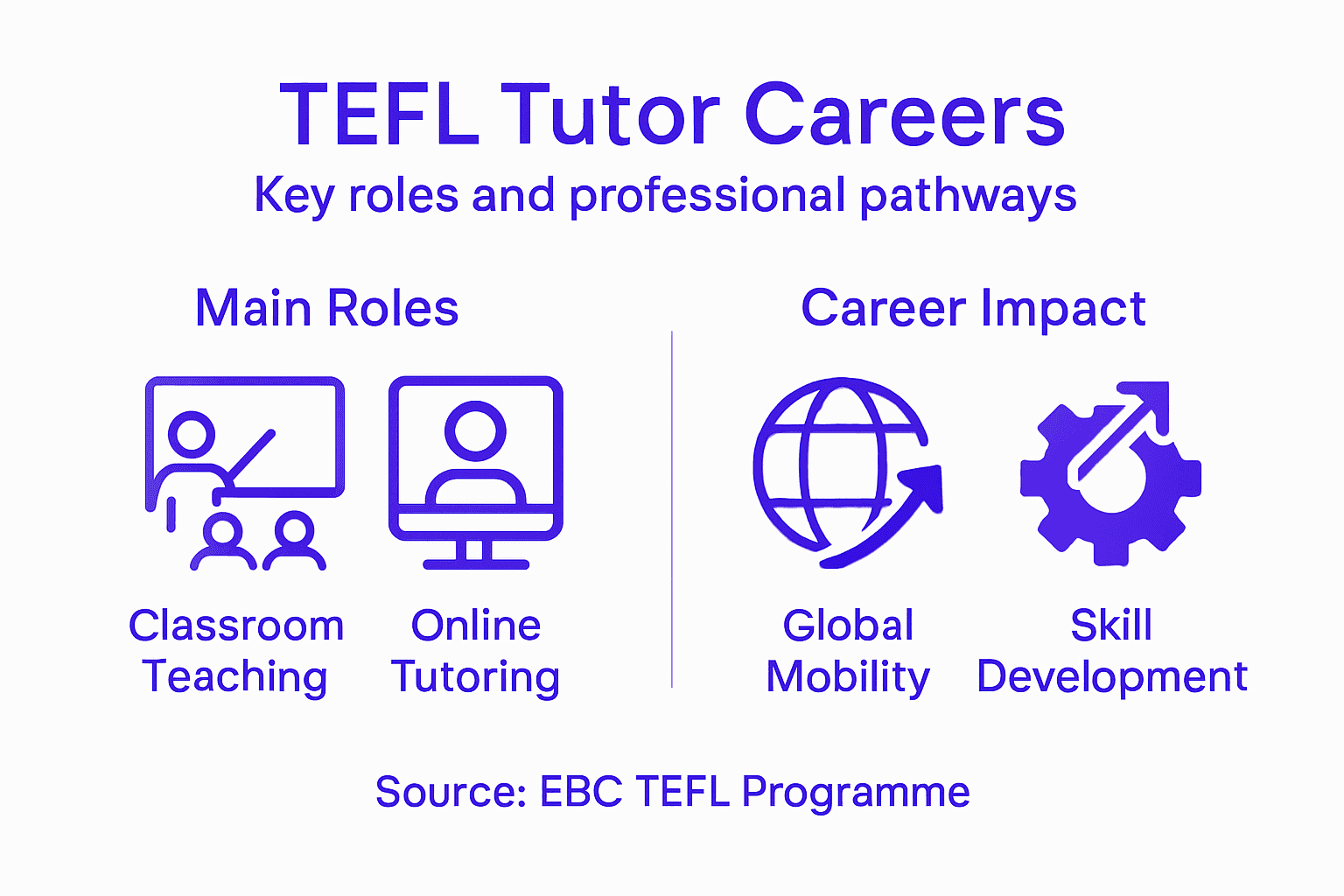
A TEFL Tutor is an educational professional dedicated to teaching English as a foreign language in international contexts, bridging communication gaps and providing language skills to non-native speakers. Unlike traditional classroom teachers, these professionals operate in diverse global settings, from language schools to online platforms, with a specialised mission of language instruction.
The core responsibilities of a TEFL tutor extend far beyond simple language instruction. These educators are cultural ambassadors who help students develop comprehensive language skills through interactive, engaging methodologies. Key roles include:
- Designing interactive lesson plans tailored to student needs
- Developing conversational and grammatical English skills
- Providing contextual cultural understanding alongside language learning
- Adapting teaching strategies for different learning environments
- Supporting students’ linguistic confidence and communication abilities
Many people misunderstand the TEFL profession, assuming it’s merely about teaching grammar rules. However, innovative English teaching approaches demonstrate that modern TEFL tutoring is a sophisticated, dynamic profession requiring significant skill and adaptability.
Professional TEFL tutors must possess a robust set of skills beyond language knowledge. They need strong intercultural communication abilities, patience, creativity, and technical proficiency to succeed in rapidly changing global educational landscapes. Successful tutors understand that language learning is not just about memorising vocabulary but about building genuine communication bridges.
Professional Requirements for TEFL Tutors:
- Internationally recognised teaching certification (e.g., Trinity CertTESOL)
- Advanced English language proficiency
- Understanding of second language acquisition principles
- Strong interpersonal communication skills
- Flexibility and cultural sensitivity
TEFL tutoring is more than a job – it’s a pathway to global understanding and personal growth.
Pro tip: Research destination countries thoroughly and understand their specific English language teaching requirements before committing to an international teaching position.
Key Qualifications and Trinity Accreditation
Successful TEFL tutors require a comprehensive set of professional qualifications that go beyond basic language proficiency. The Trinity CertTESOL certification stands as a globally recognised benchmark for English language teaching professionals, offering a rigorous and internationally respected credential that demonstrates advanced pedagogical expertise.
To become a qualified TEFL tutor, candidates must typically meet several critical requirements:
- Hold a minimum of a bachelor’s degree
- Obtain an internationally recognised teaching certification
- Demonstrate advanced English language proficiency
- Complete specialised teacher training programme
- Possess strong intercultural communication skills
The Trinity CertTESOL certification represents a gold standard in English language teaching qualifications. This comprehensive programme goes beyond traditional language instruction, equipping educators with sophisticated teaching methodologies, classroom management techniques, and deep understanding of second language acquisition principles.
Professional TEFL tutors must develop a multifaceted skill set that encompasses linguistic knowledge, cultural sensitivity, and adaptive teaching strategies. The certification process typically involves:
- Theoretical language teaching modules
- Practical classroom observation
- Supervised teaching practice
- Assessment and lesson planning skills
- Intercultural communication training
Trinity CertTESOL certification transforms language teachers from mere instructors to professional educational facilitators.
Critical Components of Professional TEFL Qualifications:
- Advanced pedagogical training
- Understanding of learning psychology
- Curriculum development skills
- Technology integration in language teaching
- Assessment and evaluation techniques
Pro tip: Research multiple accreditation pathways and select a certification that offers comprehensive practical training alongside theoretical knowledge.
Types of TEFL Tutors and Teaching Pathways
The world of TEFL tutoring encompasses a diverse range of teaching roles and professional pathways, offering educators multiple opportunities to apply their language expertise across different learning environments. Global TEFL career steps reveal the remarkable flexibility inherent in English language teaching professions.
Primary types of TEFL tutors include:
- Young learner specialists
- Business English instructors
- University-level academic English tutors
- Online language educators
- Corporate training professionals
- Exam preparation coaches
- International school teachers
Each teaching pathway demands unique skills and approaches. Online tutors, for instance, require advanced technological proficiency and the ability to create engaging digital learning experiences. Classroom-based educators need strong classroom management skills and the capacity to adapt to diverse student backgrounds.

Professional TEFL tutors typically follow several core career development routes:
Here is a comparison of popular TEFL tutor career pathways and their workplace environments:
| Pathway | Typical Setting | Key Skills Required | Professional Growth Potential |
|---|---|---|---|
| Private Language School | Small classroom | Classroom management, cultural sensitivity | Moderate, steady advancement |
| Online Platform | Virtual classroom | Digital literacy, adaptability | High, global opportunities |
| Corporate Training | Business offices | Business English, professionalism | Networking, career expansion |
| International School | Multinational campus | Flexibility, intercultural skills | Leadership and specialisation |
- Private language school instruction
- Public school teaching positions
- University lecturer roles
- Corporate language training
- Private tutoring and freelance teaching
- International school employment
- Online platform instruction
TEFL teaching is not just a job – it’s a global passport to cultural exchange and professional growth.
Specialisation Areas for TEFL Professionals:
- Academic English preparation
- Business communication training
- Pronunciation and accent reduction
- Test preparation (IELTS, TOEFL)
- Curriculum development
- Educational technology integration
Pro tip: Develop multiple teaching specialisations to increase your employability and create diverse career opportunities in the global English language market.
Day-to-Day Responsibilities and Teaching Environments
TEFL tutors navigate complex and dynamic teaching environments that demand extraordinary adaptability, creativity, and professional skill. Teaching practice strategies reveal the multifaceted nature of daily responsibilities for English language educators working across diverse global contexts.
Typical daily responsibilities for TEFL tutors encompass a wide range of professional activities:
- Lesson planning and curriculum development
- Preparing engaging instructional materials
- Conducting interactive classroom sessions
- Assessing student language proficiency
- Providing individualised student feedback
- Managing classroom dynamics
- Adapting teaching methods to student needs
Teaching environments vary dramatically, ranging from traditional classroom settings to digital platforms. Online tutors might manage virtual classrooms with students across multiple time zones, while corporate trainers could deliver specialised business English workshops in professional settings. Each environment requires unique approaches and technical competencies.
Key aspects of daily TEFL teaching include:
- Designing contextually relevant learning experiences
- Implementing communicative teaching methodologies
- Monitoring student progress and comprehension
- Creating inclusive learning environments
- Developing supplementary educational resources
- Maintaining professional development records
- Collaborating with educational stakeholders
Effective TEFL tutors transform language learning from a technical exercise into an engaging, transformative experience.
Critical Professional Skills for Daily Teaching:
- Intercultural communication expertise
- Technological proficiency
- Flexible instructional techniques
- Emotional intelligence
- Continuous learning mindset
- Adaptive problem-solving abilities
Pro tip: Develop a robust digital toolkit and remain adaptable to emerging educational technologies to enhance your teaching effectiveness across different learning environments.
Employment Prospects and Global Opportunities
The global landscape for TEFL tutors continues to expand, offering remarkable career opportunities across diverse international contexts. TEFL job search strategies demonstrate the dynamic and promising nature of English language teaching careers worldwide.
Primary global employment destinations for TEFL professionals include:
- China
- South Korea
- Vietnam
- United Arab Emirates
- Spain
- Japan
- Thailand
- Saudi Arabia
- Mexico
- Online teaching platforms
The employment landscape for TEFL tutors encompasses multiple professional pathways, ranging from traditional classroom settings to innovative digital platforms. Professional opportunities are increasingly flexible, allowing educators to choose between permanent international positions, short-term contracts, and remote teaching roles.
Key employment opportunities for TEFL professionals involve:
- Public school teaching positions
- Private language school instruction
- Corporate training programmes
- University lecturer roles
- Online language education platforms
- International school employment
- Freelance tutoring and consultancy
Global English language education represents more than a career – it’s a pathway to cross-cultural understanding and personal transformation.
Emerging TEFL Employment Trends:
- Increasing demand for online teaching
- Growth in business English specialisations
- Expansion of digital learning platforms
- Rising opportunities in emerging markets
- Emphasis on technological teaching skills
- Multicultural teaching environment
Pro tip: Develop multiple language teaching specialisations and remain technologically adaptable to maximise your global employability in the evolving TEFL job market.
The Value of 1-Year Study/Work Abroad Programmes
One-year study and work abroad programmes represent a transformative pathway for aspiring TEFL professionals, offering unprecedented opportunities for personal and professional development. Study abroad TEFL programmes provide a comprehensive approach to international teaching and cultural immersion.
Key benefits of 1-year study/work programmes include:
- Comprehensive teacher training certification
- Full language and cultural immersion
- Professional work experience
- International networking opportunities
- Personal growth and independence
- Enhanced career prospects
- Visa and legal work support
- Structured professional development
These programmes typically combine multiple professional development components, creating a holistic approach to international teaching careers. Participants can expect a structured experience that integrates academic learning, practical teaching experience, and cultural adaptation across destinations like Spain, France, and Italy.
Core programme components usually encompass:
The options for 1-year study/work abroad programmes differ in key experiential advantages:
| Destination Country | Language Immersion Level | Work Experience Type | Post-Programme Prospects |
|---|---|---|---|
| Spain | High | Private school teaching | Improved EU employability |
| France | Very high | Part-time classroom roles | Access to French job market |
| Italy | Moderate | English mentoring | Broader international access |
- Accredited TEFL certification training
- Language study in host country
- Part-time teaching or work opportunities
- Cultural integration workshops
- Professional mentorship
- Visa and legal documentation support
- Ongoing career guidance
A 1-year study/work programme is more than an educational experience – it’s a life-changing journey of professional and personal transformation.
Strategic Advantages of Study/Work Programmes:
- Guaranteed teaching practicum
- Structured professional pathway
- Multinational work experience
- Cultural intelligence development
- International credential enhancement
- Comprehensive support system
Pro tip: Research programme details meticulously and choose a comprehensive package that offers integrated training, work experience, and robust support mechanisms.
Launch Your Global TEFL Career with Trusted Accreditation and Support
Becoming a professional TEFL tutor means embracing a rewarding journey that transforms your passion for teaching into a lifelong career abroad. If you are inspired by the diverse roles, essential qualifications like the Trinity CertTESOL, and the rich cultural experiences described in the article “What Is a TEFL Tutor and Career Impact Abroad” then EBC TEFL is your ideal partner. We provide internationally recognised Trinity College London accredited certification courses that combine practical, hands-on teacher training with expert guidance on securing global teaching positions. Our lifetime job placement support ensures you never teach alone and can seize emerging opportunities worldwide.
Ready to expand your horizons with a structured 1-year study and work abroad programme? EBC TEFL offers bespoke programmes in Spain, France, and Italy that integrate accredited teacher training, immersive language study, and valuable teaching or part-time work experience. These country-specific programmes also include visa support and cultural immersion that prepare you thoroughly for teaching success internationally. Discover how you can bridge your personal growth with professional qualifications by visiting EBC TEFL’s course offerings and explore detailed insights on why Trinity CertTESOL matters or learn all steps for your TEFL career worldwide. Take the first step to build your future in English teaching abroad with EBC TEFL today.
Frequently Asked Questions
What qualifications do I need to become a TEFL tutor?
To become a TEFL tutor, you typically need a bachelor’s degree, an internationally recognised teaching certification such as Trinity CertTESOL, advanced English language proficiency, and strong intercultural communication skills.
What are the main responsibilities of a TEFL tutor?
TEFL tutors are responsible for designing interactive lesson plans, developing students’ English language skills, providing cultural insights, and adapting their teaching strategies to meet diverse student needs.
What is the significance of the Trinity CertTESOL certification?
The Trinity CertTESOL certification is a globally recognised credential that not only demonstrates your teaching ability but also equips you with advanced pedagogical techniques, classroom management skills, and a thorough understanding of second language acquisition principles.
How can a 1-year study/work abroad programme benefit my career as a TEFL tutor?
A 1-year study/work abroad programme offers comprehensive teacher training, full cultural immersion, professional experience, and enhanced career prospects, positioning you for success in the global job market.