
More than 40 percent of teachers consider working internationally at some point in their careers. Yet the path to global teaching is not a simple one. Cultural differences, unfamiliar education systems and the pressure to choose the right certification all play a role. Whether you are drawn by travel or professional growth, learning how to successfully navigate these challenges will help you build an international teaching career with real confidence and impact.
Table of Contents
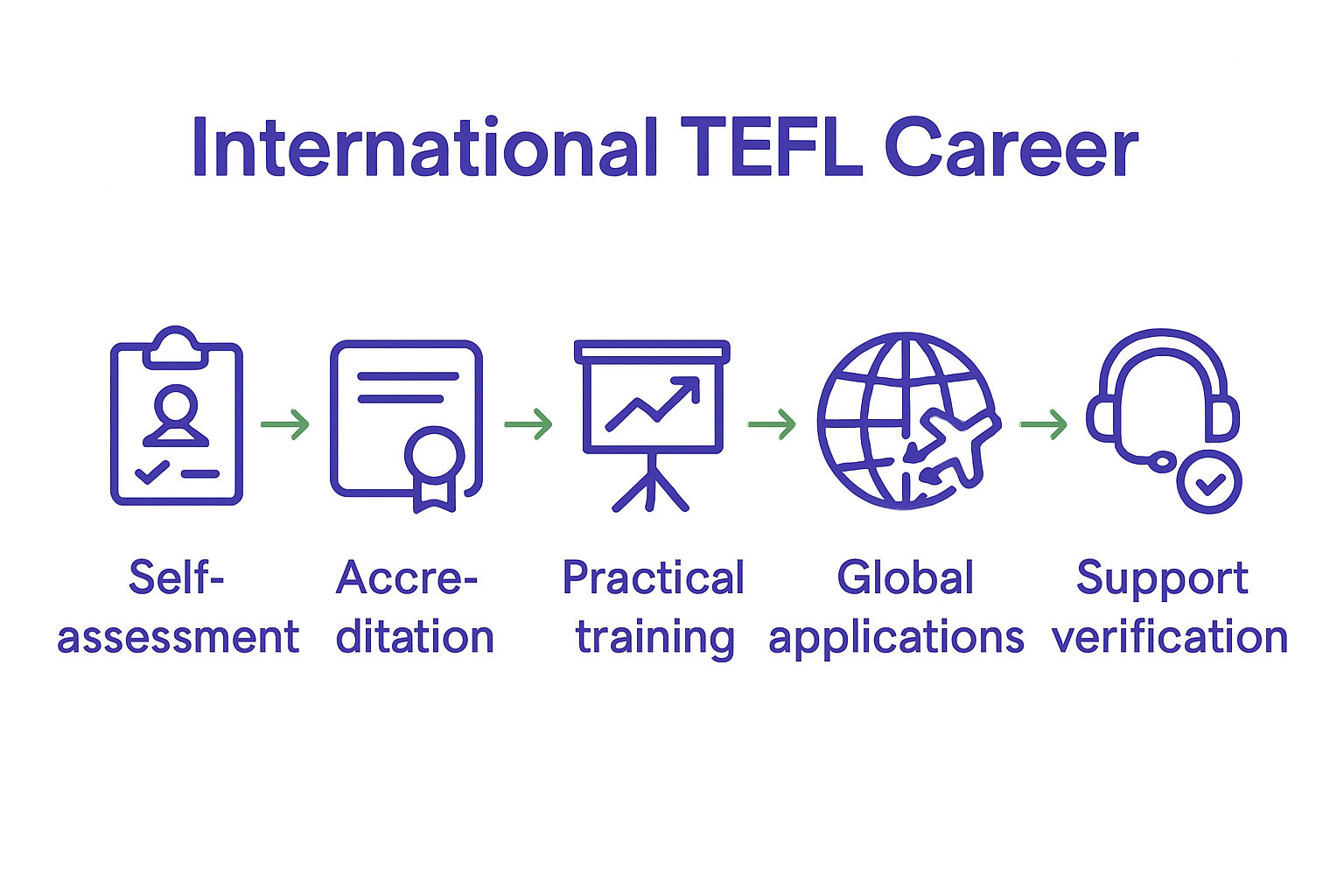
- Step 1: Assess Personal Readiness For International Teaching
- Step 2: Select The Right TEFL Or TESOL Accreditation Course
- Step 3: Complete Certification With Practical Training
- Step 4: Apply For Global Teaching Opportunities
- Step 5: Join Support Networks And Verify Placement Offers
Quick Summary
| Major Insight | Clarification |
| 1. Assess personal readiness thoroughly | Evaluate soft skills and emotional maturity to ensure adaptability in international teaching environments. |
| 2. Choose a reputable accreditation course | Select TEFL or TESOL programmes offering comprehensive training and recognised accreditation for improved employment prospects. |
| 3. Prioritise practical training experience | Engage in hands-on teaching practice to gain real-world skills essential for effective classroom management. |
| 4. Develop a strategic job application plan | Tailor your CV and approach to meet regional requirements while showcasing your cultural adaptability and professionalism. |
| 5. Verify job placements and join networks | Conduct thorough research on job offers and connect with professional networks for support and guidance in your teaching career. |
Step 1: Assess personal readiness for international teaching
Successful international teaching requires more than just language skills and academic qualifications. Preparing for a global teaching career demands honest self reflection and a comprehensive understanding of your personal capabilities and potential challenges.
Start by conducting a thorough personal assessment across multiple dimensions. Research indicates that cross-cultural communication skills are fundamental to international teaching success. 7 Key Requirements for Teaching English Abroad or Online suggests evaluating your adaptability, communication skills, and psychological resilience. Consider your comfort levels with:
- Living in unfamiliar cultural environments
- Managing potential language barriers
- Adapting to different educational systems
- Handling unexpected personal and professional challenges
A systematic self evaluation helps determine your preparedness. Assess your soft skills critically recognising that emotional intelligence and cross-cultural adaptability are as important as technical teaching competencies. Reflect on previous international experiences, travel history, and personal growth opportunities that demonstrate your capacity to thrive in diverse settings.
Warning: Do not romanticise international teaching. The reality involves significant personal and professional adjustments that require genuine self awareness and emotional maturity.
Ready to proceed? Your next step involves researching specific destination requirements and preparing targeted professional development strategies to enhance your international teaching readiness.
Step 2: Select the right TEFL or TESOL accreditation course
Choosing the appropriate TEFL or TESOL accreditation course is a critical decision that will shape your international teaching career. Your selected certification will determine your employability, professional credibility, and potential teaching opportunities worldwide.
Navigate the certification landscape by understanding key differentiators. 7 Key Types of Accredited TEFL Courses Explained recommends evaluating courses based on several crucial factors. Look for internationally recognized programmes that offer:
- Comprehensive curriculum covering language teaching methodologies
- Practical teaching experience components
- Internationally acknowledged accreditation
- Specialisation options matching your career goals
Pay close attention to accreditation standards. International bodies like Cambridge Assessment and Trinity College London ensure quality and rigour in teacher training programmes. Your chosen course should provide robust theoretical knowledge and practical skills that translate directly into classroom effectiveness.

Warning: Not all TEFL certifications are created equal. Budget courses might seem attractive but could significantly limit your future teaching prospects. Invest in a high quality programme that offers comprehensive training and global recognition.
Your next step involves researching specific course details understanding the nuanced differences between TEFL and TESOL certifications to make an informed decision about your professional development pathway.
Step 3: Complete certification with practical training
Practical training represents the critical bridge between theoretical knowledge and real world classroom effectiveness. Your certification journey must include hands-on teaching experience that transforms academic understanding into professional competence.
The most successful TEFL programmes integrate substantial practical components. 200-Hour Online TEFL Certification demonstrates that comprehensive training involves more than textbook learning. Seek certification programmes that provide:
- Minimum of six hours supervised and observed teaching practice
- Direct classroom observation opportunities
- Structured feedback mechanisms
- Simulated teaching scenarios
- Professional mentorship
The Cambridge English and Trinity College London Teaching Frameworks highlight progressive stages of teacher development, emphasising that practical experience is fundamental to building confident teaching skills. Your goal is to move beyond theoretical concepts and develop authentic classroom capabilities through structured practical training.
Warning: Theoretical knowledge alone will not prepare you for real teaching environments. Prioritise programmes offering extensive practical training that simulate actual classroom challenges and interactions.
After completing your practical training, you will be prepared to transition into your first international teaching role with confidence and professional credibility.
Step 4: Apply for global teaching opportunities
Transitioning from certification to actual employment requires strategic planning and a targeted approach to international teaching job applications. Your professional journey now moves from academic preparation to real world career positioning.
Get a job teaching English abroad reveals that successful international job hunting involves multiple strategic steps. Develop a comprehensive application strategy that includes:
- Tailoring your CV for international recruitment
- Creating compelling professional profiles
- Understanding regional recruitment requirements
- Preparing documentation for international work permits
- Building a professional digital presence
The Cambridge English and Trinity College London Teaching Frameworks recommend continuous professional development and self assessment when pursuing global opportunities. Research specific regional job markets thoroughly understanding their unique requirements cultural expectations and potential challenges.
Warning: International teaching recruitment is highly competitive. Your application must stand out through demonstrating adaptability cultural sensitivity and clear professional credentials.
Your next phase involves networking strategically connecting with international recruitment agencies and preparing for potential online and in person interviews that will launch your global teaching career.
Step 5: Join support networks and verify placement offers
Building professional connections and thoroughly validating job opportunities are critical final steps in your international teaching journey. Professional networks provide crucial support and insider knowledge that can transform your career trajectory.
7 Key Steps to Become a TEFL Teacher Abroad emphasises the importance of strategic professional networking. Develop a comprehensive approach by:
- Connecting with professional TEFL organisations
- Joining online teaching communities
- Engaging with alumni networks
- Following reputable international teaching forums
- Participating in professional development webinars
The Cambridge English and Trinity College London Teaching Frameworks underscore the significance of continuous professional learning and peer support. Verify potential placement offers meticulously by checking institutional credentials checking reviews from previous teachers and confirming contract details before making final commitments.
Warning: Not all international teaching opportunities are legitimate. Always conduct thorough background research and never commit to a position without comprehensive verification.
Your final preparation involves consolidating your professional network maintaining open communication channels and preparing mentally and practically for your upcoming international teaching adventure.
Unlock Your Global Teaching Career with Confidence and Support
Embarking on an international teaching journey means facing real challenges like adapting to new cultures, gaining practical classroom experience and securing authentic job placements. The article highlights that success depends on thorough preparation in areas such as cross-cultural communication, accredited TEFL training and smart job hunting strategies. If you are feeling overwhelmed or uncertain about how to navigate these crucial steps you are not alone.
At EBC, we specialise in guiding aspiring teachers like you through every stage of the process. Our accredited courses offer robust practical training trusted worldwide including options like Trinity CertTESOL and specialised pathways. We also provide lifelong job placement support and insider resources to help you connect with verified international teaching opportunities. Ready to turn your passion into a rewarding global career Take the next step by booking a free consultation and discover how our expert team can tailor your journey to success. Start now by visiting Book a Call and transform your international teaching ambitions into reality.
Frequently Asked Questions
What should I assess before starting my international TEFL career?
Before diving into an international TEFL career, assess your adaptability, cross-cultural communication skills, and emotional resilience. Reflect on your comfort levels with living in new cultures and managing potential language barriers. Conduct this personal assessment to identify areas for improvement and prepare yourself better.
How do I choose the right TEFL or TESOL accreditation course?
Select a TEFL or TESOL course based on its comprehensive curriculum and practical teaching experiences. Ensure it is internationally recognised and offers specialisation options aligned with your career goals. Research various courses and compare their features to find one that will enhance your employment prospects.
What practical training should be included in my TEFL certification?
Your TEFL certification should include a minimum of six hours of supervised and observed teaching practice, classroom observation opportunities, and structured feedback mechanisms. Look for programmes that provide simulated teaching scenarios to prepare you for real classroom environments. Prioritise practical training that enhances your teaching capabilities.
How can I effectively apply for international teaching opportunities?
To effectively apply for international teaching roles, tailor your CV and create compelling professional profiles focusing on your adaptability and cultural sensitivity. Understand regional recruitment requirements and prepare all necessary documentation for work permits. Develop a targeted job application strategy to stand out in a competitive market.
What steps should I take to verify job offers in international teaching?
To verify job offers, meticulously check the institutional credentials, reviews from previous teachers, and contract details before making commitments. Engage with professional networks and alumni for insights about the institution. Conduct thorough background research to ensure the legitimacy of the offered position and protect yourself from potential scams.
Recommended
- 7 Key Steps to Become a TEFL Teacher Abroad Successfully – EBC TEFL courses
- What Is International TEFL? Complete Guide and Benefits – EBC Trinity CertTESOL and TEFL courses
- Master the TEFL Job Placement Process for Global Teaching – EBC TEFL courses
- TESOL Certification Steps: Guide to Global English Teaching – EBC Trinity CertTESOL and TEFL courses