
More than 35,000 teachers pursue international opportunities every year, seeking real classroom experience outside the United Kingdom. For those considering a TEFL internship, understanding how these placements build both professional teaching skills and cultural awareness makes a measurable difference. Discover what sets a TEFL internship apart from traditional classroom roles, and see how hands-on experience abroad prepares educators for a truly global career.
Table of Contents
- Defining A TEFL Internship And Its Purpose
- Key Types Of TEFL Internships Worldwide
- How TEFL Internships Work In Practice
- Entry Requirements And Candidate Expectations
- Paid Vs Unpaid TEFL Internships Compared
- Career Outcomes And Long-Term Opportunities
Key Takeaways
| Point | Details |
| TEFL Internships | Provide practical classroom training combined with cultural exchange for aspiring English teachers. |
| Diverse Opportunities | Include various types such as university placements, corporate training, and online teaching, catering to different career goals. |
| Entry Requirements | Typically require a Bachelor’s degree, TEFL certification, and relevant professional competencies for successful candidates. |
| Career Advancement | Serve as a stepping stone for diverse career pathways in international education, including advanced roles in curriculum development and administration. |
Defining a TEFL Internship and Its Purpose
A TEFL internship represents a structured professional learning experience designed specifically for aspiring English language teachers seeking practical classroom training and international exposure. Unlike traditional academic placements, these internships combine theoretical knowledge with immersive real-world teaching opportunities, allowing participants to translate academic learning into genuine classroom skills. International TEFL experiences provide participants with unique opportunities to develop professional teaching competencies while experiencing cultural exchange.
TEFL internships typically involve participants working in educational settings across different countries, delivering English language instruction to students of various ages and proficiency levels. These programmes offer comprehensive training that goes beyond standard certification, integrating practical teaching methodologies, classroom management techniques, and cross-cultural communication skills. Participants gain hands-on experience in designing lesson plans, managing student interactions, and adapting instructional strategies to diverse learning environments.
The primary purpose of a TEFL internship extends beyond mere language instruction. These programmes aim to develop well-rounded educators who can navigate complex international educational landscapes. Interns learn to create engaging learning experiences, understand different educational systems, and develop adaptable teaching approaches that transcend traditional academic boundaries. By providing structured mentorship, real-world teaching opportunities, and comprehensive professional development, TEFL internships transform theoretical knowledge into practical expertise.
Pro Teaching Tip: Research potential internship locations thoroughly and understand their specific educational requirements and cultural contexts before applying, as preparation is key to maximising your international teaching experience.
Key Types of TEFL Internships Worldwide
TEFL internships represent diverse opportunities for aspiring educators, with multiple specialised programmes designed to cater to different professional development needs. International TEFL career paths offer comprehensive options ranging from short-term summer placements to comprehensive year-long immersive experiences across various global educational settings.
The primary categories of TEFL internships include:
- University Internships: Placements within higher education institutions, providing exposure to academic English teaching environments
- Corporate Language Training: Internships focused on business English instruction in professional corporate settings
- K-12 School Placements: Teaching opportunities in primary and secondary schools across different international educational systems
- Online Teaching Internships: Digital platforms offering remote teaching experiences with global student populations
- Volunteer Teaching Programmes: Community-based internships supporting educational development in underserved regions
Each internship type offers unique advantages, enabling participants to develop specialised skills tailored to specific teaching contexts. Some programmes provide comprehensive support including visa assistance, accommodation arrangements, and ongoing professional mentorship, making international teaching experiences more accessible for emerging educators.
To help clarify the distinctions between prominent TEFL internship options, here is a comparison of core internship types:
| Internship Type | Typical Setting | Key Benefit | Ideal For |
| University Internships | Higher education institutions | Exposure to academic standards | Graduates seeking academic roles |
| Corporate Language Training | Offices and businesses | Business English specialisation | Aspiring corporate trainers |
| K-12 School Placements | Primary/secondary schools | Experience with young learners | Those targeting school settings |
| Online Teaching Internships | Remote, digital platforms | Flexible global reach | Tech-savvy and remote-first tutors |
| Volunteer Teaching Programmes | Community projects | Cultural and societal impact | Individuals motivated by service |
Pro Teaching Tip: Select an internship that aligns closely with your long-term career objectives and offers structured professional development opportunities beyond basic classroom instruction.
How TEFL Internships Work in Practice
TEFL internships operate through structured programmes designed to integrate theoretical knowledge with hands-on teaching experience. Teaching practice strategies reveal a systematic approach that typically involves comprehensive preparation, classroom delivery, and reflective assessment. Most internships follow a carefully crafted progression that transforms academic learning into practical professional skills.
The practical implementation of a TEFL internship generally encompasses several key stages:
- Pre-Departure Preparation
- Completion of initial TEFL certification
- Cultural awareness training
- Language preparation for the target country
- Documentation and visa processing
- Orientation and Induction
- Introduction to local educational systems
- Classroom management techniques
- Localised teaching methodologies
- Understanding cultural communication nuances
- Supervised Teaching Experience
- Gradual classroom responsibility progression
- Mentored lesson planning
- Continuous performance feedback
- Reflective teaching practices
Internship programmes typically provide robust support structures, including accommodation arrangements, local coordinator assistance, and ongoing professional development opportunities. These comprehensive frameworks ensure that participants receive not just teaching experience, but holistic professional preparation for international education careers.

Pro Teaching Tip: Approach your TEFL internship as a professional learning journey, maintaining a growth mindset and being open to constructive feedback from experienced mentors and local educators.
Entry Requirements and Candidate Expectations
Successful TEFL internship candidates must meet specific academic and professional prerequisites designed to ensure programme effectiveness and participant readiness. TEFL job interview preparation highlights the importance of understanding these comprehensive entry requirements before applying to international teaching programmes.
Typical entry requirements for TEFL internships include:
Academic Qualifications
- Bachelor’s degree from an accredited institution (in any discipline)
- Native or near-native English language proficiency
- Minimum age requirement of 20-24 years
- Valid passport with minimum six months’ validity
Professional Competencies
- Completed TEFL/TESOL certification (minimum 120 hours)
- Basic understanding of second language acquisition principles
- Demonstrated intercultural communication skills
- Strong classroom management potential
- Adaptability and resilience in diverse educational environments
Programme selectors typically evaluate candidates holistically, assessing not just academic credentials but also personal characteristics such as communication skills, cultural adaptability, and genuine passion for international education. Successful applicants demonstrate a combination of academic preparation, professional motivation, and personal flexibility that aligns with the demanding nature of international teaching experiences.
Pro Teaching Tip: Prepare a comprehensive application portfolio showcasing your language skills, teaching aspirations, and cross-cultural experiences to significantly enhance your internship candidacy.
Paid vs Unpaid TEFL Internships Compared
The landscape of TEFL internships presents diverse opportunities ranging from fully funded programmes to volunteer-based experiences, each offering unique advantages and challenges for aspiring international educators. Global TEFL teaching salaries provide critical insights into the financial considerations that differentiate paid and unpaid internship opportunities.
Paid TEFL Internships Characteristics
- Competitive monthly stipend
- Comprehensive benefits package
- Professional development opportunities
- Full legal work permissions
- Structured career progression
Unpaid TEFL Internships Characteristics
- Volunteer-based experiences
- Cultural immersion opportunities
- Limited financial compensation
- Potential accommodation and living expense support
- Valuable teaching experience for portfolio building
While paid internships offer financial stability and professional recognition, unpaid internships provide unique cultural engagement and skill development opportunities. The choice depends on individual career goals, financial circumstances, and personal learning objectives. Some programmes offer hybrid models combining modest financial compensation with extensive professional training, bridging the gap between traditional paid and unpaid internship structures.
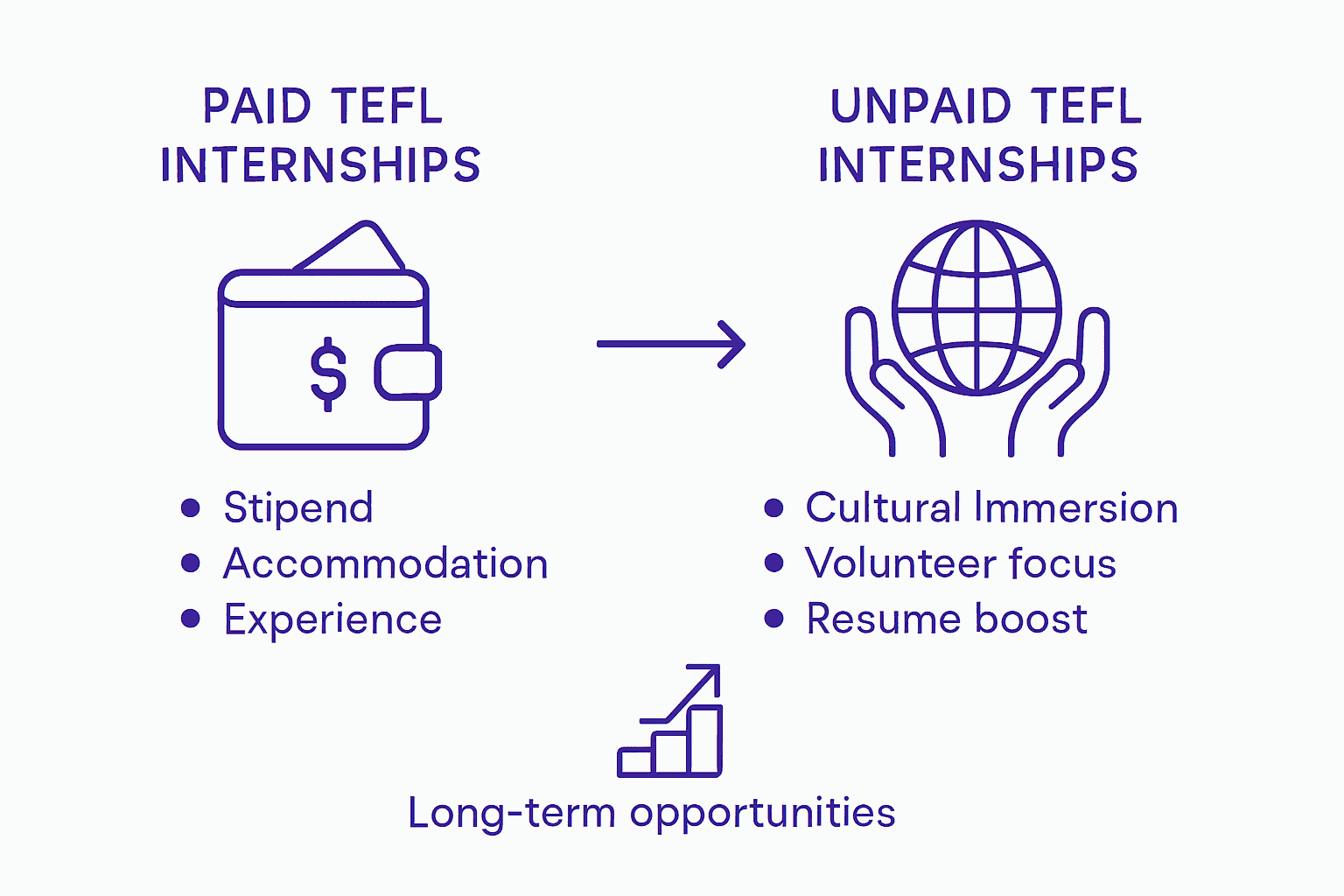
The following table summarises the core factors to weigh when considering paid versus unpaid TEFL internships:
| Factor | Paid Internships | Unpaid Internships |
| Financial Support | Regular stipend or salary | May cover living costs, no salary |
| Career Advancement | Enhanced CV, formal mentoring | Experience-driven, builds soft skills |
| Cultural Immersion | Often less extensive due to structured support | Deep local integration through volunteering |
| Entry Competition | Highly competitive, more rigorous | Broader access, focus on motivation |
Pro Teaching Tip: Thoroughly research the total value proposition of each internship, considering not just monetary compensation but also professional development, cultural exposure, and long-term career advancement potential.
Career Outcomes and Long-Term Opportunities
TEFL internships serve as transformative professional pathways that extend far beyond initial teaching experiences, offering substantial career development potential for ambitious educators. International TEFL career steps demonstrate the remarkable progression opportunities available to dedicated professionals who strategically leverage their initial internship experiences.
Career trajectories for TEFL professionals typically encompass several significant advancement stages:
Early Career Development
- Entry-level teaching positions
- International school placements
- Language centre employment
- Private tutoring opportunities
- Online teaching platforms
Advanced Career Progression
- Educational administration roles
- Curriculum development positions
- Teacher training and mentorship
- Academic programme coordination
- International educational consultancy
- Higher education lecturer roles
Successful TEFL professionals often transition from classroom teaching into specialised roles that leverage their cross-cultural communication skills, pedagogical expertise, and international experience. The global demand for English language education creates multiple career pathways, enabling professionals to design personalised career trajectories that align with their individual professional aspirations and personal interests.
Pro Teaching Tip: Document your teaching experiences, collect comprehensive professional references, and continuously expand your linguistic and pedagogical skill set to maximise your long-term career potential in international education.
Unlock Your TEFL Internship Potential with Accredited Trinity College London Training
Embarking on a TEFL internship is a crucial step that bridges theoretical knowledge with real-world teaching experience. If you are looking to transform your passion for teaching English abroad into a rewarding career, overcoming challenges such as securing recognised certification, understanding international teaching requirements, and gaining practical experience is essential. At EBC TEFL, we address these key goals by offering Trinity College London accredited courses that provide comprehensive, hands-on teacher training recognised globally.

Explore our tailored 1-year study and work abroad programmes in Spain, France, and Italy that combine TEFL/TESOL certification, immersive language study, full visa support, and invaluable part-time teaching or work opportunities. With our free lifetime job placement assistance and global employment support, you will receive unmatched professional guidance to launch your international teaching career confidently. Take the next step towards realising your teaching aspirations by booking a free consultation today at EBC TEFL. Discover detailed course descriptions, graduate success stories, and personalised pathways by visiting Trinity CertTESOL training and our work abroad programmes. Your global teaching journey starts here.
Frequently Asked Questions
What is a TEFL internship?
A TEFL internship is a structured professional learning experience for aspiring English language teachers, combining theoretical knowledge with practical classroom training in various international educational settings.
What are the benefits of participating in a TEFL internship?
Participating in a TEFL internship enhances practical teaching skills, cultural understanding, and educational competencies while providing opportunities for professional mentorship and career advancement in international education.
Are TEFL internships paid or unpaid?
TEFL internships can be either paid or unpaid. Paid internships typically offer a monthly stipend and benefits, while unpaid internships may provide experiential learning and cultural immersion opportunities without regular financial compensation.
What qualifications do I need for a TEFL internship?
Candidates typically require a bachelor’s degree, completed TEFL/TESOL certification (minimum 120 hours), native or near-native English proficiency, and strong intercultural communication skills to qualify for a TEFL internship.
Recommended
- Teaching Practice: Everything You Need to Know – EBC TEFL courses
- What Is International TEFL? Complete Guide and Benefits – EBC Trinity CertTESOL and TEFL courses
- 7 Top TEFL Course Tips for Aspiring Global English Teachers – EBC TEFL courses
- 11 good reasons to take a TEFL course – EBC Trinity CertTESOL