
Choosing an initial qualification is an important step towards a career in English language teaching. The qualification you choose can influence which teaching positions you can apply for, how well prepared you feel in the classroom and how you develop professionally.
What Is the Trinity CertTESOL?
The Trinity Certificate in Teaching English to Speakers of Other Languages (CertTESOL) is a highly respected, internationally recognised teaching qualification that opens doors to English language teaching opportunities worldwide. Employers know what it represents: rigorous training, assessed teaching practice and the professional skills needed to teach English effectively. Rather than having to convince recruiters that your certificate meets their standards, you can apply with a qualification that many employers already recognise and trust, including the British Council for relevant teaching positions.
What makes the Trinity CertTESOL valuable to aspiring English language teachers? This guide explores its professional advantages, international recognition, practical training and potential career opportunities. It also explains what the qualification can and cannot do for your career.
Table of Contents
- Why Is the Trinity CertTESOL Valued?
- International Recognition and Employer Acceptance
- Recognition by the British Council
- Practical Teaching Experience
- Career Opportunities in English Language Teaching
- Build Confidence and Professional Skills
- A Foundation for Further Professional Development
- Learn from Trinity CertTESOL Graduates
- Trinity CertTESOL vs CELTA
- Is the Trinity CertTESOL Worth the Investment?
- Frequently Asked Questions
- Take the Next Step
Why Is the Trinity CertTESOL Valued?
The Trinity CertTESOL is an initial professional qualification for people who want to teach English to speakers of other languages. Trinity College London awards the qualification through its validated training providers.
Its value comes from the combination of recognised standards, practical teaching and assessed professional development. Trainees do not simply study teaching theory. They also plan lessons, teach real learners and evaluate their classroom performance.
This combination helps prepare new teachers for the demands of actual teaching environments. It also gives employers evidence that applicants have completed structured training and demonstrated practical teaching skills.
The qualification is particularly relevant to:
- Graduates who want to begin a career in English language teaching.
- People who want to change careers and enter the education sector.
- Applicants who want to teach English in their home country or abroad.
- People with informal teaching experience who want a recognised initial qualification.
- Prospective teachers who want a practical introduction to language education.
International Recognition and Employer Acceptance
One of the main advantages of the Trinity CertTESOL is its standing in the English language teaching profession. Trinity College London is an established awarding organisation, and the qualification has international recognition.
The CertTESOL sits at Level 5 on the Regulated Qualifications Framework (RQF) in England. This provides a regulated benchmark for its academic level and assessment standards.
Trinity also validates the centres that deliver the qualification. This quality assurance process helps maintain consistent standards across approved training providers.
For employers, a recognised initial qualification provides evidence of relevant professional preparation. It shows that an applicant has studied language teaching methodology and completed assessed teaching practice.
However, recognition does not mean that every employer has identical recruitment requirements. Some employers also ask for a university degree, previous teaching experience, specific language proficiency or other qualifications.
Before applying for a position, check the employer’s requirements and the rules that apply in your intended teaching destination.
You can verify the qualification through Trinity College London’s official CertTESOL information. You can also consult the Ofqual Register of Regulated Qualifications for regulatory details.
Recognition by the British Council
Recognition by the British Council provides a particularly useful example of the qualification’s professional standing.
The British Council identifies the Cambridge CELTA and Trinity CertTESOL as examples of suitable certificate-level qualifications for its English language teaching professionals. Its published teacher requirements also refer to degree-level education, teaching experience and strong English proficiency.
This distinction matters. The Trinity CertTESOL can meet the certificate-level qualification requirement, but it does not automatically make someone eligible for every British Council teaching position.
Individual vacancies may require additional experience, a university degree, particular teaching skills or specialist knowledge. Requirements can also vary between countries and teaching centres.
Nevertheless, the fact that the British Council names the Trinity CertTESOL alongside the CELTA is meaningful evidence of its standing as an initial English language teaching qualification.
You can read the British Council’s published minimum requirements for English language teachers to understand how it approaches teacher qualifications.
Practical Teaching Experience
A major advantage of the Trinity CertTESOL is its emphasis on practical teaching. Effective language teachers need more than a sound knowledge of English. They must also know how to help learners understand and use the language.
The qualification combines teaching theory with supervised practice. Trainees plan and deliver lessons to real learners while experienced tutors observe their work.

Trinity specifies a minimum of six hours of assessed teaching practice with real learners. This gives trainees an opportunity to apply their learning in a classroom setting.
During practical teaching, you develop skills such as:
- Planning lessons with clear learning aims.
- Explaining grammar, vocabulary and pronunciation.
- Giving clear instructions and managing classroom activities.
- Responding to learners’ questions and difficulties.
- Adapting activities to different language levels.
- Evaluating lessons and acting on feedback.
You also observe experienced teachers and reflect on the learning process. These activities help you understand the challenges that learners face and the decisions teachers make in response.
This practical foundation can be particularly valuable if you have never taught English before. It gives you experience to discuss when applying for your first teaching position.
Career Opportunities in English Language Teaching
The Trinity CertTESOL can help you apply for a range of English language teaching positions. Its professional recognition and practical focus make it relevant to employers in different educational settings.
Depending on your experience and the employer’s requirements, possible career directions include:
- Private language schools: Teach general English or language courses to adult and young learners.
- International teaching positions: Apply to language schools and education providers in other countries.
- Online English teaching: Explore opportunities with online schools and independent teaching platforms.
- Private tuition: Provide individual or small-group English lessons.
- Business English: Develop specialist skills for teaching English in professional contexts.
- Academic English: Explore further training for teaching learners who need English for education.
Your opportunities will depend on more than the qualification itself. Employers may consider your degree, experience, language proficiency and suitability for the learners they teach.
Work permission also matters. Some countries require specific visas or additional documents before you can take up employment. Always check the relevant immigration and recruitment rules.
Teaching English abroad
For many trainees, the opportunity to work abroad is one of the main reasons for taking the Trinity CertTESOL.
A recognised initial qualification can help you meet the requirements of overseas language schools. It can also give employers evidence that you have completed practical teacher training.
However, requirements vary between destinations. Some employers accept an initial teaching qualification, while others ask for a degree, experience or additional credentials.
Explore our guide to certification for teaching English abroad for more information about entering the profession internationally.
Finding your first teaching position
Once you qualify, research employers and the types of positions that interest you. Read job advertisements carefully and identify the qualifications and experience each employer requests.
Use your course experience when preparing applications. You can discuss your teaching practice, lesson planning, learner feedback and professional development.
Networking can also help you discover vacancies and learn about different teaching environments. Our guide to networking to find jobs and professional opportunities offers further advice.
You can also read our practical guide to finding English teaching jobs abroad.
Build Confidence and Professional Skills
Starting a teaching career can feel challenging, especially if you have little classroom experience. The Trinity CertTESOL helps you develop the skills and confidence needed to approach your first teaching roles.
Practical teaching gives you opportunities to try different techniques and learn from your results. Tutor feedback helps you identify what works well and what you should improve.

By the end of the course, you will have worked on several important professional skills:
- Lesson planning: Set clear aims and select activities that support learning.
- Classroom management: Organise activities and encourage learner participation.
- Language awareness: Analyse English and explain language points accurately.
- Communication: Give clear instructions and respond to learner questions.
- Reflective practice: Evaluate your teaching and use feedback to improve.
- Adaptability: Respond to different learner needs and classroom situations.
These skills have value beyond your initial training. They can support your work as you gain experience and take on new teaching responsibilities.
A Foundation for Further Professional Development
The Trinity CertTESOL is an initial teaching qualification. It provides a foundation for entering the profession, but professional development continues throughout a teaching career.
After gaining classroom experience, you may decide to develop specialist knowledge or pursue a higher-level qualification.
Possible areas of development include:
- Teaching English to young learners.
- Teaching business English.
- Preparing learners for English language examinations.
- Teaching English for academic purposes.
- Developing online teaching skills.
- Taking on teacher training or academic management responsibilities.
Trinity offers further qualifications for teachers who want to develop specific skills or progress professionally. The right option will depend on your experience and career aims.
For example, practising teachers may wish to explore the Trinity CertPT course as one possible route for further development.
The important point is that the CertTESOL does not limit your career to one type of teaching role. It gives you an initial professional foundation that you can build on as your experience grows.
Learn from Trinity CertTESOL Graduates
Qualification descriptions explain what a course teaches. Graduate experiences can show how people apply that training in real situations.
Listening to former trainees can help you understand the challenges of the course, the value of teaching practice and the different directions a teaching career can take.
For example, graduate interviews may describe how someone moved into English language teaching, prepared for their first classroom role or adapted to working in another country.
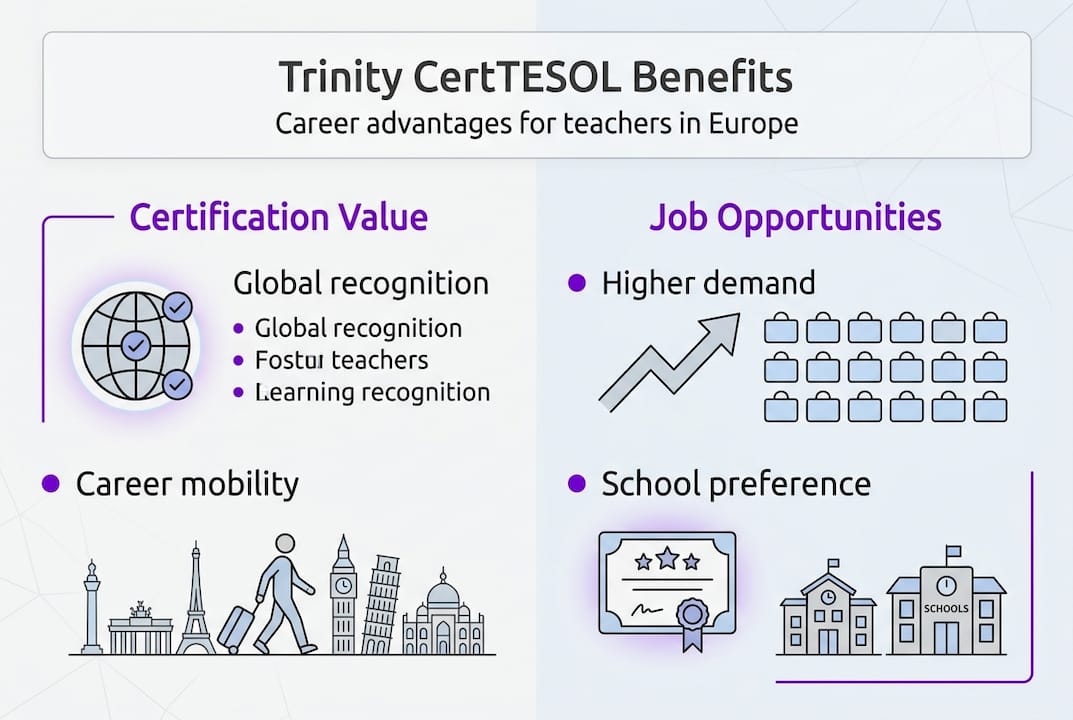
Explore the EBC Knowledge Centre to read graduate stories and watch interviews. These first-hand accounts can give you a more realistic picture of teacher training and career development.
Remember that individual experiences will differ. A graduate’s success does not guarantee the same outcome for every trainee. Your opportunities will depend on your circumstances, experience and the requirements of employers.
Trinity CertTESOL vs CELTA
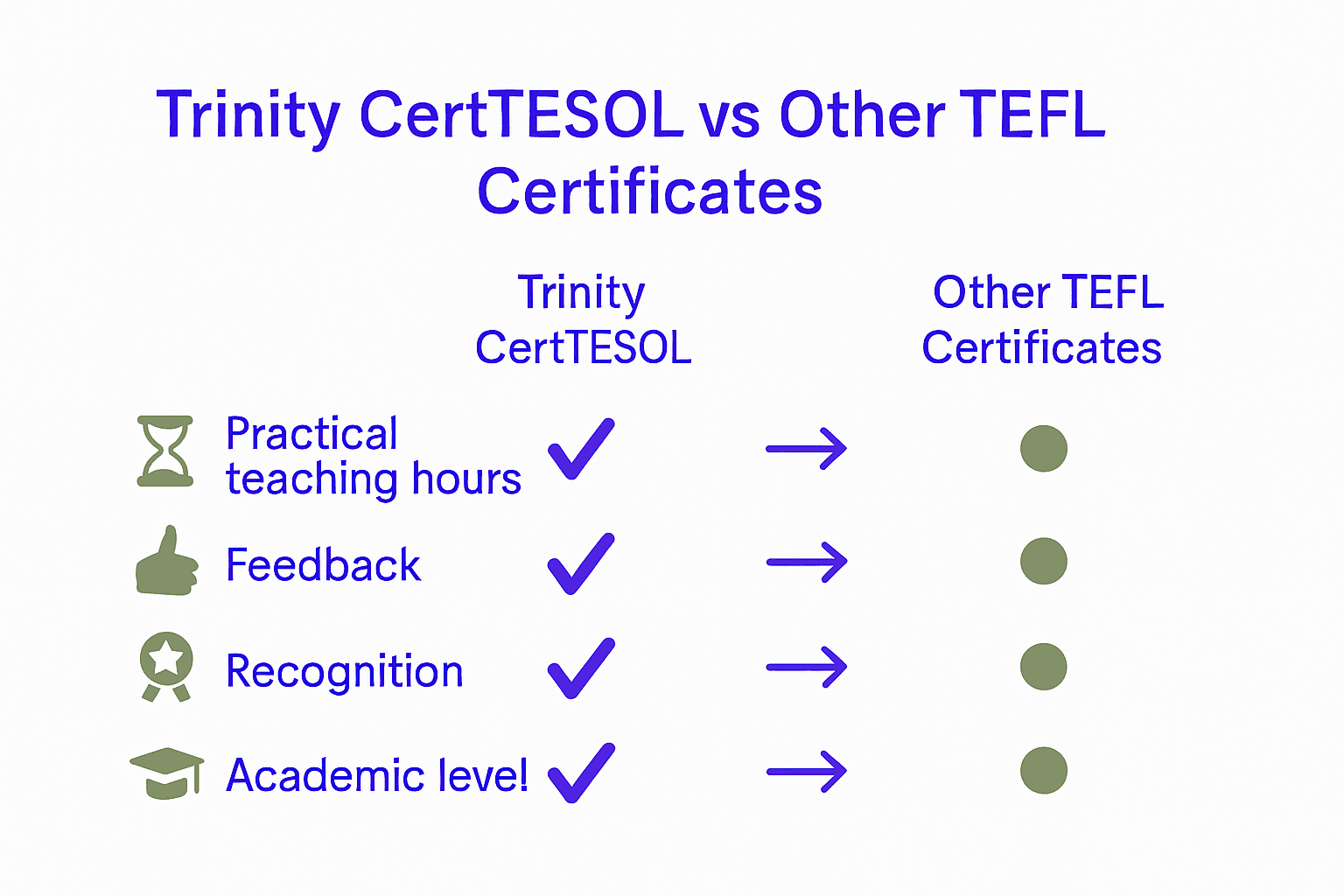
People choosing an initial English language teaching qualification often compare the Trinity CertTESOL with the Cambridge CELTA. Both are established qualifications for people who want to enter the profession.
They share several important features. Both include language awareness, teaching methodology and assessed teaching practice with real learners.
| Feature | Trinity CertTESOL | CELTA |
|---|---|---|
| Awarding organisation | Trinity College London | Cambridge English |
| Qualification purpose | Initial training for English language teachers | Initial training for English language teachers |
| Practical teaching | Assessed teaching practice with real learners | Assessed teaching practice with real learners |
| Qualification level | RQF Level 5 | RQF Level 5 |
| Professional recognition | Widely recognised by employers in English language teaching | Widely recognised by employers in English language teaching |
Neither qualification is automatically the right choice for every applicant. Consider the course structure, training centre, tutor support, assessment requirements and your own learning preferences.
Read our detailed guide to the difference between Trinity CertTESOL and CELTA before making your decision.
Is the Trinity CertTESOL Worth the Investment?
The value of a teaching qualification depends on your goals and the opportunities you want to pursue. The Trinity CertTESOL may be a strong investment if you want structured training and a recognised route into English language teaching.
It offers several clear advantages:
- It provides an established Level 5 teaching qualification.
- It combines teaching theory with practical classroom experience.
- It includes assessed teaching practice with real learners.
- It meets the certificate-level qualification requirement for many employers.
- It can strengthen applications for suitable teaching positions.
- It provides a foundation for further professional development.
However, you should also consider the course fees, time commitment and your personal circumstances. The qualification does not guarantee a job, a particular salary or permission to work in another country.
Before enrolling, compare approved training providers and check what their fees include. Ask about tutor support, teaching practice arrangements, assessment and any additional costs.
For a wider overview of the course and its requirements, visit our complete Trinity CertTESOL course guide.
Frequently Asked Questions
Is the Trinity CertTESOL internationally recognised?
Yes. Trinity College London describes the CertTESOL as an internationally recognised teaching qualification. Many employers accept it as an initial qualification for English language teaching. However, individual employers and countries may set additional requirements.
Does the British Council accept the Trinity CertTESOL?
Yes. The British Council names the Trinity CertTESOL alongside the Cambridge CELTA as an example of a suitable certificate-level teaching qualification. Applicants must still meet the other requirements for each position.
Does the Trinity CertTESOL guarantee a teaching job abroad?
No. No teaching qualification can guarantee employment. However, the Trinity CertTESOL is a highly valued, respected and recognised qualification that can give you strong support when applying for suitable teaching positions abroad. Employers may also consider your experience, degree, English proficiency and visa eligibility.
Does the Trinity CertTESOL include practical teaching?
Yes. The qualification includes a minimum of six hours of assessed teaching practice with real learners. Trainees also plan lessons, receive feedback and reflect on their teaching.
Do I need previous teaching experience?
No. The Trinity CertTESOL is an initial teacher training qualification. It is designed for people with little or no previous experience of teaching English.
Can non-native English speakers take the Trinity CertTESOL?
Yes. English does not have to be your first language. However, applicants must demonstrate a high level of English proficiency and meet the course provider’s entry requirements.
Is the Trinity CertTESOL better than CELTA?
Neither qualification is automatically better for every applicant. Both provide recognised initial teacher training and include assessed teaching practice. Compare their course specifications, providers and delivery arrangements before choosing.
Can I use the Trinity CertTESOL to teach online?
The qualification can support applications for some online English teaching positions. However, employers may ask for additional experience or online teaching skills. Check the requirements of each platform or employer.
Take the Next Step Towards Teaching English
The Trinity CertTESOL offers more than a certificate. It gives aspiring teachers structured training, supervised classroom experience and a recognised professional foundation.
Its recognition by employers, including the British Council, makes it a strong option for people who want to enter English language teaching. Its practical focus also helps trainees develop skills they can continue to use throughout their careers.
The right training provider matters. Compare course formats, teaching practice arrangements, tutor support and fees before making your decision.
If you would like to discuss your options, book a call with EBC. We can help you understand the training route and decide whether the Trinity CertTESOL fits your professional goals.
Recommended
- 7 Key Advantages of the Trinity CertTESOL for Aspiring Teachers – EBC TEFL courses
- Trinity CertTESOL Step by Step Guide for Global Educators
- Trinity CertTESOL Certification: Boosting Global Teaching Careers
- CELTA vs Trinity CertTESOL: Which Is the Best Qualification?
- CELTA and Trinity CertTESOL: Course Requirements