
Every year, thousands of students and aspiring teachers look beyond their borders for educational adventure and professional growth. Study Abroad TEFL Programmes have become a popular choice because they unlock new cultural experiences while delivering valuable teaching credentials. With more than 65 percent of British TEFL participants finding global job opportunities within six months, these programmes offer a clear path to teaching English abroad and building essential international skills.
Table of Contents
- Defining Study Abroad TEFL Programmes
- Variations: Certificates, Diplomas And Degrees
- How Accredited TEFL Courses Operate
- Key Requirements And Application Process
- Benefits Of One-Year Study And Work Placements
- Global Job Support And Lifelong Career Opportunities
Key Takeaways
| Point | Details |
|---|---|
| Study Abroad TEFL Programmes | These programmes combine TEFL certification with cultural immersion, offering educators practical training alongside international experience. |
| Qualification Variations | TEFL qualifications range from certificates to degrees, providing diverse pathways for career advancement in language teaching. |
| Accreditation Importance | Choose TEFL courses accredited by recognised bodies to ensure quality education and professional credibility in the global market. |
| Global Job Support | Successful TEFL programmes offer lifelong career support, including job placement assistance and continuous professional development resources to enhance employability. |
Defining Study Abroad TEFL Programmes
Study Abroad TEFL Programmes represent transformative educational experiences that combine professional language teaching certification with international immersion. These comprehensive programmes enable aspiring educators to simultaneously develop professional skills and explore new cultural landscapes through structured academic and practical training.
A student exchange programme fundamentally allows participants to study abroad at partner institutions, providing unique opportunities to experience different educational systems and cultural environments. Student exchange opportunities enable individuals to develop global perspectives while acquiring professional teaching credentials. In the context of TEFL, these programmes specifically focus on preparing teachers to instruct English language learners in international settings.
TEFL programmes typically combine theoretical training with practical teaching experiences, offering participants multiple pathways to professional development. Participants can choose between online and in-person certification routes, with online TEFL training regulated by professional bodies like Qualifi in the United Kingdom and AQC in the United States. These programmes provide structured curricula designed to equip educators with essential language teaching methodologies, classroom management techniques, and cross-cultural communication skills.
Pro Teaching Tip: Research and select TEFL programmes with internationally recognised accreditations that offer practical teaching placements, ensuring you gain both theoretical knowledge and real-world classroom experience.
Key features of comprehensive Study Abroad TEFL Programmes include:
- Professional language teaching certification
- Cultural immersion experiences
- International teaching opportunities
- Practical classroom training
- Global networking possibilities
By combining professional development with international travel, these programmes offer an unparalleled pathway for educators seeking to launch their global teaching careers.
Variations: Certificates, Diplomas and Degrees
The landscape of TEFL professional qualifications encompasses multiple levels of certification, each offering distinct pathways for language teaching professionals. These variations range from entry-level certificates to advanced academic credentials, providing educators with flexible options for career development and specialisation.
At the foundational level, TEFL certificates represent introductory qualifications typically requiring 120-170 hours of training. These programmes provide essential pedagogical skills and classroom techniques for aspiring language instructors. Intermediate credentials include more comprehensive diplomas, which demand deeper theoretical understanding and practical teaching experience. Advanced teaching diplomas like the DELTA represent high-level qualifications specifically designed for experienced educators seeking professional advancement.
The progression of TEFL qualifications typically follows a structured hierarchy: initial certificates serve as entry points, professional diplomas offer advanced training, and postgraduate degrees provide comprehensive academic and research-oriented preparation. Full academic degrees in TEFL or Applied Linguistics represent the pinnacle of professional development, often incorporating extensive research components and specialised teaching methodologies.
Each qualification level offers unique benefits and career opportunities:
- Certificates: Quick entry into teaching
- Diplomas: Advanced pedagogical training
- Degrees: Academic research and specialised roles
- Postgraduate qualifications: Leadership and educational management positions
Pro Teaching Tip: Select your TEFL qualification strategically by aligning the certification level with your specific career goals and target teaching markets.
The choice between certificates, diplomas, and degrees depends on individual career aspirations, prior teaching experience, and desired international mobility. Professionals should carefully evaluate their long-term objectives when selecting a TEFL qualification pathway.
To better understand which TEFL qualification suits your aspirations, see this comparison:
| Qualification Type | Typical Duration | Ideal Candidate Profile | Common Career Outcome |
|---|---|---|---|
| Certificate | 4–8 weeks | Beginners, new teachers | Entry-level teaching |
| Diploma | 3–12 months | Experienced teachers | Senior teaching roles |
| Degree | 1–3 years | Academics, researchers | Lecturer, specialist |
How Accredited TEFL Courses Operate
Accredited TEFL courses represent structured professional training programmes designed to equip educators with comprehensive language teaching skills and internationally recognised qualifications. These programmes follow rigorous academic and professional standards, ensuring participants receive high-quality pedagogical preparation for global English language instruction.

The operational framework of accredited TEFL courses typically encompasses several critical components. TEFL accreditation processes involve systematic assessment of curriculum, teaching methodologies, instructor qualifications, and overall programme effectiveness. Most accredited programmes incorporate a blend of theoretical learning and practical teaching experiences, allowing participants to develop both academic understanding and real-world classroom competencies.
Structurally, these courses are designed with progressive learning modules that systematically build teaching expertise. Participants engage in comprehensive training that covers linguistic theory, classroom management techniques, learner assessment strategies, and cross-cultural communication skills. Advanced programmes often include specialised modules addressing digital teaching technologies, curriculum development, and adaptation of instructional approaches for diverse learning environments.
Key operational elements of accredited TEFL courses include:
- Standardised curriculum development
- Rigorous instructor certification
- Practical teaching practicum
- Assessment and quality control mechanisms
- Continuous professional development pathways
Pro Teaching Tip: Prioritise TEFL programmes with robust accreditation from internationally recognised educational bodies to ensure your qualification holds genuine professional credibility.
Successful TEFL course participants emerge with a sophisticated understanding of language pedagogy, equipped with adaptable teaching strategies and the confidence to navigate complex international educational contexts.
Key Requirements and Application Process
The application process for TEFL programmes demands careful preparation and understanding of specific academic and professional prerequisites. Prospective candidates must navigate a comprehensive set of requirements designed to ensure they possess the foundational skills necessary for successful language teaching.
Recognised TEFL qualifications typically require candidates to meet several critical criteria. Most programmes expect applicants to have a minimum of an undergraduate degree, demonstrate advanced English language proficiency, and possess strong communication and interpersonal skills. Entry-level certifications like the Trinity CertTESOL are specifically designed for individuals with little to no prior teaching experience, providing a structured pathway into language education.
The standard application process involves multiple stages of assessment and verification. Candidates usually begin by submitting a comprehensive application package, which includes academic transcripts, proof of language proficiency, a detailed personal statement, and potentially letters of recommendation. Many programmes conduct interviews to evaluate candidates’ motivation, communication abilities, and potential for successful language instruction.
Critical application requirements include:
- Undergraduate degree (in any discipline)
- Native or near-native English language proficiency
- Minimum age requirement (typically 18+)
- Passport for international programmes
- Application fee payment
- Personal statement or motivation letter
- Optional: Teaching experience or language learning background
Pro Teaching Tip: Prepare a comprehensive portfolio highlighting your language skills, academic background, and personal motivation before applying, as this can significantly strengthen your application.
Successful applicants demonstrate not only academic capability but also a genuine passion for cross-cultural communication and language education. The application process serves as a critical filter, ensuring that only committed and capable individuals enter the professional language teaching pathway.
Benefits of One-Year Study and Work Placements
One-Year Study and Work Placements offer transformative professional and personal development opportunities for aspiring educators seeking international experience. These comprehensive programmes combine structured academic training with real-world teaching and professional exposure, creating a holistic pathway to global career advancement.
Student exchange programmes provide unprecedented opportunities to experience diverse cultural environments, develop global perspectives, and build comprehensive professional skills. Participants engage in immersive learning experiences that extend far beyond traditional classroom-based training, allowing them to simultaneously acquire language teaching credentials and develop profound cross-cultural understanding.
The multifaceted benefits of these placements encompass professional, linguistic, and personal growth dimensions. Participants gain internationally recognised teaching qualifications while experiencing direct professional immersion in multicultural educational settings. Road2Spain programme participants, for instance, benefit from integrated language study, teacher training, and professional work opportunities that create a comprehensive development experience.
Key advantages of one-year study and work placements include:
- Internationally recognised teaching certification
- Language immersion and fluency development
- Professional work experience
- Cultural adaptation skills
- Enhanced global employability
- Personal and professional network expansion
- Financial sustainability through part-time work
Pro Teaching Tip: Approach your international placement as a holistic learning experience, actively seeking opportunities for professional and personal growth beyond formal programme requirements.
These placements represent more than traditional educational experiences; they are transformative journeys that equip participants with sophisticated professional capabilities, global perspectives, and the confidence to navigate increasingly interconnected international professional landscapes.
Global Job Support and Lifelong Career Opportunities
Global job support represents a critical component of professional development for TEFL-qualified educators, providing comprehensive assistance that extends far beyond initial certification. Professional support systems are designed to bridge the gap between academic training and real-world international teaching opportunities, ensuring graduates have robust pathways to meaningful employment.
The landscape of global job opportunities for qualified TEFL professionals continues to expand, with increasing demand for English language instructors across diverse educational and corporate environments. Professional placement services help candidates navigate complex international recruitment processes, connecting qualified teachers with institutions worldwide through strategic partnerships and established professional networks.
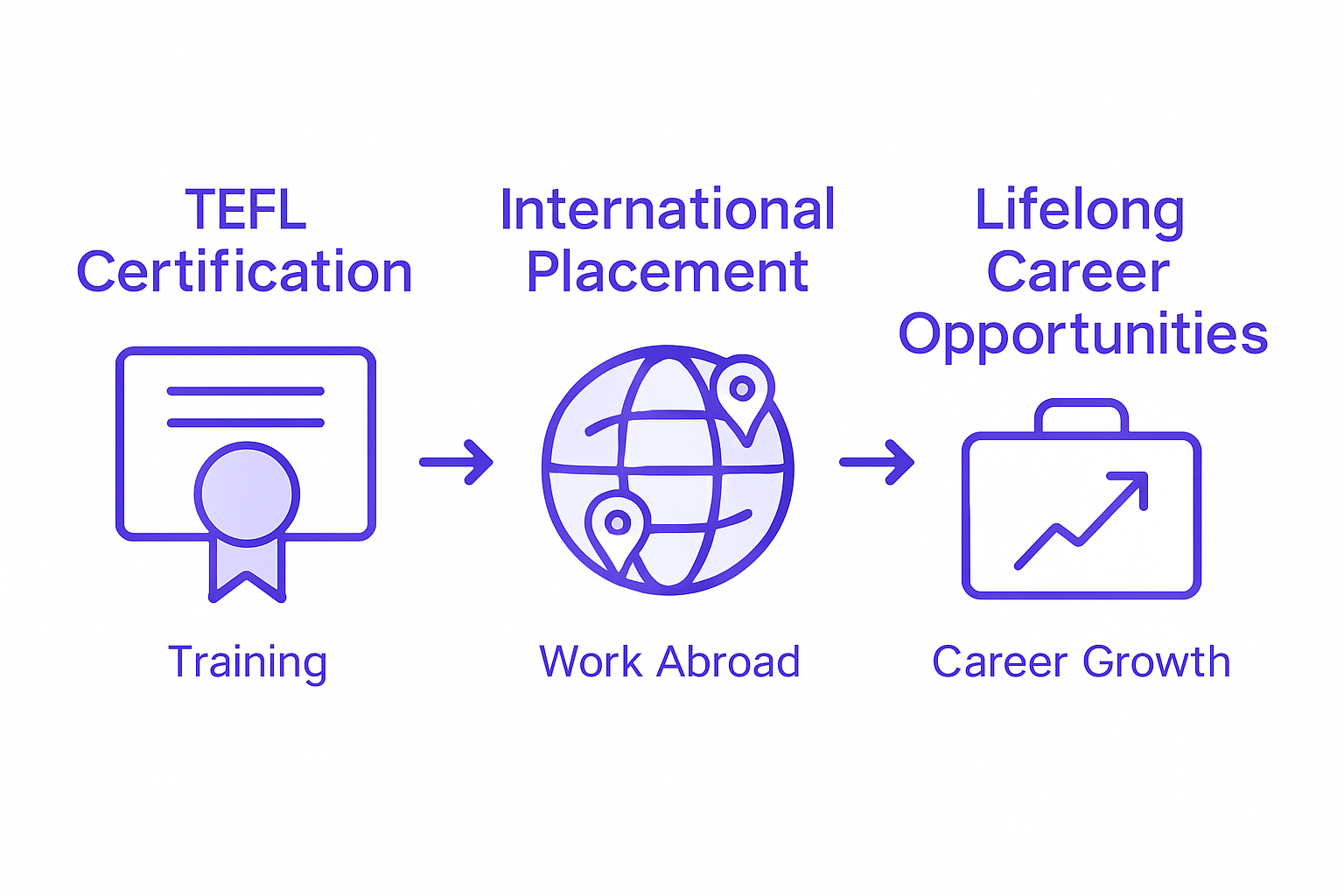
Lifelong career support encompasses multiple dimensions of professional development. Graduates receive ongoing guidance including interview preparation, curriculum vitae refinement, cultural adaptation strategies, and continuous professional training updates. This holistic approach ensures educators can adapt to evolving global educational landscapes, maintaining competitive professional profiles throughout their teaching careers.
Key features of comprehensive career support include:
- Personalised job placement assistance
- Global recruitment network connections
- Ongoing professional development resources
- Cultural adaptation guidance
- Continuous skills enhancement programmes
- International job market insights
- Networking opportunities with global educators
Pro Teaching Tip: Maintain an adaptable professional profile by continuously updating your skills, collecting diverse teaching experiences, and remaining open to emerging international educational opportunities.
Successful TEFL professionals understand that career development is a continuous journey of learning, adaptation, and strategic professional positioning in the dynamic global education marketplace.
Here is a summary of support provided to TEFL graduates globally:
| Support Area | Description | Long-Term Benefit |
|---|---|---|
| Job Placement | Connecting graduates with schools abroad | Increases employment chances |
| CV/Interview Coaching | Tailored guidance for job search | Improves job application success |
| Professional Development | Access to extra training resources | Sustains career progression |
| Global Networking | Links to alumni and educators worldwide | Expands opportunities and support |
Launch Your TEFL Career with Accredited Training and Global Work Opportunities
The challenge of balancing world-class TEFL certification with meaningful international experience is one that many aspiring teachers face. This article highlights the critical importance of accredited programmes, like those offered by Trinity College London, combined with immersive one-year study and work placements in destinations such as Spain, France, and Italy. These integrated pathways address the pain points of acquiring practical teaching skills, cultural immersion, and real-world job support while securing lifelong career benefits.
EBC TEFL is here to bridge that gap by providing Trinity College London accredited courses, including the renowned Trinity CertTESOL and specialised certifications in Business English and Online Teaching. Our comprehensive 1-year study and work abroad programmes deliver not only hands-on teacher training but also a unique opportunity for language study, visa assistance, and paid part-time employment, perfectly designed to enhance your professional and personal growth across Europe.
Start your journey to becoming a confident, globally mobile English teacher today through free personalised consultation. Discover how our expert team can support your enrolment and lifelong job placement needs with proven success stories and detailed course guides at EBC TEFL. Take the crucial step now to transform your passion for teaching and travel into a rewarding international career.
Frequently Asked Questions
What are Study Abroad TEFL programmes?
Study Abroad TEFL programmes are educational experiences that provide language teaching certifications while allowing participants to immerse themselves in new cultures. They combine theoretical training with practical teaching experience in international settings.
What qualifications do I need to apply for a TEFL programme?
Most TEFL programmes require applicants to have a minimum of an undergraduate degree, advanced proficiency in English, and strong communication skills. Some entry-level certifications may also be available for those with little to no prior teaching experience.
How do accredited TEFL courses ensure quality training?
Accredited TEFL courses follow rigorous standards involving curriculum assessment, instructor qualifications, and programme effectiveness. They include theoretical learning alongside practical experiences, ensuring teachers are well-prepared for classroom environments.
What support do TEFL graduates receive for job placements?
TEFL graduates typically receive personalised job placement assistance, guidance on CV and interview preparation, access to professional development resources, and opportunities for networking with global educators to enhance their employment prospects.
Recommended
- Professional Development TEFL: Pathways to Global Teaching – EBC TEFL courses
- 7 Top TEFL Course Tips for Aspiring Global English Teachers – EBC TEFL courses
- How to Succeed in Online TEFL and Launch a Global Teaching Career – EBC TEFL courses
- International TEFL Career Steps: Your Path to Global Teaching – EBC TEFL courses