
Speaking English fluently and knowing how to teach it professionally are two very different things. Many aspiring teachers are surprised to discover that simply being a native or proficient speaker is not enough to secure a teaching role in Spain, France, Italy, or most other desirable destinations. The primary internationally recognised certifications for English teachers are CELTA, Trinity CertTESOL, and accredited 120+ hour TEFL/TESOL courses. Choosing the right English teaching licence from the start can mean the difference between landing your ideal role abroad and being turned away at the application stage. This guide walks you through every key decision.
Table of Contents
- What is an English teaching licence?
- Types of recognised English teaching certificates
- Which teaching licences do schools prefer in Spain, France and Italy?
- Which English teaching licence is best for your career goals?
- How to get certified: step-by-step process
- Explore your path to teaching English abroad
- Frequently asked questions
Key Takeaways
| Point | Details |
|---|---|
| International recognition crucial | Only accredited qualifications like CELTA or Trinity CertTESOL are widely accepted by European employers. |
| Choose the right certificate | Select a course with classroom practice and international accreditation to maximise job options abroad. |
| Country requirements differ | Spain, France, and Italy often demand different paperwork, so check employer and visa needs before applying. |
| Plan your training path | Entry-level certificates open most doors, while advanced options like DELTA help with career progression later. |
What is an English teaching licence?
The term “English teaching licence” does not refer to a government-issued permit. It refers to a formal, internationally recognised certificate that proves you have been trained to teach English as a foreign language. This is distinct from a degree in English literature or years of tutoring experience. Schools and language academies want evidence of structured, assessed teacher training.
Employers across Europe, particularly in Spain, France, and Italy, require specific certificates because they signal consistent quality. A certificate tells a hiring manager that you have completed a recognised curriculum, practised in a real classroom, and been assessed by qualified trainers. Without one, your application is unlikely to progress.
Not all certificates carry equal weight. Watch out for these red flags:
- Courses with fewer than 100 hours of study
- No observed or assessed teaching practice included
- No recognised awarding body or external accreditation
- Certificates issued entirely online with no classroom component
Accreditation also affects your visa eligibility. In Spain, France, and Italy, work visa applications for teaching roles often require proof of a recognised teaching qualification. Understanding the differences between TEFL and TESOL is a useful first step, as is reviewing the teaching licence differences between the most common awards.
“A certificate is not just a piece of paper. It is the professional foundation that opens doors to classrooms around the world and satisfies the legal and institutional requirements of your target country.”
Types of recognised English teaching certificates
The primary internationally accepted qualifications for entry-level English teachers are CELTA, Trinity CertTESOL, and Level 5 TEFL Diplomas. Each has a distinct structure, but all three are respected by employers globally.
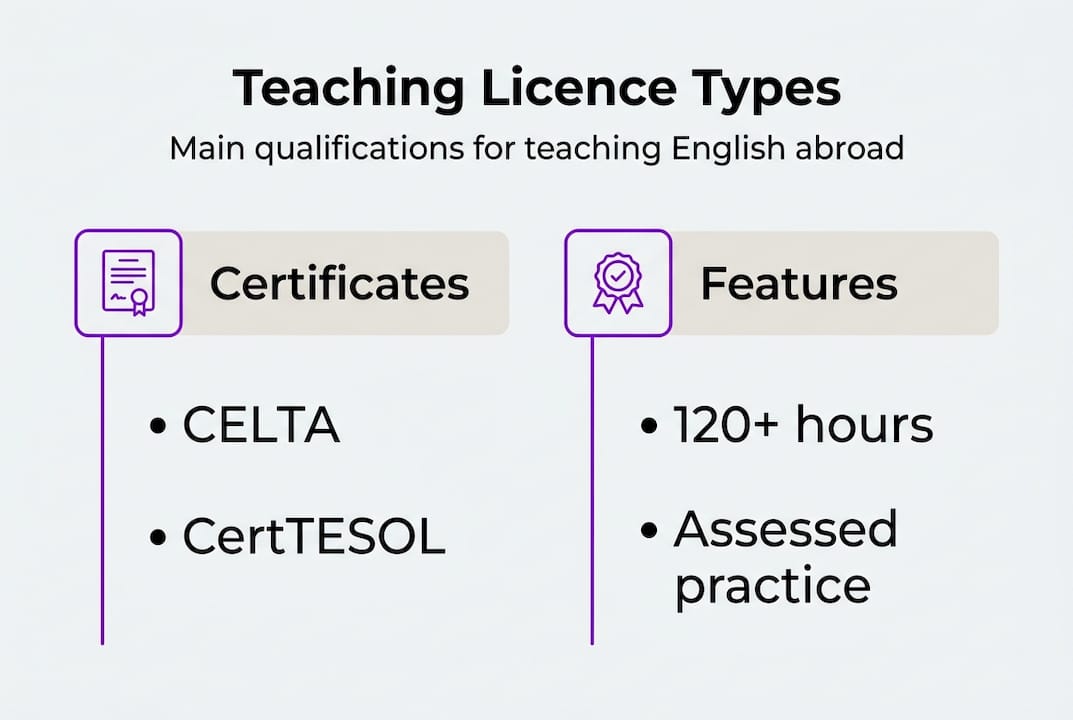
Here is how they compare:
| Certificate | Hours | Teaching practice | Awarding body | Global recognition |
|---|---|---|---|---|
| CELTA | 120+ | 6+ hours assessed | Cambridge Assessment | Very high |
| Trinity CertTESOL | 130+ | 6+ hours assessed | Trinity College London | Very high |
| Level 5 TEFL Diploma | 180 | Varies by provider | Ofqual-regulated body | High |
| Standard online TEFL | 120 | Often none | Varies | Low to moderate |
The Wikipedia overview of CELTA confirms that both CELTA and Trinity CertTESOL are considered equivalent by most European employers. The Trinity CertTESOL, accredited by Trinity College London, is particularly well regarded for its rigorous practical component and its global portability.
The classic pathway to certification follows these steps:
- Research which certificate suits your goals and target country
- Apply to an accredited course provider and complete the entry interview
- Complete the written coursework and language awareness assignments
- Undertake assessed teaching practice with real learners
- Receive your certificate and begin your job search
For a detailed side-by-side review, the CELTA vs Trinity CertTESOL comparison is an excellent resource. You can also explore European teaching requirements to understand what specific countries expect.
Pro Tip: Only enrol on a course that includes at least six hours of observed and assessed teaching practice with genuine language learners. This is the single most important quality indicator for any TEFL or TESOL certificate.
Which teaching licences do schools prefer in Spain, France and Italy?
Once you understand the options, the next question is practical: what will employers in your target country actually accept? The answer varies by country, institution type, and role.
CELTA and Trinity CertTESOL are the most widely required certificates for teaching jobs across Europe, particularly in Spain and Italy. Here is a summary of minimum expectations by country:

| Country | Certificate required | Degree required | Teaching practice needed | Visa notes |
|---|---|---|---|---|
| Spain | CELTA, CertTESOL strongly preferred | Usually yes | Yes | Certificate affects visa eligibility |
| France | CELTA or CertTESOL preferred | Yes for public schools | Yes | Assistantship programmes have own criteria |
| Italy | CELTA or CertTESOL strongly preferred | Often yes | Yes | Private academies may be more flexible |
There is an important distinction between language academies and public schools:
- Language academies tend to be more flexible. Some will accept a 120-hour TEFL with observed practice, particularly for part-time or conversation roles.
- Public schools and state programmes almost always require a recognised degree alongside a formal certificate such as CELTA or Trinity CertTESOL.
- Online-only TEFLs are rarely accepted for roles that come with a work visa, especially in Spain and Italy.
- Visa applications in all three countries may be refused if your certificate does not meet the minimum standard set by the consulate or employer.
For a full breakdown of what each country expects, the teaching requirements in Europe guide covers this in detail. You can also review the TEFL certification standards to confirm your chosen course meets the threshold.
Which English teaching licence is best for your career goals?
Your ideal certificate depends on where you are in your career and where you want to go. There is no single right answer, but there are clear patterns.
- New graduates with no teaching experience: Trinity CertTESOL or CELTA. Both are designed for beginners and carry immediate credibility with employers.
- Career changers moving into teaching: Trinity CertTESOL is an excellent fit, particularly if you want to combine certification with a one-year study and work programme in Spain, France, or Italy.
- Experienced teachers looking to formalise their skills: Trinity CertPT (Certificate for Practising Teachers) is specifically designed for those already in the classroom who want recognised professional development.
- Teachers aiming for university or senior roles: Consider the DELTA qualification, which is an advanced diploma for experienced teachers, not an entry-level award.
One of the most common mistakes is completing a short online TEFL that is not accepted in your target country. You invest time and money, then discover the certificate does not meet visa or employer requirements. Avoid this by checking what TEFL or TESOL means for your specific situation before enrolling.
Pro Tip: If you are unsure where to start, choose Trinity CertTESOL or CELTA. Both are universally respected and give you the strongest foundation for teaching careers abroad. You can always pursue DELTA later once you have classroom experience.
How to get certified: step-by-step process
Getting your English teaching licence is a structured process. Knowing what to expect at each stage removes the uncertainty and helps you prepare properly.
- Research your best fit. Consider your target country, timeline, and budget. Compare Trinity CertTESOL, CELTA, and Level 5 TEFL Diploma options based on your goals.
- Confirm accreditation. Check that the course is accredited by a recognised body such as Trinity College London or Cambridge Assessment. Verify that it includes a minimum of six hours of assessed teaching practice, as all CELTA and Trinity CertTESOL courses require this as standard.
- Apply and prepare for interview. Both CELTA and Trinity CertTESOL require an entry interview or task. This is not a barrier; it is a way to ensure you are ready for the course demands.
- Complete coursework and teaching practice. You will study language awareness, lesson planning, and methodology. Teaching practice sessions are observed and assessed by qualified trainers.
- Receive your certificate and begin your job search. Once certified, you can access job boards, apply directly to schools, or work with a provider that offers placement support.
You can find a detailed overview of the TEFL course process on the EBC website. To confirm your chosen course meets international standards, browse accredited TEFL course options before committing.
Pro Tip: Set aside dedicated study time each week throughout your course. Ask your trainers for written feedback after every teaching practice session. Acting on that feedback is what separates good teachers from great ones.
Explore your path to teaching English abroad
If this guide has helped clarify your options, the next step is finding the right course and support structure to make it happen. EBC TEFL works with aspiring teachers across the globe, offering Trinity College London accredited programmes and one-year study and work abroad programmes in Spain, France, and Italy.
Whether you are just starting out or looking to formalise existing experience, EBC provides personalised guidance at every stage. You can begin by reading the introduction to TEFL to build your foundational knowledge, or use the how to choose a TEFL course guide to narrow down your options. When you are ready to speak with an adviser, book a call with EBC for a free consultation tailored to your goals, target country, and timeline.
Frequently asked questions
What is the difference between TEFL, TESOL, CELTA, and DELTA?
TEFL and TESOL are broad terms describing English language teaching certificates. CELTA and Trinity CertTESOL are specific, prestigious, classroom-based qualifications. The Level 5 TEFL Diploma at 180 hours is considered equivalent to CELTA, while DELTA is an advanced award for experienced teachers only.
Do I need a degree to get an English teaching licence and job in Europe?
Most teaching roles in Spain, France, and Italy require a bachelor’s degree alongside your certificate, though some private language academies are more flexible. Degree and visa requirements vary by country and institution type, so always check before applying.
Is an online-only TEFL accepted in Spain, France, or Italy?
Many employers and consulates in these countries prefer face-to-face or blended courses with real teaching practice. Online-only TEFLs frequently fall short of institutional and visa requirements, particularly for roles that include a work permit.
How long does it take to get an English teaching licence?
Most reputable certificates take between four and twelve weeks to complete. CELTA and Trinity CertTESOL are available as intensive four-week full-time courses or longer part-time options to suit different schedules.
Can I teach English abroad with just a TEFL?
For many language academies, a 120+ hour TEFL with observed teaching practice is sufficient. However, some countries and roles have stricter requirements. The Level 5 TEFL Diploma, CELTA, and Trinity CertTESOL are all widely accepted for teaching abroad and give you the strongest position when applying.