
Breaking into teaching English abroad demands more than enthusiasm. You need recognised credentials, practical classroom skills, and a clear path to employment in your target country. Trinity CertTESOL certification opens doors worldwide, where demand for qualified English teachers remains strong. This guide walks you through certification requirements, job search strategies, and essential preparation steps to launch your teaching career internationally.
Table of Contents
- Understanding Accreditation And Initial Requirements
- How To Get Trinity College London Certification: Step By Step Process
- Finding And Securing Jobs Teaching English
- Common Challenges And How To Overcome Them Teaching Abroad
Key takeaways
| Point | Details |
| Trinity CertTESOL provides international recognition | This gold standard qualification is accepted by language schools worldwide and emphasises practical teaching experience. |
| Accredited training improves employment prospects | Completing recognised certification significantly enhances your competitiveness. |
| Visa and language preparation is essential | Understanding work permit requirements and developing basic local language skills determines your success in European countries. |
| Strategic job searching accelerates placement | Targeted applications, networking, and understanding regional demand patterns lead to faster, better teaching positions. |
| Professional development sustains careers | Continuous learning and specialisation create long term teaching opportunities and career advancement abroad. |
Understanding accreditation and initial requirements
The Trinity CertTESOL qualification represents internationally recognised teacher training specifically designed for English language instruction. Unlike generic certificates, this credential emphasises hands on classroom practice with real students, observed teaching sessions, and rigorous assessment standards. Schools prioritise candidates with Trinity accreditation because it demonstrates both theoretical knowledge and practical competence.
Basic eligibility centres on several core requirements. Most programmes require candidates to be at least 18 years old with English language proficiency at C1 level or native speaker standard. Whilst a university degree isn’t always mandatory for the course itself, many European countries require bachelor’s qualifications for work visas. Check specific requirements for your target destination before committing to training.
Developing basic language skills can strengthen your candidacy substantially. Whilst many private language schools conduct lessons entirely in English, understanding local languages helps with daily life, contract negotiations, and building rapport with colleagues. Consider starting language study several months before your training to gain functional competence.
Key preparation steps include:
- Verifying your passport validity extends beyond your planned teaching period
- Gathering academic transcripts and reference letters for visa applications
- Building savings to cover initial relocation costs and deposits
- Researching accredited programmes that align with your timeline and budget
How to get Trinity College London certification: step by step process
Securing Trinity CertTESOL certification follows a structured pathway designed to build teaching competence systematically. Start by identifying approved training centres that meet Trinity College London’s rigorous standards. These centres must demonstrate qualified trainers, appropriate facilities, and access to genuine teaching practice opportunities with language learners.
The enrolment process typically requires submitting an application form, providing proof of English proficiency, and completing a pre course task that assesses your language awareness. Some centres conduct interviews to evaluate your suitability and motivation for teaching. Once accepted, you’ll receive course materials and preparation guidance to maximise your readiness.
Course structure combines theoretical input sessions with practical teaching experience. Input sessions cover essential topics including lesson planning, classroom management, teaching grammar and vocabulary, and adapting materials for different proficiency levels. These sessions provide frameworks and techniques you’ll immediately apply during teaching practice.
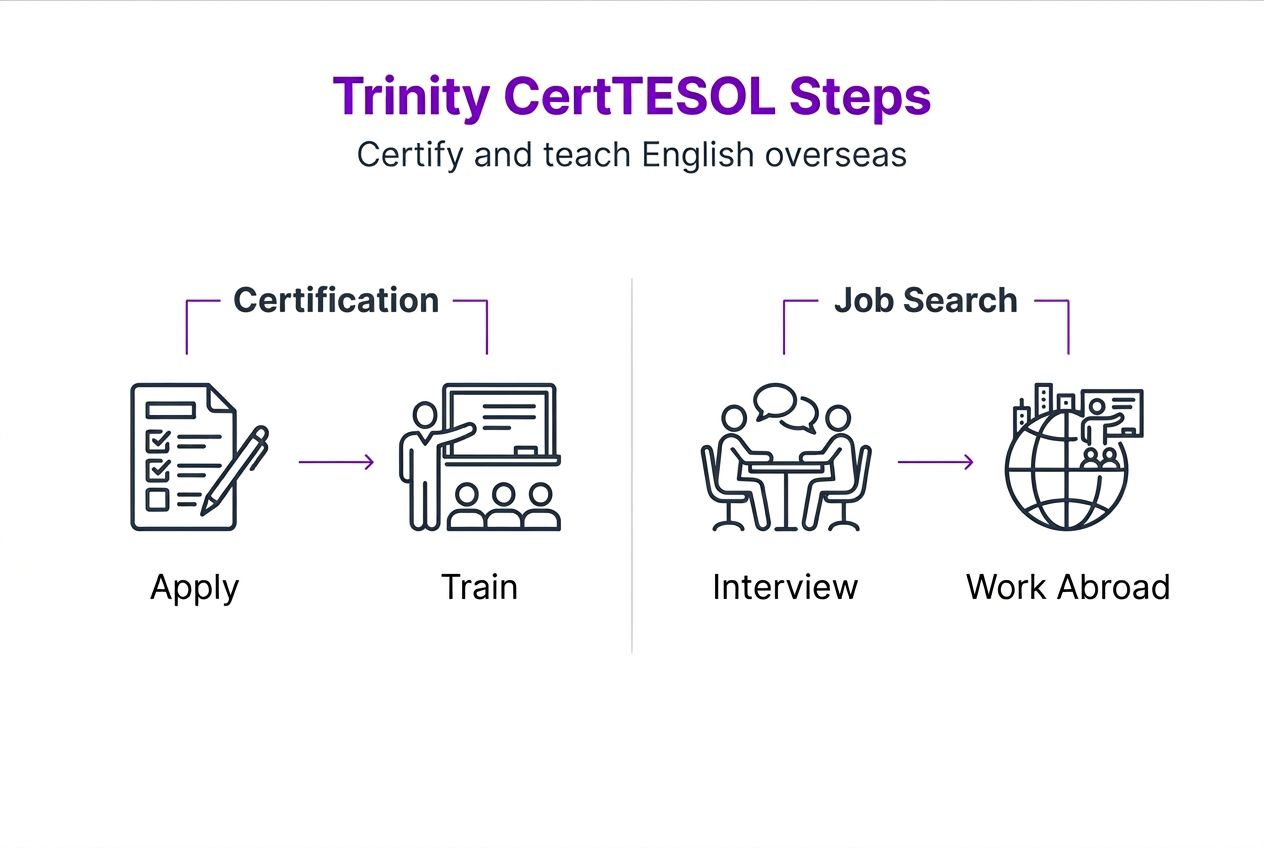
Practical components form the certification’s foundation. You’ll teach real lessons to authentic language learners whilst experienced tutors observe and provide detailed feedback. Most programmes require six to eight assessed teaching practice sessions, each targeting specific skills and lesson types. This observed practice ensures you develop confidence and competence before entering professional classrooms independently.
Completion requirements include:
- Successfully completing all assessed teaching practice sessions with passing grades
- Submitting written assignments analysing teaching methodology and reflecting on practice
- Demonstrating understanding of language systems and learner needs
- Maintaining professional conduct and engagement throughout the intensive programme
- Receiving satisfactory feedback from tutors on progress and development
Pro Tip: Select training providers offering integrated job placement support alongside certification. Providers with established school networks and recruitment partnerships dramatically reduce post qualification job search time and connect you with reputable employers.
Finding and securing jobs teaching English
Job hunting success depends on understanding where schools recruit and how hiring cycles operate. Language academies, international schools, and private tutoring platforms represent the primary employers. Each sector offers distinct advantages regarding contract types, working hours, and salary structures.

Reputable job boards include dedicated TEFL employment sites that verify school credentials and filter opportunities by location, qualification requirements, and contract terms. General recruitment agencies often lack specialised knowledge of teaching positions, making TEFL focused platforms more efficient. Many schools also recruit directly through their websites, particularly for positions starting in September when European academic years begin.
Cultural awareness significantly impacts interview success. Employers value warmth and personal connection during interviews. They may emphasise formal qualifications and structured lesson demonstrations. Most appreciate enthusiasm and adaptability alongside teaching competence.
Contract negotiations require careful attention to several factors. Verify whether positions include social security contributions, paid holidays, and professional development opportunities. Understand teaching hour expectations versus administrative duties. Clarify whether contracts cover summer months or represent academic year only employment. Request clear documentation of salary, working conditions, and notice periods before signing.
Pro Tip: Connect with current teachers through TEFL community forums and social media groups specific to your target city. These networks provide insider knowledge about reputable schools, typical salary ranges, and practical relocation advice that official job listings omit.
Common challenges and how to overcome them teaching abroad
Cultural differences shape classroom dynamics in ways that surprise many new teachers. Depending on the coutry where you teach, students may expect
- interactive, conversational lessons with flexible structures rather than rigid textbook progression
- grammatical accuracy and detailed explanations of language rules
- energetic teaching styles with emphasis on practical communication skills. Adapting your approach to match these cultural preferences improves student engagement and satisfaction.
Managing diverse classrooms presents ongoing challenges, particularly when students range across proficiency levels or age groups within single classes. Mixed ability teaching requires differentiating tasks, providing extension activities for advanced learners, and offering additional support to struggling students simultaneously. Preparation time increases initially as you develop materials catering to varied needs, but experience streamlines this process.
Homesickness and language difficulties affect most teachers during their first months abroad. Even basic tasks like opening bank accounts, navigating healthcare systems, or understanding utility bills become complicated without local language skills. Building support networks through expat communities, language exchange partnerships, and workplace friendships provides essential emotional and practical assistance during adjustment periods.
Recommended
- How Do I Teach English Abroad: Accredited Programmes Guide – EBC TEFL courses
- Teaching English Overseas Steps for a Successful Start – EBC TEFL courses
- How to Apply for TESOL: Secure Trinity CertTESOL and Work Abroad – EBC TEFL courses
- English Teaching Jobs with Visa Sponsorship Archives – EBC TEFL courses