
Most new English teachers feel confused when they see both TEFL and TESOL on job listings. These acronyms may look similar, but the differences in their meaning can shape your entire teaching journey. With over 250,000 teachers worldwide holding a TEFL or TESOL certificate, the right choice can open doors to global opportunities or diverse classrooms at home. This guide lays out the real distinctions and clears up common myths so you can move forward with confidence.
Table of Contents
- TEFL vs TESOL: Core Definitions and Misconceptions
- Key Differences Between TEFL and TESOL Certifications
- Certification Requirements and Accreditation Standards
- Global Teaching Opportunities and Career Pathways
- How to Choose the Right Course for Your Goals
Key Takeaways
| Point | Details |
|---|---|
| TEFL vs TESOL | TEFL is focused on teaching English in non-English speaking countries, while TESOL encompasses teaching English to both native and non-native speakers. |
| Certification Implications | The choice between TEFL and TESOL can impact career opportunities; TEFL is more aligned with overseas positions, while TESOL offers broader teaching contexts. |
| Accreditation Standards | A legitimate TEFL or TESOL certification should include a minimum of 100 hours of instruction and supervised teaching practice for professional validity. |
| Career Pathways | English teaching careers span diverse sectors, including international schools, corporate training, and online education, providing flexible opportunities for educators. |
TEFL vs TESOL: Core Definitions and Misconceptions
When you first explore teaching English internationally, you’ll quickly encounter two critical acronyms: TEFL and TESOL. While many people use these terms interchangeably, understanding their nuanced differences can significantly impact your teaching career trajectory. TEFL stands for Teaching English as a Foreign Language, typically referring to teaching English in countries where English is not the primary spoken language. TESOL, which means Teaching English to Speakers of Other Languages, offers a broader umbrella that encompasses teaching English in both non-native and native English-speaking environments.
The core distinction lies in the context and environment of language instruction. Check out our comprehensive guide on understanding language teaching certifications to dive deeper into these professional pathways. In a TEFL setting, you might be teaching English in countries like Japan, Spain, or Brazil, where English is learned as an additional language for international communication, professional development, or academic purposes. Conversely, TESOL includes scenarios like teaching English to immigrant communities in English-speaking countries such as the United Kingdom, United States, or Australia, where language acquisition serves more immediate social integration needs.
Common misconceptions about these terms often stem from oversimplification. Many aspiring teachers assume TEFL and TESOL are completely interchangeable, but subtle professional implications exist. TEFL certifications are frequently more internationally oriented, focusing on teaching strategies for classroom environments abroad. TESOL certifications tend to provide a more comprehensive approach, covering diverse teaching contexts, including multicultural classrooms, online instruction, and specialised language learning scenarios. Both certifications can open significant professional opportunities, but your specific career goals should guide your choice.

Ultimately, the distinctions between TEFL and TESOL matter less than the quality of training and your commitment to effective language instruction. Whether you choose a TEFL or TESOL pathway, the critical factor is selecting a robust, internationally recognised certification that equips you with strong pedagogical skills, understanding of language acquisition principles, and practical classroom strategies. The world of English language teaching is dynamic and diverse, offering exciting opportunities for passionate educators willing to bridge cultural and linguistic boundaries.
Key Differences Between TEFL and TESOL Certifications
Navigating the world of English language teaching certifications can feel like decoding a complex puzzle, but understanding the key differences between TEFL and TESOL certifications is crucial for your professional development. While these terms are often used interchangeably, they represent distinct approaches to language education with unique certification requirements, teaching contexts, and career implications. Learn more about these nuanced certification pathways to make an informed decision about your teaching career.
The primary distinctions between TEFL and TESOL certifications lie in their scope, focus, and targeted teaching environments. TEFL certifications are typically more narrowly focused, designed specifically for educators planning to teach English in non-English speaking countries. These programmes emphasise strategies for teaching English as a foreign language in international classroom settings, preparing teachers for cultural challenges and communication barriers in countries where English is not the primary language. Conversely, TESOL certifications offer a broader, more comprehensive approach to language instruction, covering a wider range of teaching scenarios including multicultural classrooms, online instruction, and language learning for immigrant communities in English-speaking countries.
When considering career implications, the certification you choose can significantly impact your professional opportunities. TEFL certifications are often preferred for international teaching positions in countries like Japan, South Korea, China, and various European nations. They tend to be more streamlined and directly oriented towards overseas teaching environments.
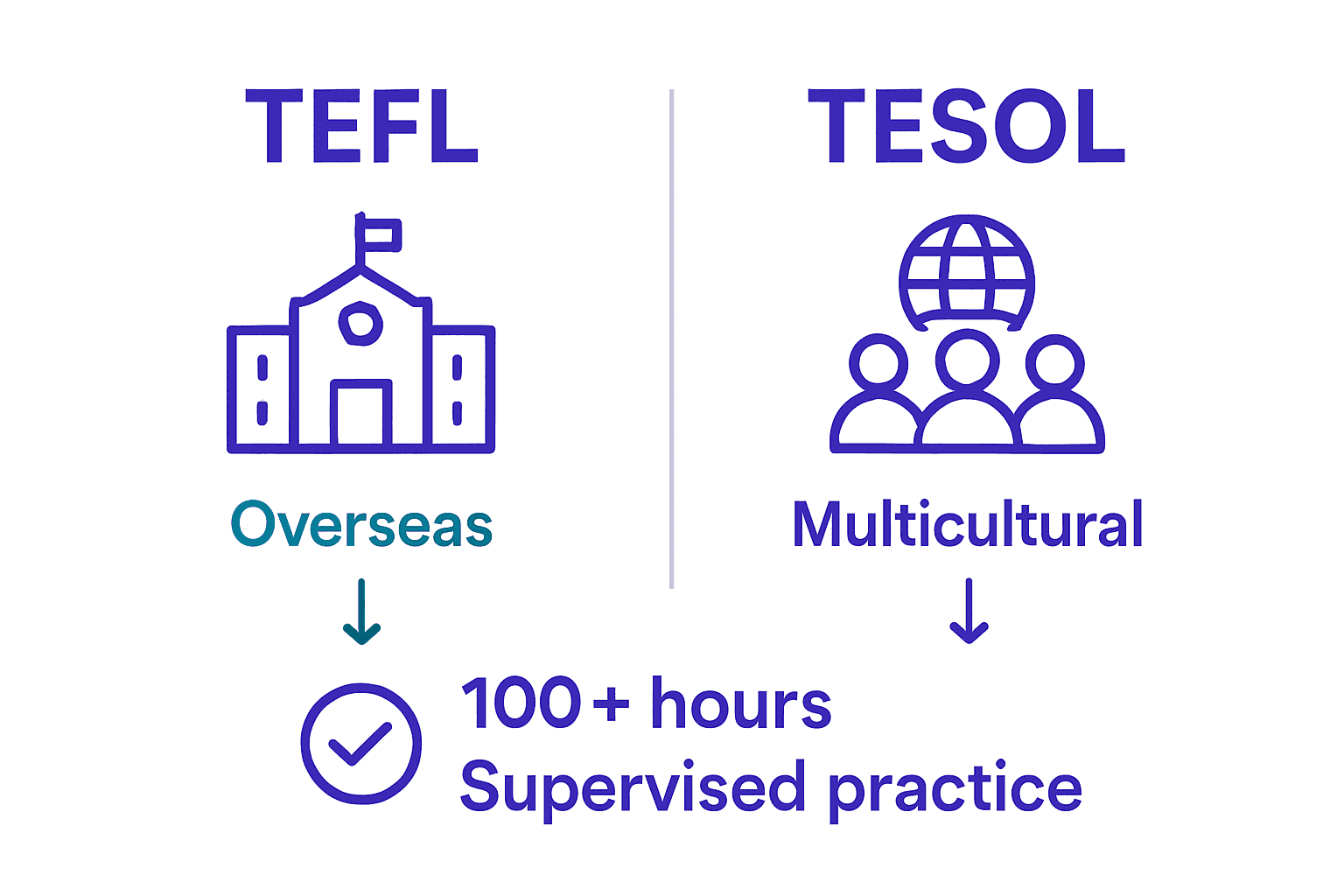 TESOL certifications, with their more expansive curriculum, provide greater flexibility and are particularly valuable for educators interested in teaching within English-speaking countries, working with diverse immigrant populations, or pursuing online teaching opportunities. Some advanced programmes even offer dual certification, allowing teachers to combine the strengths of both TEFL and TESOL approaches.
Ultimately, the choice between TEFL and TESOL should align with your specific career goals, preferred teaching environment, and long-term professional aspirations.
While the certifications have distinct characteristics, both demonstrate your commitment to high-quality language education and your ability to support students in developing crucial communication skills. The most important factor is selecting a rigorous, internationally recognised certification that provides robust pedagogical training, practical classroom strategies, and a deep understanding of language acquisition principles. Whichever path you choose, your passion for teaching and dedication to student learning will be the most significant determinants of your success in the dynamic world of English language education.
Certification Requirements and Accreditation Standards
Navigation through the landscape of TEFL and TESOL certifications requires a keen understanding of rigorous accreditation standards and comprehensive certification requirements. Professional language teaching credentials are not just pieces of paper, but carefully crafted qualifications that demonstrate your expertise, pedagogical skills, and commitment to high-quality language education. Explore our comprehensive guide to understanding certification standards to ensure you’re making an informed decision about your professional development.
According to guidelines from the British Council, legitimate TEFL and TESOL certificates must meet specific benchmarks to be considered professionally valid. Key accreditation requirements typically include a minimum of 100 hours of comprehensive instruction and at least six hours of supervised teaching practice. These standards ensure that prospective language teachers develop not just theoretical knowledge, but practical classroom skills. Accreditation bodies like Ofqual play a crucial role in validating these programmes, examining factors such as curriculum design, instructor qualifications, assessment methods, and overall educational rigour. Reputable certifications will be externally validated, providing an independent assessment of the programme’s quality and alignment with international teaching standards.
When evaluating certification programmes, aspiring teachers should consider several critical factors beyond basic accreditation. Professional recognition varies significantly across different programmes, with some certifications carrying more weight in specific geographical regions or educational contexts. International bodies such as Cambridge Assessment English, Trinity College London, and the College of Teachers offer widely respected credentials that can substantially enhance your employability. Look for programmes that provide comprehensive training covering areas like language methodology, classroom management, learner psychology, cultural competence, and practical teaching strategies. Some advanced certifications also offer specialised modules in areas such as business English, online teaching, or teaching young learners, allowing you to tailor your qualification to specific career objectives.
Ultimately, selecting the right certification is a strategic investment in your professional future. While meeting technical requirements is essential, the most valuable credentials go beyond mere compliance, offering transformative learning experiences that genuinely prepare you for the complexities of language instruction. Consider programmes that provide ongoing support, job placement assistance, and opportunities for continuous professional development. The best certifications not only validate your current skills but also provide a foundation for lifelong learning and career growth in the dynamic field of English language education. Your chosen programme should inspire confidence, expand your pedagogical toolkit, and open doors to exciting international teaching opportunities across diverse educational landscapes.
Global Teaching Opportunities and Career Pathways
The world of English language teaching offers an extraordinary landscape of professional opportunities that extend far beyond traditional classroom boundaries. International education has transformed from a niche career path into a dynamic global industry, providing passionate educators with incredible chances to explore diverse cultures, develop cross-cultural communication skills, and make a meaningful impact on students’ lives. Discover where English teachers are most in demand and unlock your potential for an exciting international teaching career.
Career pathways in TEFL and TESOL are wonderfully diverse, spanning multiple sectors and geographical regions. Teaching opportunities range from traditional school settings in countries like Japan, South Korea, and China to corporate language training programmes in emerging markets, online teaching platforms, and specialised instruction for professionals seeking English communication skills. Some educators find rewarding careers in international businesses, multinational corporations, diplomatic services, and educational technology companies, where advanced language skills are crucial. Emerging markets in Southeast Asia, Middle Eastern countries, and parts of Latin America continue to offer robust demand for qualified English language instructors, creating numerous opportunities for those with robust TEFL or TESOL certifications.
Beyond geographical diversity, modern English language teaching presents multiple career development trajectories. Ambitious professionals can progress from classroom teaching to roles such as academic coordinators, curriculum developers, teacher trainers, and educational consultants. Some teachers specialise in niche areas like business English, academic preparation, exam preparation (IELTS, TOEFL), or online language instruction. The digital transformation of education has further expanded opportunities, with remote teaching, hybrid learning models, and international online platforms creating unprecedented flexibility for language educators. Experienced teachers can also transition into roles involving educational technology, content creation, materials development, and intercultural communication training.
Ultimately, success in global teaching requires more than just linguistic expertise. The most successful international educators combine strong pedagogical skills, cultural adaptability, continuous learning mindset, and genuine passion for cross-cultural communication. While certification provides the foundational framework, your ability to connect with students, understand diverse learning contexts, and remain adaptable will truly distinguish your career. Whether you dream of teaching in bustling Asian metropolises, European educational institutions, or developing online global classrooms, the world of English language education offers an exciting, dynamic professional journey that goes far beyond traditional employment – it’s an opportunity to become a global communication bridge, transforming lives one lesson at a time.
How to Choose the Right Course for Your Goals
Selecting the perfect TEFL or TESOL certification is like mapping out a career adventure – it requires careful consideration, strategic planning, and a clear understanding of your personal and professional aspirations. Course selection is not just about obtaining a certificate, but about finding a programme that aligns precisely with your unique teaching goals, learning style, and future career trajectory. Explore our comprehensive guide to understanding certification standards to ensure you make an informed decision that will truly propel your teaching career forward.
When evaluating potential courses, consider several critical factors that will impact your professional development. Key selection criteria should include the course’s accreditation, curriculum depth, practical teaching components, and alignment with your specific career objectives. For instance, if you’re targeting international school positions in Asia, look for programmes with robust international practicum experiences and cultural competence modules. Aspiring online educators might prioritise courses with digital teaching methodology, while those interested in business English should seek specialised training in corporate communication skills. Pay close attention to course structures – some offer intensive full-time programmes, while others provide flexible online or part-time options that can accommodate working professionals or those with existing commitments.
Beyond technical curriculum considerations, the most successful course selection involves a holistic assessment of your personal learning needs and career ambitions. Advanced programmes often provide additional benefits like job placement support, ongoing professional development resources, and networking opportunities with global teaching communities. Consider the programme’s reputation within the international education sector, the qualifications of its instructors, and the depth of practical teaching experience integrated into the course. Some certifications offer specialised modules in areas like young learner instruction, exam preparation teaching, or digital language education, allowing you to differentiate yourself in a competitive global market. Look for courses that not only provide a certification but also offer a comprehensive toolkit for navigating diverse teaching environments.
Ultimately, the right TEFL or TESOL course is an investment in your professional future – a transformative experience that goes beyond mere technical training. The most valuable programmes will challenge you, expand your pedagogical perspectives, and provide a solid foundation for lifelong learning in language education. Trust your instincts, conduct thorough research, and choose a course that resonates with your passion for teaching and your vision for making a meaningful impact in students’ lives. Remember, your certification is more than a document – it’s a passport to a world of exciting international teaching opportunities, personal growth, and cross-cultural understanding.
Ready to Choose Your Path in TEFL or TESOL and Launch Your Global Teaching Career
Navigating the differences between TEFL and TESOL certifications can feel overwhelming, especially when deciding which qualification fits your ambitions and teaching environment best. Whether you want to teach English abroad or support immigrant communities in English-speaking countries the challenge lies in selecting a programme that offers recognised accreditation, practical training, and ongoing career support. Understanding terms like Trinity CertTESOL or specialised courses in Business English is crucial in matching your goals with the right course.
At EBC TEFL Course we understand that choosing the right certification is a pivotal step towards a successful teaching career. Our accredited courses not only meet international standards but also provide extensive job placement assistance and personalised guidance to help you teach in countries like Spain, Italy, or Asian nations. Don’t let uncertainty hold you back — take advantage of our free consultation now by booking a call and discover the options that best suit your aspirations. Your dream career as a global English teacher is within reach when you partner with experts dedicated to your success.
Frequently Asked Questions
What is the difference between TEFL and TESOL certifications?
TEFL stands for Teaching English as a Foreign Language and is focused on teaching English in non-English speaking countries. TESOL means Teaching English to Speakers of Other Languages and applies to both non-native and native English-speaking environments.
Which certification is better for teaching abroad, TEFL or TESOL?
TEFL is often preferred for teaching positions in countries where English is not the primary language, while TESOL provides a broader curriculum and is valuable for teaching in multicultural classrooms and English-speaking countries.
Are there specific certification requirements for TEFL and TESOL?
Yes, both certifications usually require a minimum of 100 hours of instruction and at least six hours of supervised teaching practice to ensure teachers are well-prepared for the classroom.
How do I choose the right TEFL or TESOL course for my career goals?
Consider the course’s accreditation, the depth of its curriculum, practical teaching components, and alignment with your specific teaching aspirations. Research programmes that offer support for job placement and professional development as well.
Recommended
- TESOL, TEFL, CELTA, DELTA, TESL – How Are They Different? – EBC Trinity CertTESOL and TEFL courses
- TEFL or TESOL? Why Not Both with the EBC Trinity CertTESOL Course?
- What is the difference between the Trinity CertTESOL and CELTA?
- TEFL vs TESOL and what they really mean – EBC Trinity CertTESOL and TEFL courses
- Mejores ofertas cursos inglés – Comparativa 2025 – Academia Atenea