
Choosing where and how to start your teaching journey can feel overwhelming. As a recent graduate with a good command of English, you’re already eligible for top accredited TEFL programmes including those recognised by Trinity College London. Focusing on self assessment and clear career planning ensures you select the right certification, stand out to employers, and set yourself up for lasting success abroad.
Table of Contents
- Step 1: Assess Eligibility And Career Goals
- Step 2: Select The Right Accredited TEFL Programme
- Step 3: Complete Application And Enrol Successfully
- Step 4: Undertake Training And Practical Teaching
- Step 5: Verify Certification And Activate Job Placement Support
Quick Summary
| Key Message | Explanation |
|---|---|
| 1. Assess career goals early | Determine your teaching preferences and target countries before choosing a TEFL programme to ensure alignment and success. |
| 2. Choose accredited courses | Select accredited TEFL programs, like those from Trinity College London, for better job prospects and recognition abroad. |
| 3. Prepare application carefully | Gather all necessary documents and write specific answers on your application to avoid delays and demonstrate commitment. |
| 4. Engage in practical training | Participate actively in teaching practice and accept feedback to build confidence and improve your teaching skills. |
| 5. Activate job placement support | Contact your job placement coordinator immediately after certification to clarify your preferences for better job match. |
Step 1: Assess eligibility and career goals
Before you commit to a TEFL course, take time to honestly evaluate where you stand and what you genuinely want from this career path. This self assessment matters far more than rushing into a certification. You need to understand both your starting point and your destination, because the route you take depends on both.
Start by checking the basic requirements for TEFL certification. Most accredited programmes, including those from Trinity College London, require you to be a native or fluent English speaker with at least secondary school education. If you’re a recent graduate from an English speaking country, you’re already there. But go further than just ticking boxes. Ask yourself what teaching environments genuinely appeal to you. Do you want to work in a formal school setting with structured curriculum and fixed hours? Or would you prefer the flexibility of private language schools or online teaching platforms? Are you drawn to working with young learners, teenagers, or adults? Your answer shapes which specialisation you pursue after your base certification.
Think carefully about your geographic goals and what that means practically. You mentioned interest in Spain, France, or Italy, which are excellent choices with strong demand for English teachers. But these countries have different hiring patterns, visa requirements, and salary ranges. Spain tends to offer more stable school placements for graduates, whilst France often favours private tuition and conversational coaching. Italy offers a mix of both. Research these realities now, not after you’ve completed your course. Check local job boards, connect with teachers already working there through social media groups, and understand what qualifications employers in each country actually prioritise. Some regions care deeply about Trinity certification, whilst others focus more on your teaching experience and cultural fit. Once you understand the local context, your career direction becomes clearer. That clarity helps you choose the right course type and specialisation options that will actually get you hired in your target location.
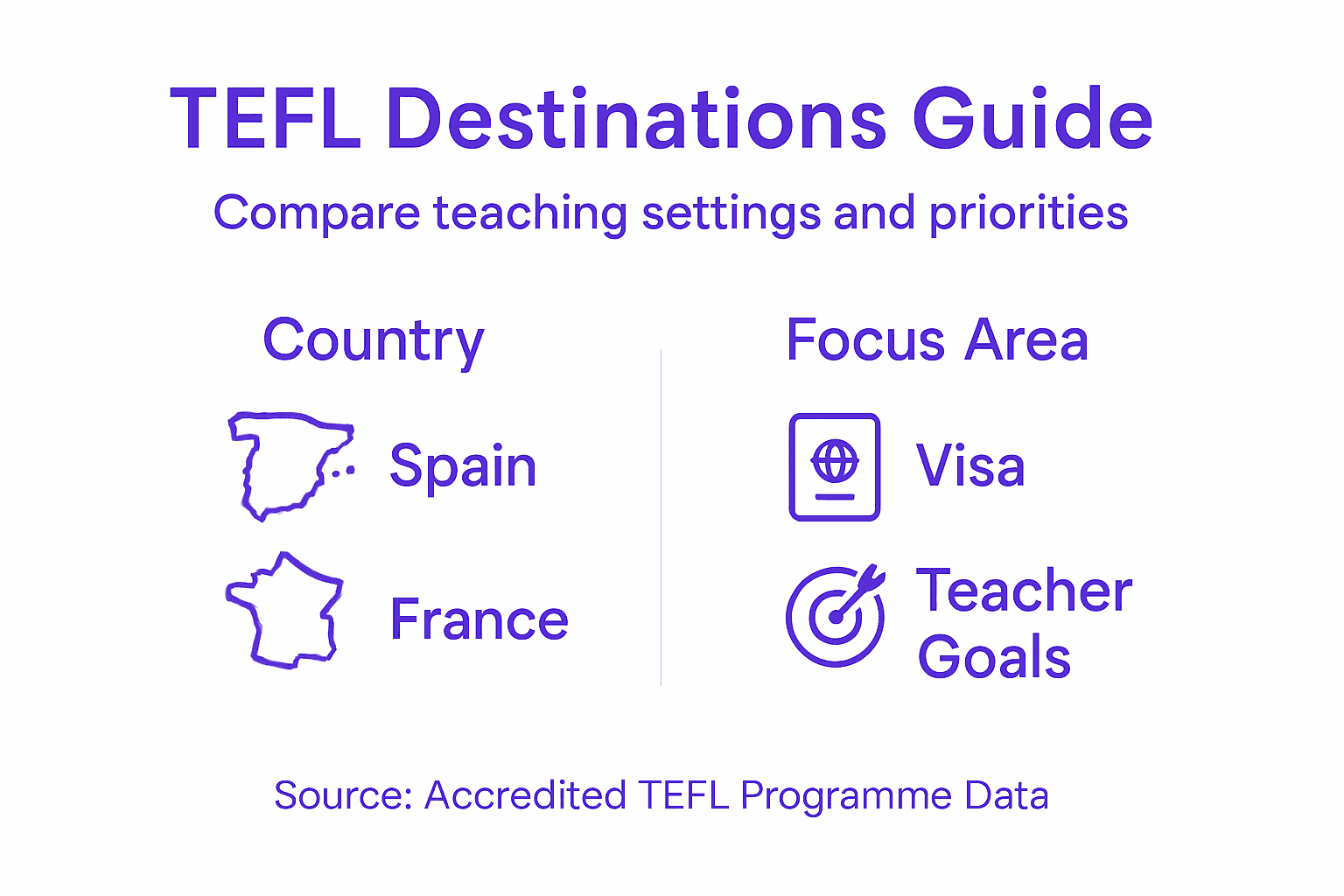
Here is a summary of how TEFL job markets differ in Spain, France, and Italy:
| Country | Common Teaching Settings | Visa Requirements | Typical Teacher Priorities |
|---|---|---|---|
| Spain | State schools, academies | Work visa or EU status | Stable placements, Trinity valued |
| France | Private tuition, coaching | Work visa or EU status | Conversational skills, flexibility |
| Italy | Mix of schools and private | Work visa or EU status | Balanced roles, experience valued |
Trusted advice Take 30 minutes to write down your ideal teaching scenario in detail, including location, student age group, work hours, and salary expectations. This written clarity becomes your decision making compass throughout the entire application and course process.
Step 2: Select the right accredited TEFL programme
Now that you understand your eligibility and career goals, it’s time to find the specific programme that matches your needs. The market for TEFL courses is crowded, but accreditation is your compass. Not all courses carry equal weight with employers, and choosing wisely at this stage directly impacts your job prospects abroad.

Accreditation matters because it signals quality assurance to schools and employers worldwide. When you’re applying for positions in Spain, France, or Italy, recruiters immediately recognise Trinity College London certification as a gold standard. However, understanding different accredited TEFL course types helps you pick the format that actually works for your life. Some recent graduates need an intensive course they can complete in a few weeks before moving abroad, whilst others benefit from part time study alongside work. Some programmes focus purely on teaching methodology, whilst others bundle language study, cultural preparation, or job placement support. You might find that a 120-hour course gets you certified quickly, or that a more comprehensive 180-hour programme better prepares you for complex classroom scenarios. Your choice here depends on your timeline, budget, and how much preparation you want before stepping into a classroom.
This table compares popular TEFL course formats to help you choose:
| Course Format | Duration | Best For | Key Benefits |
|---|---|---|---|
| Intensive | 4-6 weeks | Quick movers | Fast track to job readiness |
| Part-time | 3-6 months | Working professionals | Study balance with job or study |
| Comprehensive | 6+ months | Career-focused | Deep preparation, more teaching practice |
Beyond course duration, investigate what specialisations each programme offers. If you’re targeting corporate teaching positions or want to teach professional English, Business English specialisation strengthens your CV significantly. CLIL (Content and Language Integrated Learning) appeals to schools wanting teachers who can teach subjects through English, whilst Online Teaching specialisation opens doors to remote positions worldwide. Research employer preferences in your target countries now. Connect with hiring managers directly, email school principals asking what qualifications they value most, and check job listings on Spanish, French, and Italian education portals to see which specialisations appear repeatedly. Some regions barely mention specialisations in job postings, meaning core certification matters most. Others specifically seek candidates with Business English or specific teaching methodologies. Your homework here saves months of frustration later.
Also verify that any programme you consider provides genuine lifetime job placement support. This isn’t just a nice to have, especially when you’re moving to a new country. Quality providers maintain networks of hiring schools, respond to your job queries years after graduation, and actually work to place you in positions matching your goals. Check whether they offer visa support for your target country, whether they provide interview coaching, and whether they maintain active job boards updated with real opportunities. Some programmes sell placements as a feature but deliver minimal follow up. Others genuinely stay invested in your career success. Ask previous graduates directly through LinkedIn or graduate forums what their actual experience was.
Professional tip Before enrolling, request a sample lesson schedule and speak directly with trainers, not just admissions staff, to understand how the course actually works in practice and whether their teaching approach matches your learning style.
Step 3: Complete application and enrol successfully
You’ve assessed your eligibility, identified your career direction, and chosen your programme. Now comes the practical work of submitting your application and securing your place. This step is straightforward if you stay organised, but rushing through it or missing details can delay your start date unnecessarily.
Gather your documentation first before touching the application form. You’ll typically need proof of your English language proficiency, educational qualifications, and identification. Some programmes require a passport copy, whilst others accept a national identification document. Have copies of any teaching experience you’ve accumulated, even if it’s just volunteer work or tutoring friends. Write down your emergency contact details and prepare a brief statement about why you want to teach English abroad. This isn’t busywork, it keeps you from scrambling mid application. Understanding the TEFL application process helps you anticipate what information you’ll need and prevents frustrating delays when you discover missing documents halfway through. Many applicants underestimate how long this gathering phase takes, so allow at least a week before you plan to submit.
When you complete the actual application form, read every field carefully and answer completely. Vague or incomplete responses signal carelessness to admissions teams and sometimes trigger automatic rejections or requests for clarification that delay processing. If the form asks about your teaching goals, give a specific answer. “I want to teach English in Spain” is weak. “I want to teach in Spanish secondary schools with students aged 14 to 18, building their conversational confidence and exam preparation skills” demonstrates genuine thought. Admissions staff use these answers to recommend appropriate specialisations and course formats, so your specificity actually improves your experience. Upload clear, legible scans of documents, not blurry phone photos. Check file sizes and formats match requirements. Small details like these frustrate administrators and can slow your approval.
Once submitted, don’t disappear. Respond promptly to any follow up emails from the provider. If they ask clarifying questions, answer within 48 hours. If they invite you to a pre course consultation call, take it seriously and prepare genuine questions. This contact period gives the provider a sense of your reliability and enthusiasm, which matters when they’re allocating trainers and thinking about job placement later. After enrolment, confirm your start date, access to any pre course materials, payment arrangements, and what to bring on day one. Some programmes send welcome emails with reading lists, whilst others arrange payment plans. Get this information in writing. Within the next few weeks, you’ll transition from applicant to student, and that clarity keeps everything on track.
Practical tip Create a simple checklist of all required documents and tick them off as you gather them, then double check your completed application form before submitting it by reading through the entire thing one more time to catch typos or incomplete sections.
Step 4: Undertake training and practical teaching
Your course begins and suddenly theory becomes reality. The classroom training phase combined with practical teaching experience is where you transform from someone who knows about teaching into someone who can actually teach. This is the most demanding part of your TEFL journey, but also the most rewarding. You’ll spend time in lectures understanding methodology, observing experienced teachers, and then standing in front of real learners yourself.
Expect your training to blend multiple formats. You’ll attend sessions covering language structure, teaching techniques, and classroom management. You’ll watch videos demonstrating effective lessons and problematic teaching moments. Most importantly, you’ll prepare and deliver actual lessons to real students whilst your trainers observe and provide feedback. This practical component isn’t optional theatre, it’s where you build genuine confidence. Teaching practice sessions form the backbone of quality TEFL programmes because theory alone doesn’t prepare you for managing 20 teenagers who don’t want to be there, or helping adult learners overcome anxiety about speaking English. You’ll make mistakes in these practice lessons and that’s precisely the point. You learn from them in a supportive environment before you’re hired to teach professionally. Your trainers will note what works, what doesn’t, and where you need to develop further. Some lessons will feel brilliant and others will feel clumsy. Both are valuable data.
Take the feedback seriously, even when it stings. If a trainer points out that you talked too much and didn’t let students speak, resist the urge to defend yourself. Instead, listen, ask clarifying questions, and try again differently next time. Teachers who improve rapidly are those who treat feedback as a gift rather than criticism. Write down specific suggestions from your trainers and track your progress across multiple teaching sessions. You’ll notice patterns in what feedback you receive repeatedly, and addressing those patterns directly shows maturity and commitment. Some trainees resist this reflective process and simply get through their required teaching hours without genuine improvement. Employers notice the difference when they interview you. Those who can articulate what they learned from their mistakes and how they’ve addressed them demonstrate the growth mindset that makes good teachers.
Beyond the classroom work, expect assignments and assessments. You might write lesson plans, analyse student performance data, submit reflective journals, or complete exams testing your knowledge of grammar and teaching theory. These requirements feel tedious when you’re doing them, but they consolidate your learning and prepare you for the professional documentation you’ll complete once teaching abroad. Some programmes include components like supervised teaching practicums where you teach under continuous evaluation over an extended period, which provides deeper development than brief observed lessons. Your engagement with this rigorous training directly translates into your readiness for real teaching contexts. Trainers are also your first professional network. Strong relationships with them open doors later because they’re the people recommending you to employers, answering your questions about classroom challenges months after graduation, and sometimes placing graduates directly in positions they know are good fits.
Insider tip Keep a teaching journal throughout your course, recording what worked in each lesson, student reactions, and trainer feedback, then review it before your final lessons to demonstrate intentional growth and improvement across your certification.
Step 5: Verify certification and activate job placement support
Your course is complete. You’ve attended sessions, passed assessments, delivered teaching practice lessons, and now your Trinity College London certification is official. This moment marks a real milestone, but it’s not the finish line. Verification of your credential and activation of job placement support transform your certification from a certificate on your wall into an actual pathway to employment abroad.
First, verify your certification has been properly issued and registered. Check your course provider’s records to confirm your certificate number, the date it was issued, and that it matches your name exactly. Contact Trinity College London directly if you have any doubts about verification. You’ll need this certification number when applying for jobs and when registering with work agencies. Some employers request proof of certification before interview, so having this information readily available saves time later. Many graduates assume their provider automatically sends certificates to employers, but most require you to request official copies yourself. Order these now, not when you’re panicking about a job deadline. Request enough copies to last you through your first two years of teaching, as you’ll need them for visa applications, school registrations, and work permits in different countries. Some employers request digital verification directly from Trinity College London, so also familiarise yourself with how to provide this.
Once certified, activate your job placement support immediately. This is where your provider’s promised lifetime assistance becomes real. Contact your job placement coordinator and provide detailed information about your preferences. You want to teach in Spain, France, or Italy, but where specifically? Urban schools or rural areas? Secondary students or adults? Private language academies or government schools? Full time employment or part time work combined with further study? The more specific you are, the better placements your coordinator can recommend. Some graduates stay vague about their preferences hoping this keeps more options open, but actually it dilutes the quality of recommendations you receive. Your placement team works best when they understand your exact situation and criteria. Understand the TEFL job placement process helps you navigate what to expect from your provider’s support, including timelines, how they contact you about opportunities, and what documentation employers typically require.
Build a strong relationship with your placement coordinator early. Respond promptly to their emails, provide clear feedback on positions they suggest, and ask specific questions about positions before applying. If a school doesn’t interest you, explain why so they understand your preferences better next time. If a placement works out well, tell them. Coordinators who feel appreciated and understand your situation invest more energy in your placement. Some coordinators manage dozens of graduates, so those who are proactive and communicative receive better service. Update your availability regularly if circumstances change. If you’re planning to move to Spain in October rather than September, tell them immediately rather than applying for jobs you’ll turn down. This professionalism builds trust and ensures your coordinator keeps you in mind for genuine opportunities.
Beyond your provider’s support, begin your own job search simultaneously. Your placement team is valuable, but they’re not your only resource. Create profiles on international teaching job boards, connect with Facebook groups for English teachers in your target countries, and follow hiring schools on social media. Some of the best opportunities come through personal networks, not formal job boards. Attend virtual job fairs for international teaching positions. Start applying to schools that interest you, even if you haven’t yet been placed through your provider. You’re not bound to accept only what they offer. Multiple parallel searches increase your chances of finding a genuine good fit rather than just any available position.
Practical tip Create a simple spreadsheet tracking every job you apply for, including the school name, position details, application date, and follow up date, then review it monthly to prioritise follow ups with schools that strongly match your preferences.
Achieve Teaching Success with Trinity-Accredited TEFL Training and Lifetime Support
Navigating the journey to become a certified English teacher abroad can feel overwhelming when considering eligibility, course selection, and job placement especially if you aim to teach in Spain, France, or Italy. This article highlights critical challenges such as understanding local hiring preferences, choosing the right accredited course, and activating effective job placement support. At EBC TEFL, we provide Trinity College London accredited programmes designed to meet these specific needs through hands-on teacher training, specialisations like Business English or Online Teaching, and unmatched lifetime employment assistance worldwide.
Take the next step toward global teaching success with our comprehensive 1-year study and work abroad programmes in Spain, France, and Italy. These unique programmes combine accredited TEFL certification, visa support, language study, and real teaching opportunities tailored to your career goals. Whether you want to work in formal schools or private academies, our expert guidance and personalised job placement empower you to confidently enter the international teaching market. Book your free consultation now at EBC TEFL and turn your TEFL ambitions into a lifelong rewarding career.
Frequently Asked Questions
What are the eligibility requirements for an accredited TEFL course?
To be eligible for an accredited TEFL course, you typically need to be a native or fluent English speaker with at least secondary school education. Verify the specific requirements of the programme you choose to ensure you qualify before applying.
How do I choose the right accredited TEFL programme for my career goals?
To select an appropriate accredited TEFL programme, reflect on your teaching preferences, such as target age groups and desired work environments. Research different course formats and specialisations that align with your career aspirations, ensuring that the programme fits your schedule and budget.
What steps are involved in the application process for a TEFL course?
The application process involves gathering necessary documentation, completing the application form accurately, and submitting your application on time. Create a checklist of required documents and review your application for completeness before submission to avoid delays.
How can I maximise my teaching practice during the TEFL course?
To maximise your teaching practice, actively engage in feedback sessions, and seek constructive criticism from trainers. Keep a teaching journal to track your progress and identify areas for improvement, aiming to implement suggestions in your practical lessons.
What should I do after completing my TEFL course to find a teaching job?
After completing your TEFL course, verify your certification and activate any job placement support provided by your course provider. Also, begin networking and applying for teaching positions independently to broaden your opportunities and increase your chances of securing a job swiftly.
Recommended
- International TEFL Career Steps: Your Path to Global Teaching – EBC TEFL courses
- TEFL Accreditation: Everything You Need to Know – EBC TEFL courses
- 7 Essential Features of Accredited TEFL Courses Explained – EBC TEFL courses
- TESOL Accreditation Explained: Global Recognition and Value – EBC TEFL courses