
Planning lessons that meet Trinity College London accreditation standards whilst maintaining engaging, culturally relevant content challenges even experienced educators. Aspiring English teachers often struggle to balance rigorous certification requirements with the practical skills needed for international classrooms. This guide delivers a comprehensive, step-by-step approach to creating effective lesson plans that satisfy Trinity CertTESOL criteria whilst preparing you for teaching opportunities across Spain, France, and Italy.
Table of Contents
- Understanding TEFL Lesson Planning And Accreditation Requirements
- Prerequisites And Essential Tools For Planning Effective English Lessons
- Step-By-Step Process To Plan An Accredited English Lesson
- Integrating Cultural Immersion And Study/Work Experiences In Spain, France, And Italy
- Common Mistakes In Lesson Planning And How To Avoid Them
- Expected Outcomes And Success Metrics For Your English Lesson Plans
- Take Your TEFL Journey Further With EBC Courses And Support
- Frequently Asked Questions
Key takeaways
| Point | Details |
|---|---|
| Accreditation standards matter | Trinity College London criteria ensure your lessons meet international teaching quality benchmarks for global employment. |
| Structured planning boosts results | Following systematic lesson development improves teaching effectiveness through clearer objectives and activities. |
| Cultural integration drives engagement | Incorporating authentic local materials and customs substantially increases student participation rates in immersive contexts. |
| Common mistakes derail certification | Unclear aims, insufficient interaction, and poor time management frequently cause lesson plan failures during assessment. |
| Success metrics guide improvement | Tracking student engagement and mentor feedback creates measurable pathways to stronger teaching careers internationally. |
Understanding TEFL lesson planning and accreditation requirements
Accredited English lesson plans represent structured teaching frameworks that satisfy internationally recognised quality standards, specifically those established by Trinity College London. These plans differ fundamentally from informal teaching notes because they demonstrate systematic pedagogical thinking, clear learning outcomes, and evidence of professional teaching competence.
Trinity College London accreditation standards require lesson plans to exhibit four core characteristics. First, clarity of aims ensures students understand precisely what they will learn. Second, communicative focus prioritises meaningful language use over rote memorisation. Third, adaptability allows teachers to respond to diverse learner needs and classroom dynamics. Fourth, cultural relevance connects language learning to authentic contexts students encounter in daily life.
Meeting these criteria directly impacts your certification success and employability worldwide. Employers in Spain, France, Italy, and beyond specifically seek teachers with Trinity qualifications because the rigorous standards guarantee classroom readiness. Unlike generic TEFL certificates, Trinity CertTESOL demonstrates you can design lessons that balance linguistic accuracy with genuine communication, making you immediately valuable in competitive teaching markets.
Accredited plans incorporate several elements absent from informal approaches:
- Explicit learning objectives stated in measurable, student-centred terms
- Systematic needs analysis showing understanding of learner backgrounds and goals
- Sequenced activities progressing logically from controlled practice to freer production
- Authentic materials reflecting real-world language use in target teaching locations
- Assessment strategies checking comprehension and providing actionable feedback
Your lesson planning success depends on mastering these components before entering Trinity assessment processes. The target audience for this guidance includes aspiring educators pursuing internationally recognised qualifications through accredited programmes that combine certification with immersive teaching experiences.
Prerequisites and essential tools for planning effective English lessons
Before creating your first accredited lesson plan, you need foundational knowledge and specific resources that enable efficient, standards-compliant development. Understanding these prerequisites prevents wasted effort and ensures your planning aligns with Trinity expectations from the start.
Essential knowledge areas include learner needs analysis, which helps you identify student proficiency levels, learning styles, and motivational factors. Familiarity with CEFR (Common European Framework of Reference) levels allows you to pitch content appropriately for beginner through advanced learners. You should also understand basic lesson staging, moving students through presentation, practice, and production phases systematically.

Access to Trinity CertTESOL syllabus materials provides the blueprint for accreditation-compliant planning. These documents outline assessment criteria, sample lesson formats, and guidance on demonstrating teaching competence. Your course provider typically supplies these resources, but preparing for Trinity CertTESOL requires actively studying them before practical teaching begins.
Digital tools and templates streamline your workflow significantly. Lesson planning software helps you organise timing, materials, and activities efficiently. Template structures ensure you include all required components without starting from scratch each time. Cloud storage enables you to build a reusable resource library accessible across devices.
| Prerequisite | Description | Why it matters |
|---|---|---|
| CEFR knowledge | Understanding A1-C2 proficiency levels | Ensures appropriate content difficulty and realistic learning goals |
| Learner needs analysis | Identifying student backgrounds and objectives | Allows targeted lesson design matching actual classroom contexts |
| Trinity syllabus access | Official accreditation criteria and examples | Guarantees compliance with assessment standards and expectations |
| Digital planning tools | Templates, timers, and resource libraries | Reduces preparation time whilst maintaining quality and consistency |
| Cultural awareness | Knowledge of cultural teaching contexts | Enables authentic material selection and culturally relevant activities |
Cultural knowledge specific to your target teaching location enriches lesson content substantially. For example, if you plan to teach in Spain through study/work programmes, understanding Spanish communication styles, educational expectations, and local interests helps you select materials students find genuinely engaging. The same applies to France, Italy, and other countries where teaching abroad success depends partly on cultural sensitivity.
Step-by-step process to plan an accredited English lesson
Creating Trinity College London-compliant lesson plans requires a systematic approach balancing pedagogical rigour with practical classroom effectiveness. Follow these steps to develop lessons that satisfy accreditation standards whilst engaging diverse learners.
- Define clear, measurable learning aims stating exactly what students will achieve by lesson end, using action verbs like “describe,” “compare,” or “construct” rather than vague terms like “understand” or “learn about.”
- Analyse your learner group by documenting their CEFR level, previous language exposure, cultural backgrounds, and personal learning goals to ensure content matches their actual needs and interests.
- Select authentic materials reflecting real-world language use in contexts relevant to your teaching location, such as Spanish news articles, French restaurant menus, or Italian transport schedules.
- Design a logical activity sequence beginning with controlled practice of new language, progressing through semi-controlled application, and culminating in freer production where students use language independently.
- Allocate realistic timing for each activity based on student proficiency and task complexity, typically allowing more time than initially estimated for lower-level learners.
- Plan interaction patterns varying between individual work, pair activities, and group tasks to maintain engagement and accommodate different learning preferences.
- Develop formative assessment strategies checking comprehension throughout the lesson, not just at the end, allowing you to adjust pacing and reteach if necessary.
- Prepare contingency activities for students who finish early or struggle with core tasks, ensuring everyone remains productively engaged regardless of pace.
- Create a materials list detailing every handout, visual aid, and technology requirement to avoid mid-lesson scrambling for resources.
- Write a reflective component noting anticipated challenges and how you will address them, demonstrating proactive thinking valued in Trinity CertTESOL certification processes.
Practical training improves effectiveness by 35% compared to theory-only preparation, so applying these steps during your coursework builds essential skills before independent teaching. The process becomes faster with practice, but initial lessons may require 3 to 5 hours of development time.
Lesson adaptability remains crucial throughout planning. Build flexibility into your timeline and activities so you can respond to unexpected student difficulties or rapid comprehension. Trinity assessors specifically look for evidence that you can adjust teaching on the fly whilst maintaining lesson coherence and learning objectives.
Pro Tip: Schedule regular planning sessions with your course mentor to review lesson drafts before teaching them, as expert feedback identifies accreditation gaps you might miss and accelerates your development of standards-compliant planning habits.
Integrating cultural elements relevant to your teaching location strengthens authenticity and student motivation. Fore example, if you are teaching in Spain, incorporate references to regional festivals, local vocabulary variations, or Spanish workplace communication norms. This contextualisation helps students see immediate applications for their language learning, particularly valuable in study/work programmes where they simultaneously develop professional and linguistic competence.
Review processes complete the planning cycle. After teaching each lesson, document what worked well, what students struggled with, and how you would modify the plan for future use. This reflective practice directly supports your development through the Trinity CertTESOL step-by-step process and builds your teaching portfolio for passing assessments.
Integrating cultural immersion and study/work experiences in Spain, France, and Italy
Cultural immersion transforms language teaching from abstract grammar exercises into meaningful communication preparation. When you embed authentic local content into lessons, students see direct connections between classroom learning and their daily experiences navigating Spanish markets, French administrative systems, or Italian social customs.
The benefits of cultural integration extend beyond motivation. Students acquiring language through culturally contextualised materials develop more natural communication patterns and better understand pragmatic language use. For example, teaching request forms using actual Spanish café interactions prepares students more effectively than textbook dialogues divorced from real contexts.
Embedding cultural content requires strategic material selection:
- Source authentic texts from local newspapers, websites, and social media reflecting current language use in your teaching location
- Incorporate cultural customs and etiquette into role-play activities, such as French greeting conventions or Italian business meeting protocols
- Reference local festivals, holidays, and traditions when selecting lesson themes and vocabulary topics
- Use real signage, menus, and transport schedules from Spain, France, or Italy as reading comprehension materials
- Invite guest speakers from the local community to share authentic language use and cultural perspectives
Study/work programme participants face unique considerations affecting lesson planning. Visa regulations in Spain, France, and Italy typically allow part-time work alongside language study, creating dual demands on student time and energy. Your lesson timing and homework expectations should acknowledge these realities, perhaps offering flexible completion options or collaborative projects students can work on during free periods.
The study abroad benefits include accelerated language acquisition when formal instruction combines with immersive practice. Your lessons can explicitly bridge these contexts by assigning tasks requiring real-world interaction, such as interviewing local residents, documenting regional language variations, or solving practical problems like navigating public services in the target language.
For those considering study and teach programmes in Spain, your lesson content can directly support their dual roles as learners and emerging teachers. Include activities analysing teaching methodology, classroom management strategies, and educational cultural differences, preparing them for their own future teaching responsibilities whilst developing their language proficiency.
Align lesson content with immersive experiences by regularly surveying students about their recent interactions, challenges, and interests in the local environment. This needs analysis ensures your teaching addresses actual language gaps they encounter daily, making every lesson immediately applicable and valuable.
Common mistakes in lesson planning and how to avoid them
Even experienced teachers fall into predictable planning traps that undermine lesson effectiveness and jeopardise accreditation success. Recognising these errors early prevents certification delays and improves student outcomes substantially.
Unclear learning objectives represent the most frequent planning failure. Statements like “students will learn about the past tense” lack specificity about what students will actually do with that knowledge. Instead, write “students will construct accurate past tense narratives describing personal experiences using regular and irregular verb forms.” This precision guides your activity design and assessment.
Insufficient student interaction creates passive lessons where teachers talk excessively whilst students listen quietly. Trinity standards emphasise communicative competence, requiring substantial opportunities for students to speak, write, and interact meaningfully. Ensure at least 60% of lesson time involves active student language production, not teacher presentation.
Ignoring cultural relevance produces generic lessons that fail to engage students’ real-world contexts and interests. Materials depicting exclusively British or American scenarios feel disconnected when teaching in other countries. Source content reflecting students’ actual environments and include local cultural references throughout.
Underestimating preparation time causes rushed lessons with incomplete materials and unclear instructions. Novice teachers often assume activities will take less time than they actually require. Add buffer time to your estimates and prepare extension activities for early finishers.
Key fixes include:
- Transform vague aims into specific, measurable objectives using action verbs and clear success criteria
- Design varied activities incorporating individual, pair, and group work with multiple opportunities for language production
- Actively seek authentic materials from target teaching locations and reference local cultural elements explicitly
- Allocate realistic timing based on student proficiency levels and task complexity, building contingency buffers
- Create backup activities addressing different proficiency levels to maintain engagement regardless of pacing issues
Rigid planning that allows no adaptation stifles responsive teaching. Whilst structured plans provide essential scaffolding, effective teachers adjust pacing, reteach confusing points, and modify activities based on student comprehension. Build explicit flexibility points into your lesson structure where you will check understanding and potentially adjust your approach.
Pro Tip: Establish a peer review system with fellow trainees where you exchange lesson plans before teaching them, as fresh perspectives identify unclear instructions, timing issues, and missed opportunities that self-review overlooks.
Failure to align assessment with objectives creates disconnect between what you claim to teach and what you actually evaluate. If your aim states students will “debate controversial topics using persuasive language,” your assessment must involve actual debate performance, not a written grammar quiz. Design formative checks and final assessments directly measuring the specific skills your objectives target.
These common lesson planning mistakes collectively account for significant certification failures and reduced teaching effectiveness. Systematic attention to each area during planning development dramatically improves both accreditation outcomes and classroom impact.
Expected outcomes and success metrics for your English lesson plans
Well-designed lesson plans generate measurable improvements in teaching effectiveness, student engagement, and career outcomes. Understanding these success indicators helps you evaluate your planning quality and identify areas requiring refinement.
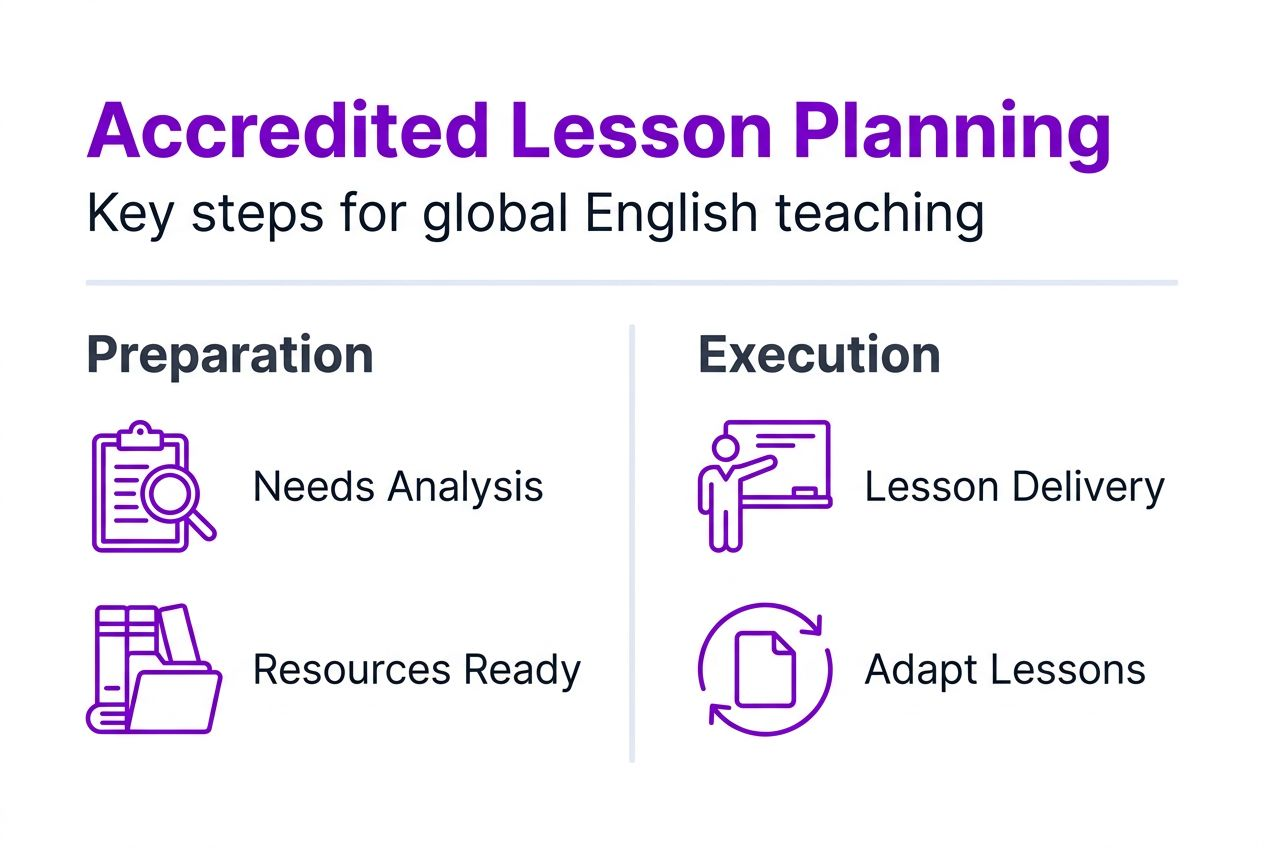
Lesson plan accreditation checklist compliance represents the primary success metric for certification candidates. Trinity assessors evaluate plans against specific criteria including clear aims, logical sequencing, appropriate materials, realistic timing, and built-in assessment. Plans meeting all criteria receive passing marks and contribute to overall CertTESOL certification.
Student engagement improvements manifest through observable participation metrics. Lessons incorporating cultural relevance and varied activities typically generate significantly higher participation rates compared to generic, teacher-centred approaches. You can measure this through tracking speaking turns per student, voluntary question asking, and task completion rates.
Employment outcomes directly correlate with accreditation quality. Teachers completing Trinity CertTESOL programmes with strong lesson planning skills experience higher job placement rates internationally compared to those with weaker planning foundations. Employers specifically seek evidence of systematic planning ability during hiring processes.
Feedback loops from mentors and students create continuous improvement cycles. Regular mentor reviews during training identify planning weaknesses before they become entrenched habits. Student feedback after lessons reveals which activities genuinely engaged learners and which fell flat, informing your material selection for future plans.
The TEFL job placement process increasingly emphasises demonstrated planning competence. Many employers request sample lesson plans during interviews, using them to assess your pedagogical thinking and classroom readiness. Strong portfolios showcasing diverse, well-structured plans significantly improve hiring outcomes.
Longer-term success metrics include teacher retention and career progression. Educators with systematic planning skills report higher job satisfaction, lower burnout rates, and faster advancement into senior teaching or training roles. These outcomes reflect the foundational importance of solid planning capabilities throughout your global teaching impact.
Track your own development by maintaining a planning portfolio documenting your growth from initial attempts through refined, accreditation-quality lessons. This tangible evidence of skill development serves both reflective and professional purposes, supporting your ongoing improvement whilst providing hiring proof of your capabilities.
Take your TEFL journey further with EBC courses and support
Mastering accredited lesson planning requires more than reading guides, it demands practical application within supportive training environments that provide expert feedback and real classroom experience. EBC’s Trinity CertTESOL programmes deliver exactly this combination, preparing you for successful teaching careers worldwide through internationally recognised certification.
Our certification programmes emphasise hands-on lesson planning workshops where you develop, teach, and refine plans under experienced mentor guidance. This practical approach accelerates your skill development far beyond theory-only courses. Beyond certification, EBC’s immersive study and teach programmes in Spain, France, and Italy combine accredited training with cultural immersion and work opportunities, allowing you to build teaching competence whilst experiencing authentic European living.
Global job placement support distinguishes EBC from generic training providers. Our comprehensive TEFL job placement process connects graduates with teaching positions around the world, backed by lifetime assistance that supports your entire teaching career. Contact EBC today to explore how our accredited programmes transform your lesson planning skills into rewarding international teaching opportunities.
Frequently asked questions
How long does it typically take to plan an accredited English lesson?
Planning your first accredited lessons usually requires 3 to 5 hours considering all required elements, material preparation, and review processes. This duration decreases substantially as you develop systematic planning habits and build reusable resource libraries. Practical training through Trinity CertTESOL programmes accelerates this efficiency development by providing structured templates and mentor feedback that streamline your workflow. Experienced teachers often complete quality lesson plans in 90 minutes to 2 hours once they have established effective planning routines.
What are the key differences between Trinity CertTESOL and other TEFL certificates?
Trinity CertTESOL maintains significantly higher accreditation standards with international recognition across Europe, Asia, and beyond. The qualification includes substantial practical teaching components with real students, not just theoretical coursework, ensuring graduates demonstrate actual classroom competence. Comprehensive job placement support accompanies certification, connecting you with global teaching opportunities and providing lifetime career assistance that generic TEFL courses rarely offer.
Can cultural immersion enhance teaching effectiveness?
Cultural immersion increases student motivation by up to 40% because lessons connect directly to learners’ daily experiences and authentic communication needs. Embedding local customs, regional language variations, and culturally relevant materials makes abstract grammar concrete and immediately applicable. This approach proves particularly valuable in study/work programmes across Spain, France, and Italy where students simultaneously develop language proficiency and cultural competence for professional success.
How can I access Trinity College London’s lesson planning resources?
Trinity College London provides official resources through their website and accredited training centres like EBC. Your course mentors typically supply specific syllabus extracts, assessment criteria documents, and sample lesson plans during CertTESOL training. Always use official materials rather than unofficial sources to ensure your planning aligns precisely with current accreditation standards and assessment expectations.
