
Most advice about TEFL course levels leaves aspiring teachers confused and overwhelmed. With an estimated 250,000 educators teach Enghlish abroad, understanding the maze of TEFL certifications truly matters if you want to succeed in a competitive, global job market. This guide cuts through the jargon to clearly explain how TEFL levels work, why certain certifications open doors worldwide, and which choices lead to lasting career growth for British teachers.
Table of Contents
- TEFL Course Levels Explained And Debunked
- Examining Trinity-Accredited TEFL Qualifications
- Course Entry Requirements And Progression Routes
- Specialist TEFL Pathways And Digital Options
- One-Year TEFL Study And Work Programmes Abroad
- Employment Outcomes And Lifetime Job Placement
Key Takeaways
| Point | Details |
|---|---|
| TEFL Course Levels | TEFL certifications range from foundational to advanced levels, each offering specific skills for varying career paths. |
| Trinity Qualifications | The Trinity CertTESOL and DipTESOL provide robust training, linking theory to practice and enhancing international employability. |
| Specialist Pathways | Modern TEFL programmes include specialisations in areas like Business English and online teaching, catering to diverse educational contexts. |
| Global Job Opportunities | Accredited TEFL certifications facilitate immediate job placement and long-term career progression in the global teaching market. |
TEFL course levels explained and debunked
Navigating the landscape of English language teaching qualifications can feel like traversing a complex maze. TEFL certifications range from entry-level programmes to advanced professional credentials, each designed to equip educators with specific skills and global teaching opportunities. Understanding these levels is crucial for aspiring teachers seeking meaningful international career pathways.
Traditionally, TEFL course levels are categorised into foundational, intermediate, and advanced tiers. The foundational tier typically includes entry-level certificates like the 120-hour online TEFL qualification, which provides basic pedagogical skills and classroom management techniques. Exploring the differences between various English teaching certifications reveals the nuanced requirements for different teaching contexts and global destinations.
The intermediate tier often encompasses more specialised qualifications such as the Trinity CertTESOL, which offers deeper theoretical understanding and practical teaching experience. These programmes typically require in-person training, observed teaching practice, and comprehensive language awareness modules. Advanced levels like the DELTA represent postgraduate-level qualifications aimed at experienced educators seeking leadership roles in language education, curriculum design, and academic management.
Key distinctions between TEFL course levels include:
- Depth of theoretical knowledge
- Practical teaching hours
- International recognition
- Specialisation opportunities
- Career advancement potential
Prospective teachers should carefully evaluate their career goals, budget, and time availability when selecting an appropriate TEFL certification pathway. While entry-level certificates provide a solid foundation, advanced qualifications can dramatically expand professional opportunities in competitive international teaching markets.
Examining Trinity-accredited TEFL qualifications
Trinity College London represents a gold standard in English language teaching qualifications, offering robust certification pathways designed to transform aspiring educators into globally recognised professionals. These internationally respected credentials provide comprehensive training that goes beyond traditional teaching methodologies, equipping teachers with advanced linguistic and pedagogical skills required in diverse educational environments.
The Trinity CertTESOL stands as a pivotal Level 5 qualification that bridges theoretical knowledge with practical classroom experience. Comprehensive details about the Trinity CertTESOL reveal its rigorous structure, which includes observed teaching practice, language awareness modules, and detailed professional development components. This certification is strategically recognised by the British Council and most international employers, making it a powerful credential for teachers seeking global opportunities.

At the advanced level, the Trinity DipTESOL emerges as a Level 7 qualification targeting experienced educators aiming to elevate their professional standing. This postgraduate-level certification enables professionals to pursue specialised roles such as teacher trainers, academic managers, curriculum designers, and senior examiner positions. The qualification demands a sophisticated understanding of language teaching methodologies, intercultural communication, and advanced pedagogical research.
Key advantages of Trinity-accredited qualifications include:
- International recognition across multiple educational sectors
- Comprehensive training beyond basic language instruction
- Practical teaching experience with professional mentorship
- Pathway to advanced educational leadership roles
- Credibility with global educational institutions
Prospective teachers should view these qualifications not merely as certificates but as strategic investments in their professional development. By choosing Trinity-accredited programmes, educators position themselves at the forefront of global English language teaching, equipped with transformative skills that transcend traditional classroom boundaries.
Course entry requirements and progression routes
Navigating the landscape of English language teaching certifications requires a strategic understanding of entry requirements and professional progression pathways. Academic qualifications form the foundation for most TEFL certification programmes, with most providers seeking candidates who demonstrate a solid educational background and a genuine passion for international language education.
The typical entry route begins with foundational certifications like the Trinity CertTESOL, which serves as an entry-level qualification for aspiring teachers. Exploring international teaching opportunities reveals diverse pathways for educators seeking global experiences. The CertTESOL, a Level 5 qualification, typically requires candidates to hold a university degree, possess intermediate to advanced English language proficiency, and demonstrate strong communication and interpersonal skills.
Progression to advanced qualifications follows a structured pathway. The Trinity DipTESOL, a Level 7 postgraduate certification, demands a minimum of two years of substantial teaching experience. Candidates are expected to have completed an initial TEFL qualification, though this is not always a strict prerequisite. This advanced certification opens doors to specialised roles such as teacher training, academic management, and curriculum development, representing a significant milestone in an educator’s professional journey.
Key progression routes typically include:
- Entry-level certification (CertTESOL)
- Intermediate teaching experience
- Advanced diploma (DipTESOL)
- Specialised teaching roles
- Academic leadership positions
Prospective teachers must view these qualifications as strategic investments in their professional development. Each certification level represents not just an academic achievement, but a gateway to increasingly sophisticated and rewarding opportunities in the global English language teaching landscape.
Specialist TEFL pathways and digital options
The landscape of English language teaching has dramatically transformed, with specialist TEFL pathways emerging to address increasingly diverse and sophisticated teaching contexts. Modern educators now have unprecedented opportunities to develop niche expertise, combining traditional classroom skills with cutting-edge digital technologies and specialised pedagogical approaches.
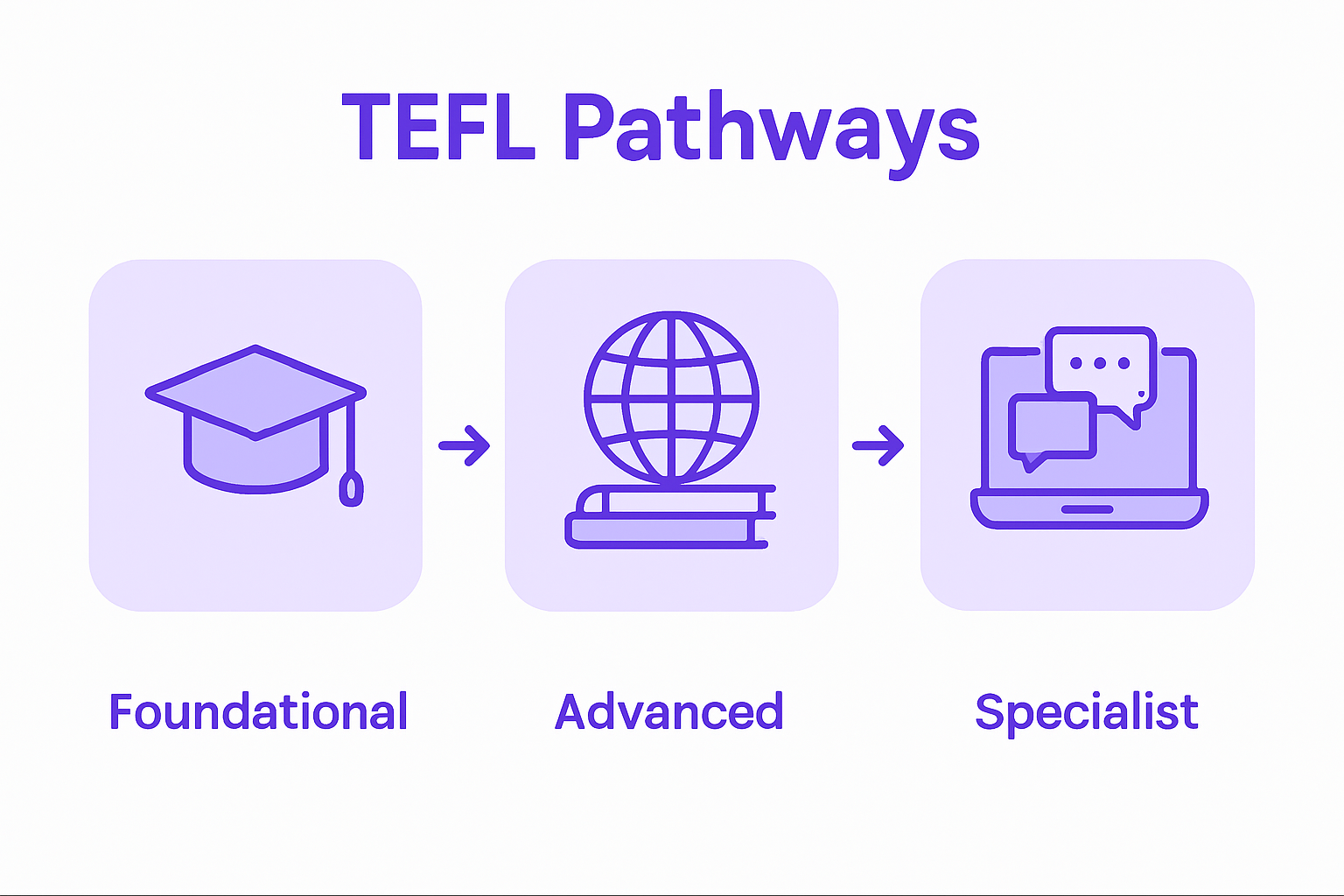
Exploring specialised TEFL certification options reveals a rich ecosystem of targeted programmes designed to meet specific educational needs. These specialist pathways include targeted certifications such as Business English instruction, English for Academic Purposes, Content and Language Integrated Learning (CLIL), and online teaching methodologies. Each specialisation represents a strategic approach to distinguishing oneself in the competitive global language education market.
Digital learning platforms have revolutionised professional development for language educators, offering flexible, comprehensive training that transcends geographical boundaries. Advanced online certification programmes now provide immersive learning experiences that mirror real-world teaching scenarios, incorporating interactive modules, virtual classroom simulations, and globally recognised accreditation. These digital options enable teachers to acquire sophisticated skills while maintaining professional and personal commitments.
Key specialist TEFL pathways include:
- Business English instruction
- Academic English preparation
- Young learner specialisation
- Online teaching certification
- Exam preparation instruction
- Intercultural communication training
Prospective teachers must view these specialisations as strategic investments in their professional trajectory. By developing targeted expertise and embracing digital learning technologies, educators can create unique professional identities that respond dynamically to the evolving global language education landscape.
One-year TEFL study and work programmes abroad
The one-year international teaching programme represents a transformative opportunity for aspiring educators seeking comprehensive professional and cultural immersion. These innovative programmes combine intensive language teacher training, cultural exploration, personal development, and practical work experience into a single integrated year-long journey that transcends traditional academic boundaries.
Exploring comprehensive study and teaching abroad opportunities reveals a strategic pathway for individuals looking to gain international teaching credentials while experiencing life in a foreign cultural context. Typically, these programmes offer a holistic approach that includes accredited TEFL certification, language study, part-time teaching or work opportunities, and comprehensive visa support, creating a seamless transition into global professional environments.
The structure of one-year programmes typically encompasses multiple interconnected components designed to provide a 360-degree professional development experience. Participants can expect intensive teacher training through internationally recognised qualifications like the Trinity CertTESOL, language immersion programmes that enhance communication skills, opportunities for part-time employment, and structured support for navigating work and residency requirements in host countries.
Key features of one-year TEFL study and work programmes include:
- Internationally accredited teacher training
- Language immersion experiences
- Part-time work opportunities
- Cultural integration support
- Comprehensive visa assistance
- Professional networking platforms
Prospective participants should view these programmes as strategic investments in their personal and professional growth. By combining structured learning, practical experience, and cultural immersion, these transformative journeys offer an unprecedented opportunity to develop global teaching skills, linguistic competence, and intercultural understanding.
Employment outcomes and lifetime job placement
The global landscape of English language teaching presents unprecedented opportunities for professionally trained educators, with internationally recognised qualifications serving as critical gateways to diverse and rewarding career pathways. Graduates of comprehensive TEFL programmes can expect to access a dynamic global job market that values high-quality, accredited teacher training and demonstrated pedagogical expertise.
Exploring comprehensive international teaching opportunities reveals the transformative potential of strategic teacher training. Internationally accredited certifications like the Trinity CertTESOL not only provide immediate employability but also establish long-term professional credibility. These qualifications are strategically recognised by educational institutions, language centres, and employers worldwide, creating a robust foundation for sustained career progression.
Lifetime job placement support represents a distinctive feature of advanced TEFL programmes, offering graduates continuous professional guidance beyond initial certification. This comprehensive approach typically includes career counselling, job search assistance, interview preparation, and ongoing networking opportunities. Advanced qualifications such as the Trinity DipTESOL further enhance employability by enabling graduates to access specialised roles including teacher training, academic management, curriculum development, and examination preparation.
Key employment outcomes typically include:
- Immediate job placement in international contexts
- Competitive salary potential
- Diverse teaching opportunities
- Career progression pathways
- Professional development support
- Global mobility
Prospective teachers should view their TEFL certification as a strategic investment in a dynamic, globally-oriented career. By selecting programmes with robust job placement support and internationally recognised credentials, educators can unlock a world of professional opportunities that extend far beyond traditional teaching boundaries.
Unlock Your Global Teaching Career with Trinity-Accredited TEFL Pathways
Navigating TEFL course levels can be overwhelming when you seek recognised qualifications, practical teaching experience, and expansive career opportunities. Whether you aim to start with the foundational Trinity CertTESOL or advance to specialised pathways, understanding the credentials that open doors worldwide is crucial. Key challenges include finding internationally accredited training, gaining hands-on support to build confidence, and securing lifelong access to employment networks.
At EBC TEFL, we address these challenges by offering Trinity College London accredited programmes known for their global recognition and rigorous standards. Our courses include not only core certifications but also specialised options like Business English and Online Teaching. Plus, our unique one-year study and work abroad programmes in Spain, France, and Italy combine full teacher training with language immersion, visa assistance, part-time work, and genuine cultural experiences. This comprehensive approach equips you with both the skills and real-world confidence to teach English anywhere.
Take the next step towards a fulfilling international teaching journey by exploring our programmes. Benefit from lifetime job placement support that keeps your career moving forward long after certification. Find out more about our Trinity CertTESOL courses, discover one-year study and work abroad options in Europe, and schedule your free consultation to start your global teaching adventure today at EBC TEFL. Your future as a confident, accredited English teacher starts here.
Frequently Asked Questions
What are the different levels of TEFL courses?
TEFL courses are typically categorised into foundational, intermediate, and advanced levels. Foundational courses, like the 120-hour online TEFL qualification, provide basic skills. Intermediate courses, such as the Trinity CertTESOL, offer more specialised training, while advanced qualifications, like the DELTA, are intended for experienced educators pursuing leadership roles.
What is the significance of a Trinity-accredited TEFL qualification?
A Trinity-accredited TEFL qualification, such as the CertTESOL or DipTESOL, is recognised internationally and provides comprehensive training. These qualifications enhance teachers’ credibility and employability, making them valuable for those seeking careers in the global English language teaching market.
How can I progress to advanced TEFL qualifications?
To progress to advanced TEFL qualifications, such as the Trinity DipTESOL, you typically need to hold an initial TEFL qualification and have relevant teaching experience. The advanced qualification often requires a minimum of two years of teaching experience, but specific prerequisites may vary by programme.
What specialist TEFL pathways are available for educators?
Specialist TEFL pathways include certifications in Business English instruction, English for Academic Purposes, Content and Language Integrated Learning (CLIL), and online teaching methodologies. These pathways allow educators to develop niche expertise and enhance their professional profiles in a competitive teaching market.
Recommended
- International TEFL Career Steps: Your Path to Global Teaching – EBC TEFL courses
- What Is TEFL Certification? Complete Guide Explained – EBC TEFL courses
- What Is International TEFL? Complete Guide and Benefits – EBC Trinity CertTESOL and TEFL courses
- 7 Key Advantages of the Trinity CertTESOL for Aspiring Teachers – EBC TEFL courses
- Making Learning Fun: Engaging Activities for Your Kids – The Zoofamily