
Over one billion people are learning English worldwide right now, creating a huge demand for qualified teachers. For anyone hoping to teach English abroad or online, understanding TEFL certification is the first step toward a global teaching career. Whether you are a recent graduate or a professional exploring a new path, knowing what TEFL stands for and why it matters can help you make smart choices that lead to rewarding opportunities in classrooms around the world.
Table of Contents
- Defining TEFL Certification And Its Purpose
- Types Of TEFL Certifications And Accreditations
- Core Requirements And Training Components
- Career Paths And Global Teaching Opportunities
- Common Pitfalls And How To Choose Wisely
Key Takeaways
| Point | Details |
|---|---|
| Importance of TEFL Certification | TEFL certification validates the ability to teach English to non-native speakers and equips educators with essential teaching methodologies and classroom management skills. |
| Types of TEFL Certifications | Certifications vary from online courses to in-class training, with some focusing on specific contexts like business English or young learners, emphasizing the need for accredited programs. |
| Core Training Components | Comprehensive TEFL programs typically include a minimum of 100 instructional hours, combining theoretical knowledge with practical teaching experience to ensure workplace readiness. |
| Career Opportunities | TEFL certification opens global teaching opportunities across various sectors, allowing for diverse roles from public schools to online platforms and specialized academic programs. |
Defining TEFL Certification And Its Purpose
TEFL certification represents a standardised professional qualification designed to equip educators with the essential skills and knowledge required to teach English effectively to non-native speakers around the world. This internationally recognised credential validates an individual’s ability to design engaging language lessons, understand second language acquisition principles, and deliver instruction using contemporary teaching methodologies.
At its core, a TEFL (Teaching English as a Foreign Language) certification provides comprehensive training that transforms language enthusiasts into qualified professional educators. The certification prepares teachers to work in diverse global classroom environments, ranging from private language schools in Asia to public educational institutions in Europe. Learn more about international TEFL opportunities to understand the breadth of potential teaching destinations.
Key purposes of TEFL certification include:
- Developing robust classroom management techniques
- Understanding language learning psychology
- Learning communicative teaching approaches
- Acquiring practical lesson planning skills
- Gaining confidence in cross-cultural educational settings
Professional TEFL programmes typically incorporate both theoretical knowledge and practical teaching experience, ensuring that graduates are not just academically prepared but also classroom-ready. By completing a reputable certification, teachers demonstrate their commitment to professional development and their ability to support students’ language learning journeys effectively.
Types Of TEFL Certifications And Accreditations
TEFL certifications come in various formats, each designed to meet different professional needs and career objectives for aspiring English language teachers. The landscape of TEFL qualifications includes multiple recognised credentials, ranging from online programmes to comprehensive in-person training courses that provide robust preparation for international teaching roles.
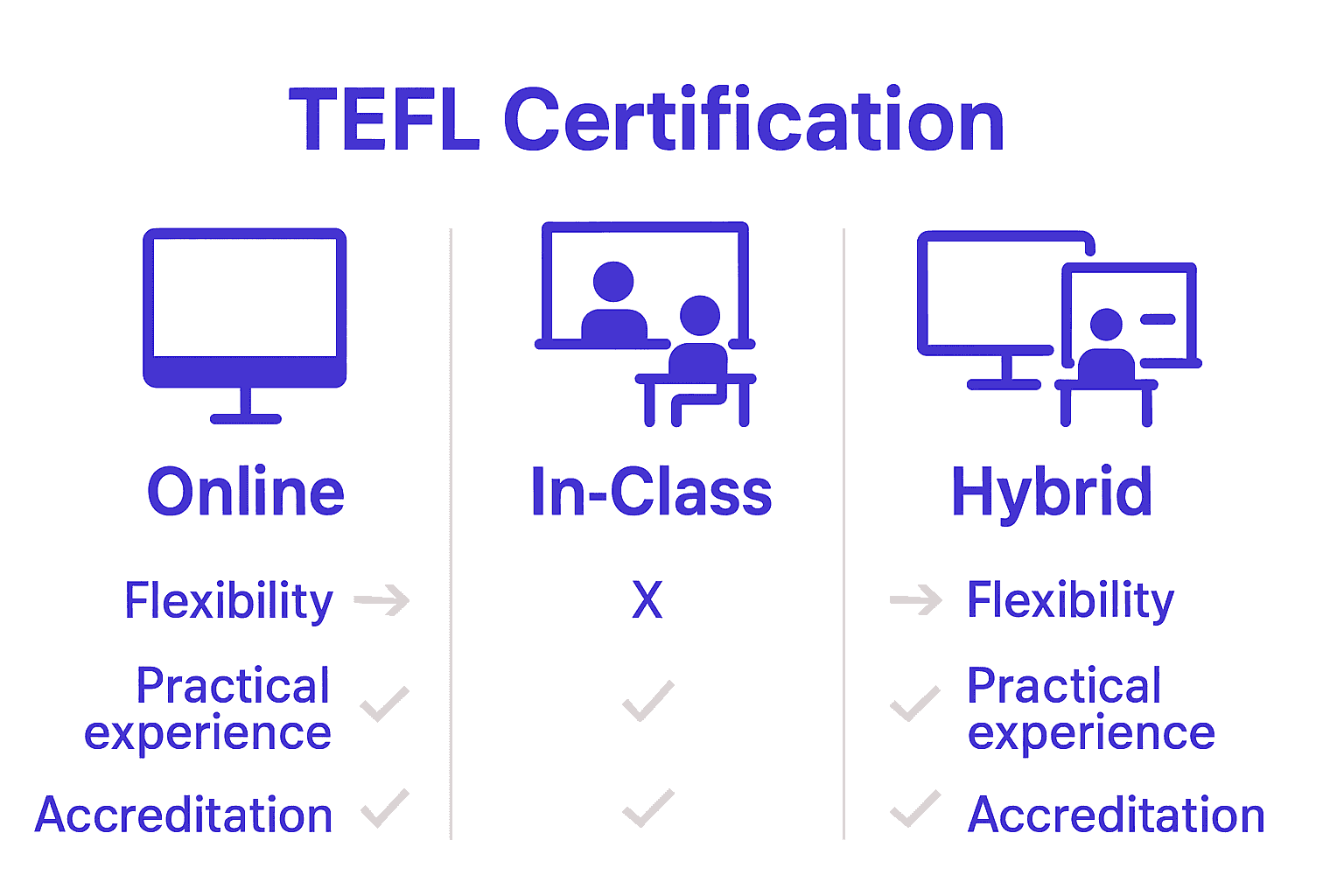
The primary types of TEFL certifications typically include:
- Online TEFL Courses: Flexible digital programmes allowing self-paced learning
- In-Class TEFL Certification: Intensive face-to-face training with practical teaching experience
- Hybrid TEFL Programmes: Combining online theoretical study with practical classroom components
- Advanced Specialised TEFL Certifications: Focusing on specific teaching contexts like business English or young learners
When considering certification options, educators should prioritise accredited TEFL courses that meet international standards. Accreditation ensures the programme meets rigorous educational quality standards and provides legitimate recognition across global teaching markets. Professional certifications like the Trinity CertTESOL represent top-tier qualifications that offer comprehensive training and significant credibility in the international English language teaching profession.

Recognition and quality vary significantly across different certification types. Some programmes offer 120-hour standard certifications, while others provide more intensive 150 or 180-hour courses with additional practical teaching components. Potential teachers should carefully evaluate programme specifics, including accreditation status, practical teaching opportunities, and recognition by international employers to select the most appropriate certification for their career goals.
Core Requirements And Training Components
TEFL certification programmes are meticulously structured to provide comprehensive training that transforms language enthusiasts into professional educators. According to TESOL recommendations, these programmes typically require a minimum of 100 instructional hours complemented by supervised teaching practice, ensuring a robust blend of theoretical knowledge and practical classroom skills.
The core training components of a comprehensive TEFL certification usually encompass:
- Language Teaching Methodology: Understanding contemporary approaches to second language acquisition
- Classroom Management: Developing strategies for effective student engagement and lesson delivery
- Lesson Planning: Creating structured, interactive, and goal-oriented English language lessons
- Language Awareness: Deepening grammatical and linguistic understanding
- Practical Teaching Practice: Supervised classroom or online teaching experiences
Professional TEFL accreditation standards emphasise the importance of balanced training that goes beyond theoretical learning. The Level 5 Certificate in Teaching Practice (TEFL) highlights the significance of developing both academic and professional skills crucial for effective English language instruction. This approach ensures that teachers are not just knowledgeable, but also practically prepared to handle diverse classroom environments and student needs.
Most comprehensive TEFL programmes require candidates to demonstrate proficiency across multiple dimensions, including lesson design, classroom interaction, error correction techniques, and understanding of learner psychology. The practical teaching component is particularly critical, typically involving 6-20 hours of actual teaching experience under expert supervision, allowing candidates to apply theoretical knowledge in real-world teaching scenarios and receive constructive feedback from experienced mentors.
Career Paths And Global Teaching Opportunities
TEFL certification opens up a world of diverse and exciting career paths for language educators, transforming passionate individuals into globally recognised English language professionals. The international demand for English teachers continues to expand, creating numerous opportunities across multiple sectors and geographical regions, from traditional classroom settings to innovative online teaching platforms.
Potential career paths for TEFL-certified teachers include:
- Public School Teaching: Working in government educational systems worldwide
- Private Language Academies: Delivering specialised English language instruction
- Corporate Language Training: Providing business English programmes to professionals
- Online Teaching Platforms: Delivering digital English lessons to global students
- International University Language Centres: Supporting academic English programmes
- International Test Preparation Centres: Helping students prepare for English proficiency exams
Discover which countries need English teachers most in 2025, revealing exciting opportunities for ambitious educators. The global landscape of English language teaching offers remarkable flexibility, allowing teachers to choose between permanent positions, short-term contracts, and freelance opportunities across different continents. Professionals with TEFL certification can expect competitive compensation packages, often including additional benefits like housing allowances, flight reimbursements, and comprehensive healthcare in many international teaching markets.
Beyond traditional teaching roles, TEFL-certified educators can explore specialised career paths such as curriculum development, educational consulting, materials creation, and teacher training programmes. The certification provides a robust foundation for professional growth, enabling teachers to transition between different educational contexts and continuously expand their expertise in language education.
Common Pitfalls And How To Choose Wisely
Selecting the right TEFL certification requires careful consideration and strategic decision-making, as not all programmes are created equal. Many aspiring teachers fall into common traps that can significantly impact their future teaching opportunities, such as choosing unaccredited courses or overlooking the importance of practical teaching experience.
Key pitfalls to avoid when selecting a TEFL certification include:
- Unaccredited Programmes: Courses lacking recognised international credentials
- Insufficient Teaching Hours: Programmes with less than 120 hours of comprehensive training
- Zero Practical Teaching Components: Certifications without supervised teaching practice
- Overpriced Online-Only Courses: Programmes charging premium rates for minimal instruction
- Generic, Non-Specialised Training: One-size-fits-all approaches that don’t address specific teaching contexts
Professional TEFL accreditation standards provide critical guidance for making informed choices. Prospective teachers should prioritise certifications that offer a balanced mix of theoretical knowledge and practical classroom experience, ensuring they develop genuine, transferable teaching skills. Careful research into course content, instructor qualifications, and post-certification support can prevent costly mistakes and set the foundation for a successful international teaching career.
Ultimately, the wisest approach involves thoroughly investigating potential TEFL programmes, comparing their curriculum, accreditation status, and industry recognition. Seek out courses that provide comprehensive training, include observed teaching practice, offer job placement support, and have a proven track record of successful graduate placements in international teaching markets. Don’t just look at the price tag – invest in a certification that will genuinely prepare you for the complex and rewarding world of English language teaching.
Unlock Your Global Teaching Career with Accredited TEFL Certification
Navigating the world of TEFL certification can feel overwhelming with so many options and concerns about accreditation, practical training, and job placement. This article highlights key challenges like choosing a programme with recognised credentials, obtaining sufficient hands-on teaching experience, and finding trusted support to start your international teaching journey. If you are eager to gain comprehensive skills such as lesson planning, classroom management, and cross-cultural communication, then investing in a high-quality course is essential.
At EBC TEFL Course we understand these goals and barriers intimately. Our Trinity-accredited certifications—including the prestigious CertTESOL—and specialised courses are designed to blend robust theory with real-world teaching practice. We also offer lifelong job placement support to help you secure rewarding roles across Europe and Asia. You do not have to face these challenges alone. Take the first step to transform your passion into a qualified profession by booking a free consultation with our advisors today.
Explore how you can begin your TEFL journey with confidence at EBC TEFL Course and discover tailored pathways that match your ambitions and lifestyle. The best time to act is now because every day brings you closer to teaching English abroad and changing your life forever. Find out more by visiting How to Get Accredited TEFL Training and start writing your own success story.
Frequently Asked Questions
What is the purpose of obtaining a TEFL certification?
TEFL certification provides essential skills and knowledge for teaching English to non-native speakers, validating an individual’s ability to design lessons and deliver instruction effectively.
What types of TEFL certifications are available?
TEFL certifications include online courses, in-class training, hybrid programmes, and advanced specialised certifications focusing on specific teaching contexts, such as business English or young learners.
What are the core components of a TEFL certification programme?
Core components typically include language teaching methodology, classroom management, lesson planning, language awareness, and practical teaching practice to ensure candidates are well-prepared for teaching.
How can I choose the right TEFL certification for my career?
To choose the right TEFL certification, prioritize accredited programmes with a minimum of 120 hours of training, practical teaching components, and a well-recognized curriculum that aligns with your career goals.
Recommended
- TESOL, TEFL, CELTA, DELTA, TESL – How Are They Different? – EBC Trinity CertTESOL and TEFL courses
- TEFL vs TESOL and what they really mean – EBC Trinity CertTESOL and TEFL courses
- What Is International TEFL? Complete Guide and Benefits – EBC Trinity CertTESOL and TEFL courses
- What Is a TEFL Course Syllabus? Complete Breakdown – EBC Trinity CertTESOL and TEFL courses