
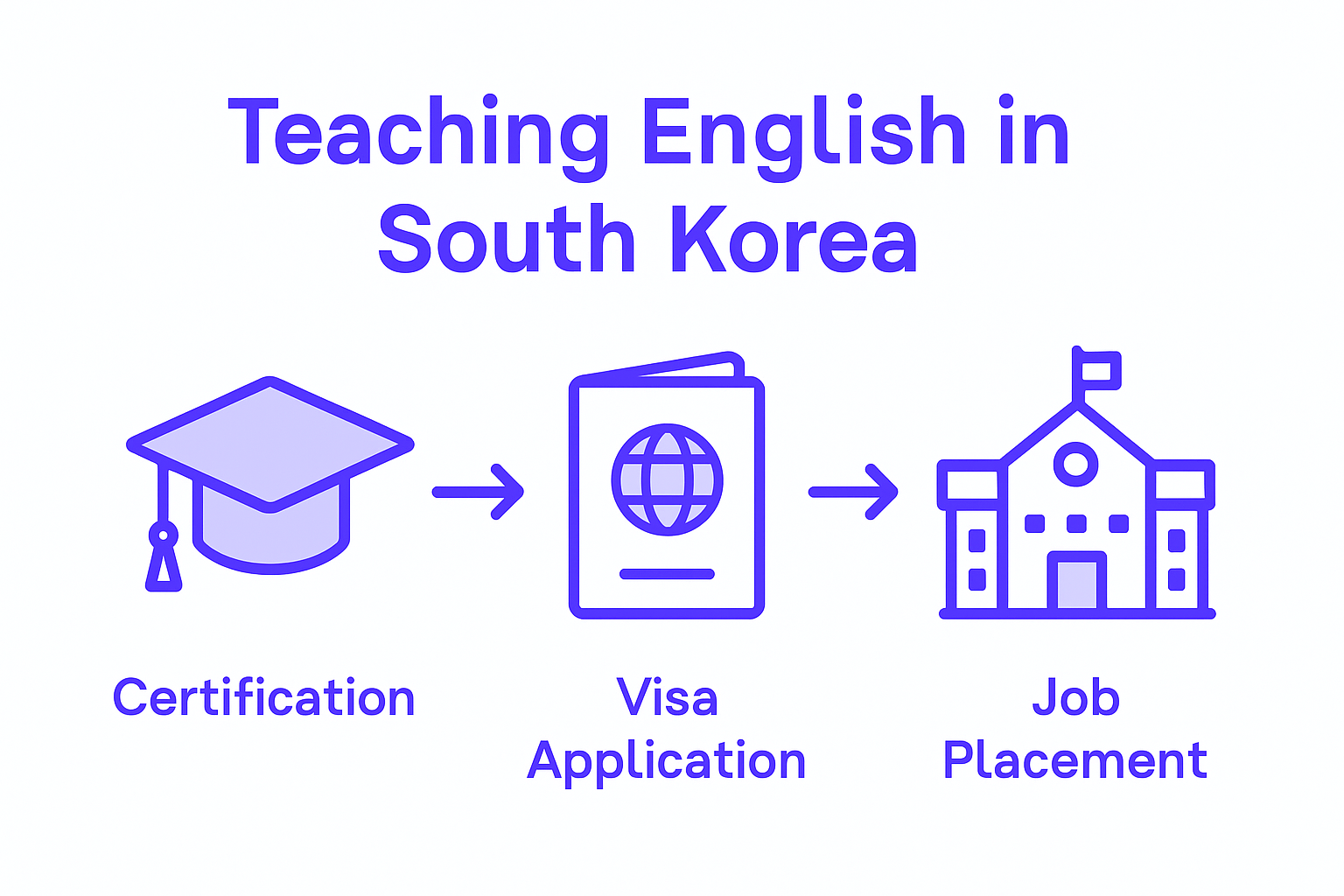
Over 10,000 teachers head to South Korea each year seeking rewarding opportunities and cultural adventure. With a thriving English education market and strict TEFL requirements, South Korea attracts those eager to launch international teaching careers. Understanding the certification process, visa steps, and the unique experience of adapting to Korean schools will help you stand out and succeed in this competitive field.
Table of Contents
- Step 1: Research TEFL Requirements and Opportunities
- Step 2: Gain a Trinity College London Accredited TEFL Certification
- Step 3: Prepare Essential Documents and Apply for a Visa
- Step 4: Secure Teaching Jobs with Lifetime Placement Support
- Step 5: Adapt to Korean Culture and Begin Teaching
Quick Summary
| Essential Insight | Detailed Explanation |
|---|---|
| 1. Understand TEFL Requirements | Research required qualifications, including a bachelor’s degree, TEFL certification, and native English proficiency for teaching in South Korea. |
| 2. Acquire Trinity CertTESOL Accreditation | Completing an accredited Trinity College London TEFL course equips you with essential teaching methodologies and skills for success in South Korean classrooms. |
| 3. Prepare Necessary Documents for Visa | Compile critical documents, such as your degree, background check, and medical certificate, and allow time for authentication before applying for your teaching visa. |
| 4. Leverage Job Placement Resources | Utilize professional placement services which connect you with suitable teaching jobs in various educational settings in South Korea. |
| 5. Adapt to Korean Cultural Norms | Embrace and understand South Korean social dynamics, such as workplace hierarchy and communication protocols, to enhance your teaching experience. |
Step 1: Research TEFL Requirements and Opportunities
Researching TEFL opportunities in South Korea requires strategic planning and understanding specific certification requirements. Your goal is to map out the necessary qualifications, job markets, and potential teaching pathways that will help you successfully launch your international teaching career.
Starting your research involves exploring TEFL certification requirements for teaching English in South Korea. Most South Korean schools and language institutes demand specific credentials, typically including a bachelor’s degree, a TEFL certification, and native English speaking proficiency. The standard requirements usually encompass:
- A four-year university degree in any discipline
- A Trinity CertTESOL or equivalent TEFL certification
- Clean criminal background check
- Valid passport from an English speaking country
- Good physical and mental health
Digging deeper into opportunities means understanding the different teaching environments available. South Korea offers multiple teaching contexts including public schools through programmes like EPIK (English Programme in Korea), private language academies known as hagwons, international schools, and university positions. Each context has unique requirements and salary ranges.
Pro Tip: Connect with current English teachers in South Korea through online forums and professional networks. These communities provide invaluable insights into current job markets, cultural adaptation strategies, and realistic expectations for teaching abroad.
Your next step will involve preparing your application documents and identifying specific job placement resources that can guide your international teaching journey.
Step 2: Gain a Trinity College London Accredited TEFL Certification
Gaining a Trinity College London accredited TEFL certification represents your gateway to becoming a professional English language instructor in South Korea. This internationally recognised qualification will not only enhance your employability but also provide you with robust teaching skills essential for success in international classrooms.
The Trinity CertTESOL certification process typically involves comprehensive training that covers practical teaching methodologies, language awareness, and classroom management techniques. Most programmes require 120 hours of intensive study, including both theoretical learning and practical teaching experience. You will need to prepare for:
- Theoretical language teaching modules
- Observed teaching practice sessions
- Assessment of lesson planning skills
- Evaluation of language awareness
- Professional portfolio development
Successful candidates receive an internationally recognised qualification that demonstrates their ability to teach English effectively. The Trinity CertTESOL stands out because it provides practical skills directly applicable to South Korean educational environments, which value structured and professional teaching approaches.
Pro Tip: Ensure you select a Trinity College London accredited programme that offers specific preparation for teaching in Asian contexts. Some programmes provide additional support for understanding cultural nuances and adapting teaching strategies to South Korean classroom dynamics.
Once you have completed your certification, you will be well positioned to start applying for teaching positions and preparing your application documents for potential employers in South Korea.
Step 3: Prepare Essential Documents and Apply for a Visa
Preparing essential documents and navigating the visa application process is a critical stage in your journey to teach English in South Korea. Your goal is to compile a comprehensive document portfolio that meets the stringent requirements of both educational institutions and South Korean immigration authorities.
Document authentication is a crucial step for teaching in South Korea. You will need to gather and prepare several key documents, including:
- Original bachelor’s degree diploma
- Authenticated degree certificate
- Valid passport with at least 18 months remaining
- National level criminal background check
- Sealed university transcripts
- Professional passport photographs
- Completed visa application forms
- Medical health certificate
- Copy of your Trinity CertTESOL certification
The E2 teaching visa requires meticulous preparation. Most employers and immigration offices demand original documents with apostille certification, which validates the document’s authenticity for international use. This process typically involves getting your documents verified by your home country’s government and the South Korean embassy.

Pro Tip: Start the document authentication process at least three months before your planned departure. Some government certification processes can take several weeks, and delays could potentially jeopardise your teaching opportunity.
Once your documents are prepared and authenticated, you will be ready to submit your visa application and take the next exciting step towards your teaching adventure in South Korea.
Step 4: Secure Teaching Jobs with Lifetime Placement Support
Securing teaching jobs in South Korea requires strategic planning and leveraging professional placement resources. Your goal is to transform your Trinity CertTESOL certification into a meaningful teaching opportunity that launches your international career.
Worldwide job placement support becomes crucial in navigating the competitive South Korean English teaching market. Most successful candidates utilise comprehensive placement services that help match their specific skills and preferences with appropriate teaching positions. The typical job search process involves:
- Creating a professional teaching portfolio
- Preparing comprehensive application documents
- Participating in online and in person interviews
- Understanding school and recruitment agency expectations
- Negotiating contract terms
South Korean schools typically recruit for three primary teaching environments public schools through EPIK programmes, private language academies known as hagwons, and international educational institutions. Each environment offers unique challenges and opportunities, with salary ranges and working conditions varying significantly.
Pro Tip: Network actively with current English teachers in South Korea through professional forums and social media groups. These connections can provide invaluable insider information about potential job openings and cultural adaptation strategies.
Once you have secured a teaching position, you will be ready to embark on an exciting professional journey that combines cultural immersion with meaningful educational experiences.
Step 5: Adapt to Korean Culture and Begin Teaching
Beginning your teaching journey in South Korea requires more than just professional skills it demands cultural sensitivity and adaptability. Your success will depend on understanding and respecting the nuanced social dynamics of Korean educational environments.
Understanding programmes like EPIK provides crucial insights into the structured approach of English language education in South Korea. The cultural adaptation process involves several key elements:
- Learning basic Korean language skills
- Understanding workplace hierarchy and communication protocols
- Respecting traditional social etiquette
- Embracing collective work culture
- Developing professional relationships with Korean colleagues
Teaching in South Korean schools requires a structured and disciplined approach. Classroom management differs significantly from Western educational models, with greater emphasis on respect, conformity, and collective learning. You will need to balance your teaching methodology with local educational expectations, which often prioritise rote learning and academic achievement.
Pro Tip: Invest time in learning about Korean cultural nuances before your arrival. Understanding concepts like ‘kibun’ (emotional mood) and ‘nunchi’ (emotional intelligence) will help you navigate social interactions more effectively.
As you settle into your new role, remember that cultural adaptation is a gradual process. Patience, openness, and a willingness to learn will be your greatest assets in creating meaningful educational experiences.
Launch Your Teaching Career in South Korea with Confidence
The journey to becoming an English teacher in South Korea involves navigating certification requirements, visa processes, and cultural adaptation. If you are aiming to meet these challenges with a trusted qualification and global support, EBC TEFL offers exactly what you need. Our Trinity College London accredited TEFL certifications equip you with practical teaching skills recognised worldwide—perfect for meeting South Korea’s demand for professional English instructors.
Beyond certification, we provide free lifetime job placement support helping you secure teaching positions in South Korea and other countries. Additionally, explore our immersive 1-year study and work abroad programmes in Spain, France, and Italy that combine accredited teacher training, language study, visa assistance, and part-time teaching opportunities for a well-rounded international experience.
Ready to take the next step and make your teaching ambitions in South Korea a reality? Book your free consultation now at EBC TEFL and begin your journey with expert guidance and support. Discover detailed course information and future career possibilities through our Trinity College London TEFL courses and secure your spot on the path to global teaching success.
Frequently Asked Questions
What qualifications do I need to become an English teacher in South Korea?
To teach English in South Korea, you typically need a bachelor’s degree, a recognised TEFL certification such as the Trinity CertTESOL, and native-level English proficiency. Start by researching accredited TEFL programmes to gain the necessary qualifications within a few months.
How do I apply for a teaching position in South Korea?
To apply for a teaching position in South Korea, prepare a professional teaching portfolio and submit application documents to schools or recruitment agencies. Begin this process early, ensuring your portfolio is ready well ahead of the hiring season, which often starts in late spring.
What documents do I need for the E2 visa application?
For the E2 visa application, you will need to prepare documents including your bachelor’s degree diploma, national criminal background check, and a valid passport, among others. Ensure all documents are authenticated and ready at least three months before your planned departure to avoid delays.
How can I adapt to teaching in a Korean school environment?
To adapt to teaching in a Korean school environment, invest time in learning about local cultural norms and classroom management styles. Familiarise yourself with concepts such as respect and collective learning approaches to enhance your classroom effectiveness within the first few weeks.
Is it necessary to learn the Korean language before teaching?
While it is not mandatory to know Korean, learning basic phrases can greatly enhance your experience and interactions. Start by learning essential vocabulary and phrases that will help you navigate daily life and build rapport with students and colleagues more effectively.
What types of schools can I teach in South Korea?
You can teach in various settings, including public schools under the EPIK programme, private language academies known as hagwons, or international schools. Research the differences between these options to determine which environment aligns best with your teaching goals.
Recommended
- Teach English in South Korea – 3 great reasons why you should – EBC Trinity CertTESOL and TEFL courses
- Teach English in South Korea – 3 great reasons why you should
- Why Teach in South Korea: Complete Guide – EBC TEFL courses
- What are EPIK, GEPIK, SMOE? – teaching English in South Korea – EBC Trinity CertTESOL and TEFL courses