
Every year, thousands of teachers from around the world set their sights on South Korea, drawn by more than just generous paychecks. The country’s education system is known for its structured support and high-quality standards, making it a magnet for educators who want both career advancement and cultural adventure. With monthly salaries often reaching up to £4,000 and a community that values learning, South Korea offers opportunities few destinations can match. Discover what makes teaching here such a global phenomenon.
Table of Contents
- Why Teaching in South Korea Appeals Globally
- Key Requirements and Eligibility Criteria
- Popular Teaching Positions and Institutions
- Salary, Benefits, and Contract Conditions
- Cultural Insights and Daily Life Experiences
- Challenges, Legalities, and What to Avoid
Key Takeaways
| Point | Details |
|---|---|
| Global Attraction | South Korea’s teaching opportunities offer competitive salaries, low living costs, and a rich cultural experience for international educators. |
| Eligibility Requirements | Applicants must meet nationality, educational, and certification criteria to ensure quality integration into the Korean education system. |
| Diverse Teaching Positions | Various teaching roles are available across public schools, private academies, international schools, and universities, catering to different qualifications and experiences. |
| Legal Preparedness | Prospective teachers should understand visa regulations, contract details, and cultural norms to navigate potential challenges in their teaching journey. |
Why Teaching in South Korea Appeals Globally
Teaching in South Korea has emerged as an incredibly attractive international opportunity for English language educators worldwide, blending professional development with cultural immersion and exceptional career prospects. The Korean education system stands out globally for its structured approach, robust support for foreign teachers, and commitment to high-quality English language instruction.
The appeal of teaching in South Korea extends far beyond mere employment. Educators are drawn to the country’s unique combination of advanced technological infrastructure, generous compensation packages, and a culturally rich environment that offers unprecedented professional and personal growth opportunities. According to research from the National Center on Education and the Economy, the Korean government’s deliberate integration of foreign teachers into the national curriculum creates a supportive ecosystem for international educators.
Key factors that make South Korea an exceptional teaching destination include:
- Competitive Salaries: Monthly wages ranging from £1,500 to £2,500, often with additional housing and travel allowances
- Low Cost of Living: Enabling substantial personal savings compared to other international teaching markets
- Cultural Experience: Immersion in a dynamic society that values education and technological innovation
- Professional Development: Access to advanced training programmes and potential pathways into broader educational roles
Moreover, South Korea’s reputation for educational excellence means teachers aren’t just employed but are genuinely respected members of the professional community. Learn more about teaching opportunities in South Korea and discover why thousands of international educators choose this vibrant destination each year.
Key Requirements and Eligibility Criteria
Teaching English in South Korea involves meeting specific eligibility criteria designed to ensure high-quality educational standards and seamless integration of foreign educators into the national school system. The primary requirements are straightforward but comprehensive, focusing on educational background, professional qualifications, and personal characteristics.
According to the EPIK (English Programme in Korea) guidelines, applicants must satisfy several key prerequisites. Learn more about teaching programme requirements to understand the specific qualifications needed for successful placement.
Core eligibility requirements typically include:
- Nationality: Must be a citizen of a designated English-speaking country (typically USA, UK, Canada, Australia, New Zealand, Ireland, or South Africa)
- Educational Background: Bachelor’s degree from an accredited university (in any discipline)
- Language Certification: TEFL/TESOL certification strongly preferred, mandatory if degree is not in Education
- Age Range: Generally between 22-55 years old
- Criminal Background: Clean criminal record with mandatory background check
- Health Requirements: Pass a comprehensive medical examination
The recruitment process is highly competitive, with schools seeking enthusiastic, adaptable professionals who can effectively communicate and integrate into Korean educational environments. Physical and mental preparedness, alongside a genuine passion for teaching and cultural exchange, are equally important as meeting the technical eligibility criteria. Prospective teachers should demonstrate flexibility, cultural sensitivity, and a commitment to professional development to maximise their chances of successful placement.

Popular Teaching Positions and Institutions
South Korea offers a diverse range of teaching opportunities that cater to different professional backgrounds, experience levels, and personal preferences. These positions span multiple educational sectors, providing teachers with unique pathways to build their international teaching careers and immerse themselves in Korean culture.
Learn more about teaching programme opportunities to understand the nuanced landscape of English education in South Korea. The primary teaching positions can be categorised into four main institutional types:
Public School Programmes
- EPIK (English Programme in Korea): Government-sponsored programme placing teachers in public schools nationwide
- Structured environment with consistent curriculum and support
- Typically offer stable salaries, housing allowances, and comprehensive benefits
- Predictable working hours and clear professional expectations
Private Language Academies (Hagwons)
- Private English institutes operating after standard school hours
- More competitive salaries with potential for higher earnings
- Smaller class sizes and more flexible teaching approaches
- Greater emphasis on conversational English and test preparation
International Schools
- Teach English to international and local students
- Require advanced teaching qualifications and prior international experience
- Highest paying positions with most comprehensive benefits
- Opportunity to teach comprehensive curriculum, not just language
University Positions
- Teaching English to university students and staff
- Typically require master’s degree and extensive teaching experience
- Reduced teaching hours with higher compensation
- Research and academic development opportunities
Each teaching environment offers distinct advantages, allowing educators to select positions that best align with their professional goals and personal preferences.
Prospective teachers should carefully research each option, considering factors like salary, working conditions, professional growth potential, and personal career objectives.
Salary, Benefits, and Contract Conditions
Teaching in South Korea presents an attractive financial package that goes far beyond a standard salary, offering comprehensive compensation structures designed to support and incentivise international educators. The remuneration typically encompasses not just monthly wages, but a holistic approach to professional and personal support that makes teaching in South Korea financially compelling.
Explore detailed teaching programme benefits to understand the full scope of financial opportunities available. The typical compensation package for English teachers includes multiple layers of financial and lifestyle benefits:
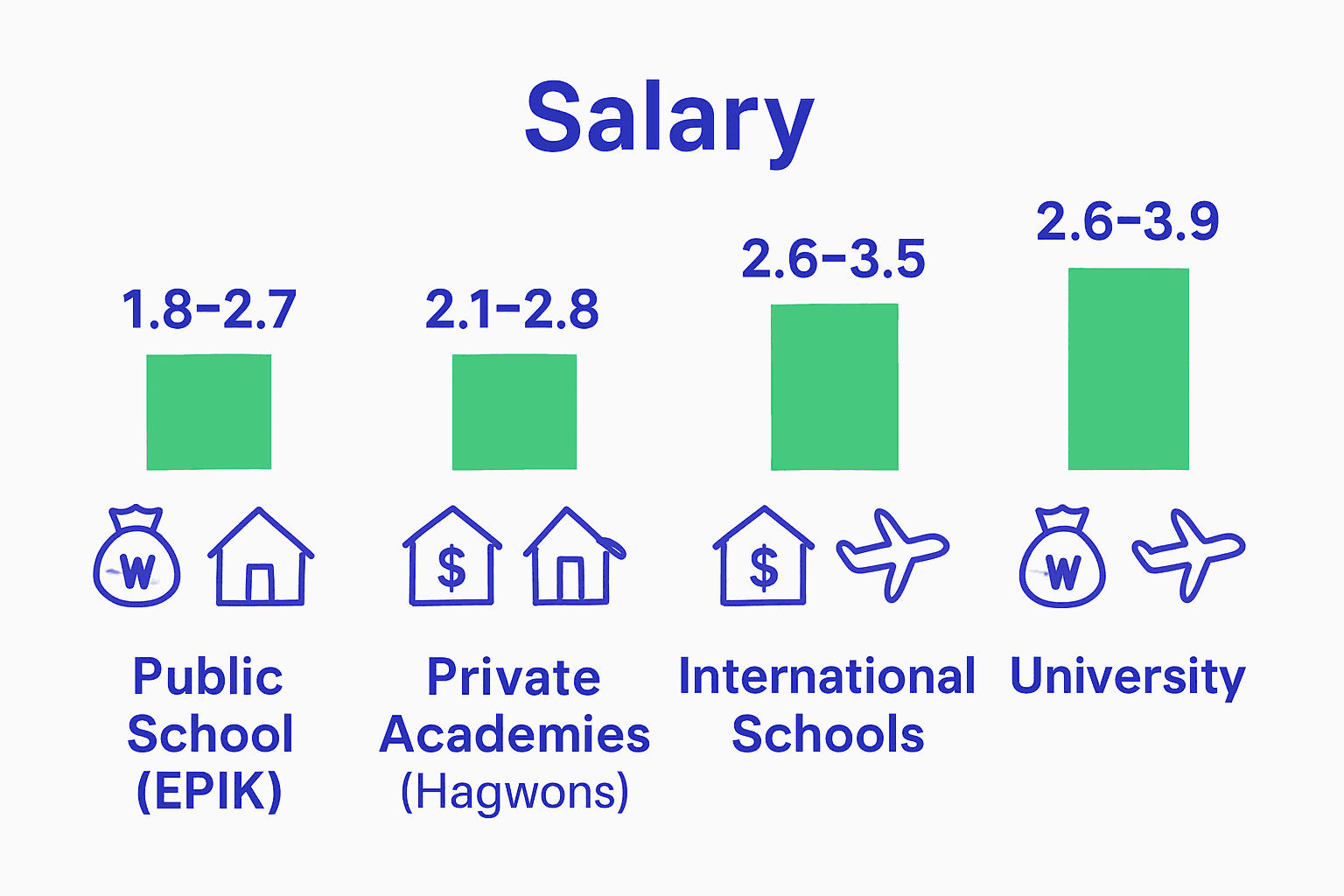
Salary Ranges
- Public Schools (EPIK): £1,700 – £2,500 per month
- Private Academies (Hagwons): £1,900 – £2,700 per month
- International Schools: £2,500 – £4,000 per month
- University Positions: £2,300 – £3,500 per month
Standard Benefits Package
- Housing: Free apartment or substantial housing allowance
- Flight Reimbursement: Return flight ticket covered at contract start and end
- Settlement Allowance: One-time payment to help with initial expenses
- Health Insurance: Comprehensive medical coverage
- Pension Contributions: Mandatory employer and employee contributions
- Severance Pay: Equivalent to one month’s salary per year of service
Typical contract conditions span one academic year (12 months), with possibilities of renewal based on performance and institutional needs. Most positions require 22-30 teaching hours per week, with additional preparation time and potential extra-curricular responsibilities. Prospective teachers should carefully review individual contract terms, as specifics can vary between institutions and programmes.
Cultural Insights and Daily Life Experiences
Living and teaching in South Korea offers an extraordinary cultural immersion that extends far beyond the classroom, presenting educators with a unique opportunity to navigate a society that blends ancient traditions with cutting-edge modernity. The Korean cultural landscape is complex, nuanced, and fundamentally different from Western experiences, requiring teachers to develop deep cultural intelligence and adaptability.
Discover more about teaching culture in South Korea to understand the intricate social dynamics that shape daily interactions. The cultural experience encompasses several key dimensions that international teachers must understand and appreciate:
Social Etiquette and Interpersonal Dynamics
- Hierarchical Relationships: Profound respect for age and professional status
- Group-Oriented Culture: Emphasis on collective harmony over individual preferences
- Communication Styles: Indirect communication and importance of saving face
- Workplace Interactions: Formal protocols and after-work social expectations
Daily Life Practical Considerations
- Public Transportation: Extensive, efficient metro and bus networks
- Technology Integration: Highest smartphone and internet penetration globally
- Food Culture: Communal dining, diverse and nutritious cuisine
- Healthcare: Advanced medical systems with affordable treatment
Successful integration requires openness, patience, and a genuine willingness to learn. While cultural differences can initially seem challenging, most teachers find the experience profoundly transformative, offering unparalleled personal and professional growth. Embracing Korean culture means understanding its underlying values of respect, continuous learning, and collective progress.
Challenges, Legalities, and What to Avoid
Teaching in South Korea presents unique legal and professional challenges that require careful navigation and proactive preparation. Prospective educators must understand the complex regulatory landscape, cultural nuances, and potential pitfalls that could impact their teaching experience and professional standing.
Explore comprehensive teaching guidelines to ensure a smooth and compliant teaching journey. The most critical legal and professional considerations include:
Legal Documentation Requirements
- Work Visa (E-2 Visa): Strict documentation and health screening processes
- Criminal Background Check: Mandatory, apostilled documentation required
- University Degree Verification: Original degree must be notarized and authenticated
- Health Certificate: Comprehensive medical examination mandatory
Common Challenges to Avoid
- Contract Disputes: Thoroughly review employment contracts
- Cultural Misunderstandings: Respect hierarchical workplace dynamics
- Professional Boundaries: Maintain professional conduct outside work
- Financial Management: Understand tax obligations and banking regulations
Potential Red Flags in Employment
- Vague contract terms
- Promises of unofficial work arrangements
- Reluctance to provide clear documentation
- Inconsistent communication about job responsibilities
Successful teachers approach these challenges with patience, professionalism, and a proactive mindset. Preparation, cultural sensitivity, and a willingness to seek guidance from experienced professionals or recruitment agencies can help mitigate potential risks and ensure a rewarding teaching experience in South Korea.
Start Your Teaching Adventure in South Korea with Confidence
If the idea of teaching in South Korea excites you but the complex eligibility criteria and cultural challenges feel overwhelming, you are not alone. Many aspiring educators share the same concerns about meeting visa requirements, understanding contract conditions, and adapting to a new cultural environment. Our platform is designed to address these exact pain points with fully accredited TEFL and TESOL courses tailored to prepare you for success in South Korea and beyond. We emphasise practical training, professional development, and comprehensive support to make your transition smooth and rewarding.
Take the next step towards becoming a respected English teacher in a dynamic, culturally rich country. Explore our specialised teaching certification pathways and learn more about how you can meet South Korea’s teaching requirements by joining a course designed by experienced professionals. Book a free consultation today at and start building the skills employers in Korea trust. Discover our detailed guidance on TEFL and TESOL training tailored for global teaching jobs and explore how our community will support you from certification to international placement. Your journey to teach in South Korea starts here and now.
Frequently Asked Questions
What are the eligibility requirements to teach English in South Korea?
To teach English in South Korea, you typically need to be a citizen of an English-speaking country, hold a bachelor’s degree from an accredited institution, possess a TEFL/TESOL certification if your degree is not in Education, and pass a criminal background check and medical examination.
How much can I earn teaching English in South Korea?
Salaries for English teachers in South Korea vary by institution. Public school teachers (EPIK) typically earn between £1,700 and £2,500 per month, while private language academies can offer between £1,900 and £2,700. International schools and university positions generally pay more, with salaries ranging from £2,500 to £4,000.
What benefits can I expect when teaching in South Korea?
Teaching positions in South Korea usually come with additional benefits such as free housing or housing allowances, flight reimbursement, health insurance, pension contributions, and severance pay at the end of your contract.
What are some common challenges I might face while teaching in South Korea?
Common challenges include navigating legal requirements like visa applications and background checks, understanding cultural differences in communication and workplace dynamics, and managing potential contract disputes. It’s essential to prepare and be culturally sensitive to ensure a successful teaching experience.