
Lesson observation often feels like a hidden test for new teachers, but it is actually a key driver of professional growth in English language teaching. For anyone planning to teach Englisg abroad, understanding how lesson observation really works can change nerves into confidence. This guide breaks down the myths and explains exactly how structured feedback and reflection, central to every Trinity College London course, help you become a better educator ready for international classrooms.
Table of Contents
- Lesson Observation Defined And Debunked
- Key Types And Formats In TEFL Training
- How Lesson Observation Works In Practice
- Feedback, Reflection, And Career Growth
- Critical Role In Trinity-Accredited Programmes
Key Takeaways
| Point | Details |
|---|---|
| Lesson Observation Is Developmental | It focuses on growth rather than evaluation, providing structured feedback to improve teaching skills. |
| Understand Observation Types | Knowing whether an observation is for learning, describing, or evaluating reduces anxiety and helps prepare effectively. |
| Feedback and Reflection Are Key | Engaging in reflection after receiving feedback transforms it into actionable insights for continuous improvement. |
| Trinity’s Approach to Observation | Observations in Trinity CertTESOL training are integrated to ensure consistent, developmental, and globally recognised teaching standards. |
Lesson Observation Defined and Debunked
Lesson observation often feels mysterious to trainee teachers. You might imagine an intimidating authority figure with a clipboard, silently judging every gesture you make. That’s the myth. The reality is far more collaborative and developmental.
At its core, lesson observation is simply watching teaching happen, recording what occurs, and using that data for growth. It’s not surveillance. It’s structured professional feedback designed to help you improve.
The purpose matters enormously. A framework for classroom observations in EFL teacher education distinguishes between three distinct observation types:
- Learning observations: You watch to understand teaching methods and student behaviour patterns
- Describing observations: You document exactly what happened without judgment or evaluation
- Evaluating observations: An assessor measures your performance against established standards
Understanding which type is happening removes anxiety. A learning observation feels entirely different from an evaluation.
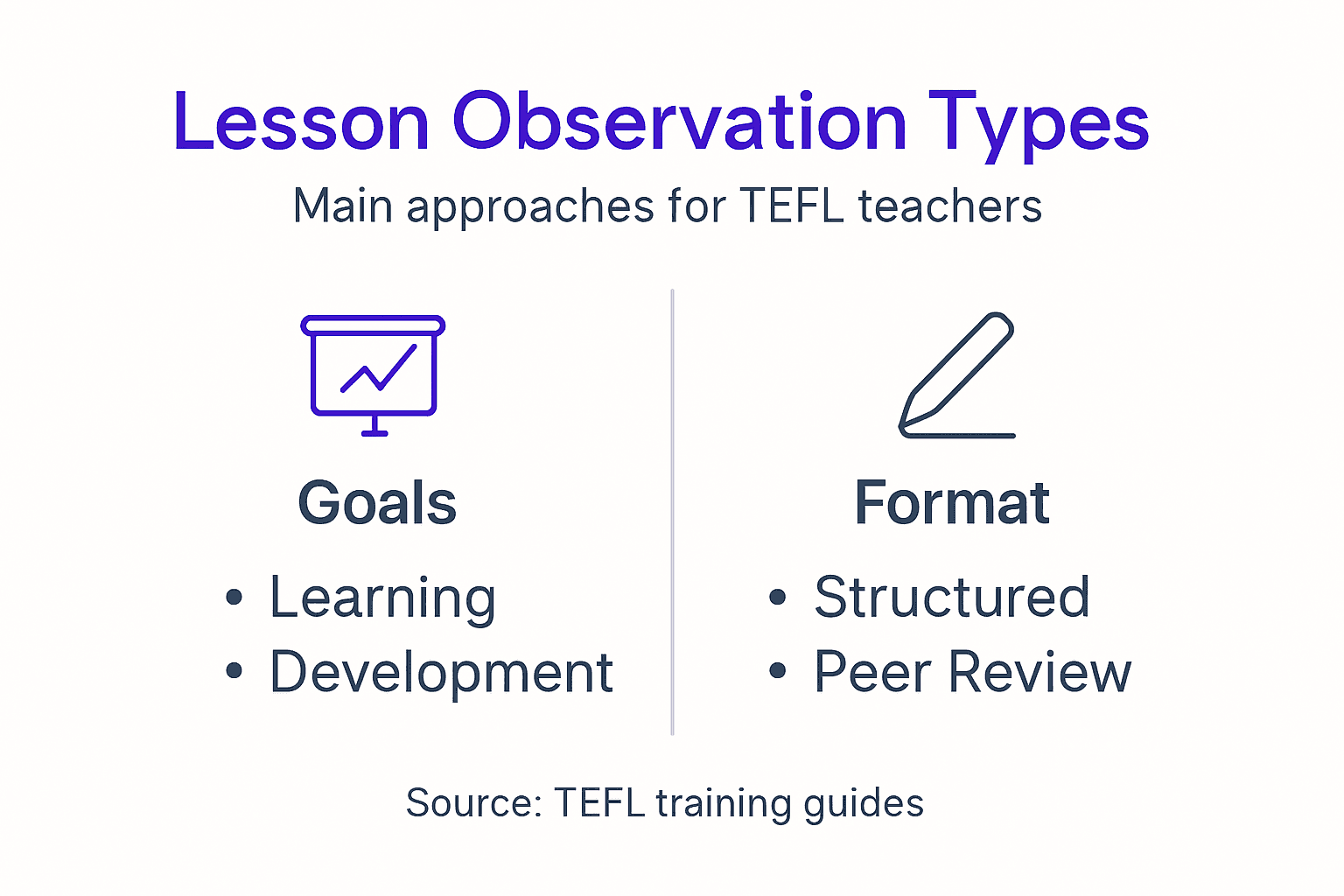
To better understand the differences between observation types, consider this comparison:
| Observation Type | Purpose | Who Conducts It | Typical Outcome |
|---|---|---|---|
| Learning Observation | Understand methods & patterns | Peer or experienced teacher | Practical insights & ideas |
| Describing Observation | Record events objectively | Observer/trainer | Factual descriptions |
| Evaluating Observation | Assess against standards | Assessor/supervisor | Formal performance rating |
Most trainee teachers benefit from frequent non-evaluative observations early in their training, which reduces stress and promotes genuine professional development.
Observation isn’t one-off either. It’s cyclical. You teach, receive feedback, reflect on what worked, adjust your approach, and repeat. This continuous loop builds real teaching confidence over months, not weeks.
Many new teachers fear every observation will “count” against them. That’s rarely true. Educational research shows that multiple observations across different contexts reveal patterns far better than single snapshots. One rough lesson doesn’t define your capability.
The process also works both ways. Experienced observers note what you do well, not just gaps. This balanced feedback builds motivation and helps you recognise your strengths alongside areas for development.
Here’s what separates effective observation from ineffective criticism: specificity. “You need better classroom management” helps no one. “Three students weren’t looking at the board during the listening task—try repositioning the speaker or using visual aids” gives you something concrete to change.
Pro tip: Before any observation, ask your observer what they’ll focus on and what success looks like in your specific context, then request written feedback within 48 hours while the lesson is fresh in both your minds.
Key Types and Formats in TEFL Training
Observation formats vary considerably depending on your training context and what you’re trying to achieve. Different approaches serve different purposes, and understanding which format you’re in helps you prepare mentally and professionally.
There are three main observation types used across TEFL training programmes:
- Peer observation: You watch a colleague teach, they watch you, and you exchange feedback together
- Supervisor observation: A trainer or experienced educator observes your lesson and provides assessment
- Self-observation: You record or reflect on your own teaching, often using video playback
Each type builds different skills. Peer observation develops critical thinking about teaching. Supervisor observation produces formal evaluation and development targets. Self-observation reveals habits you don’t notice in the moment.
International lesson observation models show that observation approaches vary globally. Some countries emphasise grading systems for accountability, whilst others focus on peer feedback and reflection. Neither approach is “right”—they serve different educational goals.
Your Trinity CertTESOL training likely uses formative observations (development-focused) early on, shifting towards summative observations (performance-assessed) as you progress.
Observations also differ in structure. Structured observations use detailed checklists or rubrics tracking specific teacher behaviours. Unstructured observations are more open-ended, with observers taking notes on whatever stands out. Structured formats work better for consistent measurement; unstructured formats capture unexpected insights.
The format you experience shapes what you’ll learn. A structured peer observation might focus on student wait time after questions. An unstructured supervisor observation might note your transitions between activities. Both develop your teaching but in different ways.
Here’s how structured and unstructured observation formats contrast in TEFL training:
| Format | Main Features | Best For | Example Focus Area |
|---|---|---|---|
| Structured | Uses rubrics & checklists | Consistent measurement | Teacher wait time after questions |
| Unstructured | Open-ended, flexible notes | Capturing unexpected insights | Activity transitions |
Timing matters too. Pre-service observations happen during initial training before you teach independently. In-service observations occur during your first year teaching abroad or throughout your career. Pre-service formats tend to be more developmental; in-service formats balance development with accountability.
When you start teaching abroad in Spain, France, Italy, or beyond, schools often use their own observation formats. Some follow national standards; others create custom systems. Understanding their format removes surprises.
Pro tip: Request a sample observation form or rubric before your first formal observation, then ask your observer to highlight the three areas they’ll focus on most, ensuring you know exactly what success looks like in their system.
How Lesson Observation Works in Practice
Lesson observation isn’t a surprise ambush. It’s a structured three-phase process: preparation, observation, and feedback. Each phase matters equally for your development.
The preparation phase sets the stage. Before an observer steps into your classroom, you’ll discuss what they’re looking for and what you want feedback on. This conversation removes guesswork and focuses attention on what matters most for your growth.
During observation, your observer takes detailed notes using systematic recording of teaching practices. They track specific behaviours, student interactions, timing, and classroom dynamics. This isn’t casual watching—it’s methodical data collection.

The observation itself typically lasts 30-60 minutes. Your observer sits quietly, usually at the back of the classroom, documenting what happens without interrupting. They note what you do well alongside areas for development.
Common areas observers track include:
- Instruction clarity: Are your explanations easy to follow?
- Student engagement: Are learners actively participating?
- Pacing: Does the lesson flow at an appropriate speed?
- Classroom management: How do you handle transitions and behaviour?
- Use of resources: Are materials utilised effectively?
- Error correction: How do you respond to student mistakes?
After observation comes the feedback phase. This happens ideally within 48 hours while details are fresh. Your observer shares their notes, highlights strengths, identifies specific areas for improvement, and discusses concrete next steps.
Effective feedback is never vague criticism—it’s specific, actionable observations paired with practical suggestions for change.
This feedback cycle repeats. You teach differently based on what you learned, get observed again, receive new feedback, and refine further. This continuous loop builds genuine teaching capability over weeks and months.
When teaching abroad, especially in Spain, France, Italy, or Asia, schools typically observe new teachers multiple times during your first term. These observations serve both developmental and accountability purposes, but early observations emphasise support over evaluation.
Pro tip: After receiving feedback, ask your observer for two specific examples of when they saw you successfully implement their suggestions before your next observation, keeping momentum in your professional growth.
Feedback, Reflection, and Career Growth
Feedback without reflection is just criticism. The real magic happens when you pause, think deeply about what you heard, and decide what to change. This reflection transforms observation from a one-time event into lasting professional development.
Reflection means asking yourself hard questions. Why did that activity flop? What did students actually learn versus what you intended? Were your explanations clear, or did confusion show on their faces? This honest self-examination reveals patterns observation alone might miss.
Teacher reflection shapes confident TEFL careers by creating space for you to process feedback emotionally and intellectually. Reflection isn’t just thinking—it’s structured thinking that connects feedback to your teaching philosophy and goals.
Effective reflection typically happens in these stages:
- Receive feedback without defensiveness; listen actively
- Process emotions separately from the content; frustration is normal
- Identify patterns across multiple observations and feedback sessions
- Set specific goals based on patterns, not isolated comments
- Plan concrete actions you’ll try in your next lessons
- Track progress by noting what changed and why
This cyclical approach turns feedback into actual skill development. You’re not just hearing criticism; you’re building capability systematically.
Reflection separates teachers who improve rapidly from those who repeat the same lessons year after year without growth.
Career growth accelerates when observation becomes part of your professional identity. Early in your TEFL career abroad, observations feel evaluative and stressful. Over time, experienced teachers seek observations because they know feedback drives improvement and career advancement.
Many successful English teachers teaching in Spain, France, Italy, and beyond actively request observations even when not required. They’ve learned that external perspective reveals blind spots no amount of self-reflection uncovers alone.
Feedback also builds your portfolio. Written observation notes document your progress over months. When you apply for better positions, seek promotions, or pursue advanced certifications, this evidence of deliberate improvement strengthens your candidacy dramatically.
Pro tip: Keep a simple reflection log after each observation: write three things you did well, one area to improve, and one concrete action you’ll try next lesson, reviewing monthly to spot genuine progress patterns.
Critical Role in Trinity-Accredited Programmes
Lesson observation isn’t optional in Trinity CertTESOL training—it’s foundational. Trinity College London integrates observation throughout their accredited programmes because they understand that watching great teaching and receiving feedback on your own teaching builds better teachers than theory alone.
Trinity’s approach is rigorous. Lesson observation frameworks align with Trinity’s standards to ensure candidates meet global expectations for language instruction. This isn’t arbitrary evaluation; it’s structured assessment designed to produce internationally recognised teaching capability.
Observation serves dual purposes in Trinity programmes:
- Formative feedback: Early observations focus on development, helping you identify strengths and areas for growth
- Summative assessment: Later observations contribute to your final certification, demonstrating you’ve met Trinity’s standards
The balance between these two purposes matters. Early formative observations feel low-stakes and developmental. As you progress, observations gradually shift toward assessment, but they never stop being developmental. Trinity views certification as the beginning of your teaching career, not the end.
Trinity observers use standardised assessment criteria aligned with international language teaching standards. They evaluate how well you facilitate learning, manage the classroom, use language appropriately, and adapt to student needs. These criteria remain consistent whether you’re training in the United Kingdom, Spain, France, Italy, or Asia.
Trinity observation standards ensure your certification carries weight globally, making you competitive for teaching positions anywhere in the world.
This global consistency is crucial for your career. When you complete Trinity CertTESOL and move to teach abroad, employers recognise your credential because they know Trinity’s observation standards are rigorous and internationally respected.
The observation process also builds your professional identity. You’re not just collecting teaching hours; you’re meeting an internationally recognised standard. This shifts your mindset from “getting through training” to “becoming a skilled English educator.”
Your trainer conducts multiple observations throughout the programme. These aren’t surprise visits; they’re planned, discussed, and reflective. Each observation builds on previous feedback, creating a development trajectory you can track and celebrate.
Pro tip: Before your first Trinity observation, ask your trainer for the exact assessment criteria they’ll use, study them carefully, and prepare a lesson that deliberately showcases your understanding of at least three of those criteria clearly.
Transform Your Teaching Through Expert-Led Lesson Observation and Accredited Training
Lesson observation plays a vital role in building confident TEFL teachers by providing detailed, actionable feedback and promoting reflective practice. If you are eager to overcome the stress and uncertainty often linked with observations, our Trinity College London accredited programmes offer structured support and professional growth. Benefit from internationally recognised certification that demonstrates your skills to employers worldwide and prepares you thoroughly for real classroom challenges.
Unlock global teaching opportunities in countries like Spain, France, and Italy with our comprehensive 1-year study and work abroad programmes. These combine accredited teacher training with immersive language study and career support including lifetime job placement assistance. Discover how to thrive in professional observations, develop your teaching capability continuously, and gain a competitive edge through Trinity CertTESOL and specialised courses all backed by a supportive community. Ready to turn lesson observation into your greatest teaching asset? Start your journey today with a free consultation at EBC TEFL.
Frequently Asked Questions
What is the purpose of lesson observation in TEFL training?
Lesson observation is designed to provide structured professional feedback to teachers, helping them understand their teaching methods and improve based on specific observations of their classroom practices.
What are the different types of lesson observations?
There are three main types of lesson observations: learning observations (focused on understanding methods), describing observations (factually documenting events), and evaluating observations (assessing performance against standards).
How can I prepare for a lesson observation?
To prepare for a lesson observation, have a discussion with your observer about their focus areas and what constitutes a successful lesson. Request written feedback within 48 hours to ensure it’s fresh in both your minds.
How does feedback contribute to my teaching development?
Feedback helps you identify strengths and areas for improvement. When coupled with reflection, it allows you to understand what’s working in your teaching and adjust your methods for continuous professional growth.
Recommended
- How to Succeed in Online TEFL and Launch a Global Teaching Career – EBC TEFL courses
- Teaching English Overseas Steps for a Successful Start – EBC TEFL courses
- How Do I Teach English Abroad: Accredited Programmes Guide – EBC TEFL courses
- Lesson Planning: Building Success in English Teaching – EBC TEFL courses