
Nearly two billion people worldwide are learning English today, and a growing number choose to study in virtual classrooms. Teaching English online has transformed how educators and students connect, making lessons accessible across borders and time zones. By blending technology with creative language instruction, this modern approach opens new possibilities for flexible, effective learning. Discover why digital platforms and evolving teaching strategies are reshaping the future of English education for instructors and learners alike.
Table of Contents
- Teaching English Online: Core Concepts Explained
- Types of Online English Teaching Jobs
- Required Skills and TEFL Certifications
- Benefits of Teaching English Online
- Challenges and Common Mistakes to Avoid
- Comparing Online and Classroom English Teaching
Key Takeaways
| Point | Details |
|---|---|
| EAP-AIAS Framework | Integrates AI tools into language instruction, emphasizing academic integrity and innovative learning techniques. |
| Diverse Job Opportunities | Online English teaching offers various roles with flexibility, from company positions to freelance teaching, each with unique benefits. |
| Essential Skills | Successful online teachers must possess technological proficiency and intercultural communication skills along with the required TEFL certifications. |
| Challenges Ahead | Online educators face technical hurdles and communication barriers that necessitate ongoing professional development and adaptability. |
Teaching English Online: Core Concepts Explained
Teaching English online represents a dynamic and transformative educational approach that combines technological proficiency with linguistic expertise. The emergence of digital platforms has revolutionised how language instruction occurs, enabling educators to connect with students globally through virtual classrooms and interactive digital environments. Modern online English teaching goes far beyond traditional methodologies, integrating sophisticated digital tools and pedagogical strategies.
According to research from arxiv.org, the EAP-AIAS framework provides a structured approach for integrating generative artificial intelligence tools into language instruction. This innovative methodology emphasises academic integrity while simultaneously developing sophisticated language learning techniques. Key components include:
- Interactive digital platforms
- Real-time communication technologies
- Adaptive learning algorithms
- Personalised instructional approaches
The human-AI meta-languaging framework further enhances online English education by focusing on critical elements like prompt engineering and developing sophisticated mental models of technological interaction. arxiv.org suggests that successful online English teaching now requires educators to understand not just language instruction, but also how to effectively leverage technological tools.
Practical skills for online English teachers include mastering video conferencing platforms, understanding digital curriculum design, and developing engaging virtual lesson plans. Teach online and face-to-face: Get certified to do both offers comprehensive guidance for educators looking to expand their digital teaching capabilities. Success in this field demands continuous learning, technological adaptability, and a deep commitment to creating meaningful cross-cultural communication experiences.
Types of Online English Teaching Jobs
Online English teaching has evolved into a diverse and dynamic professional landscape, offering multiple pathways for educators seeking flexible and rewarding career opportunities. Online English teaching jobs encompass a wide range of positions including company-based roles, teaching marketplaces, and independent freelance opportunities, each presenting unique advantages and income potential.
Three primary categories of online English teaching jobs emerge:
Here’s a comparison of the main types of online English teaching jobs:
| Job Type | Structure & Flexibility | Income Potential | Key Advantages |
|---|---|---|---|
| Company-Based Positions | Fixed schedule Structured support | Predictable monthly pay | Consistent students Resources |
| Marketplace Platforms | Flexible hours User-set availability | Variable hourly rates | International network Flexible |
| Freelance Teaching | Full autonomy Self-managed schedule | Potentially highest | Direct pricing Maximum control |
- Company-Based Positions
- Structured work environments
- Consistent student base
- Predictable monthly income
- Established curriculum and resources
- Teaching Marketplace Platforms
- Greater scheduling flexibility
- Variable hourly rates
- International student connections
- Performance-based opportunities
- Freelance Teaching
- Maximum autonomy
- Self-determined pricing
- Direct student relationships
- Potential for higher earnings
Platforms like English from A to Z and PalFish, offer competitive pay and diverse student interactions. These platforms demonstrate the expanding ecosystem of online English instruction.
 Be a freelance Online English teacher provides comprehensive guidance for educators looking to navigate these dynamic professional opportunities.
Successful online English teachers must develop technological proficiency, cultural sensitivity, and adaptable instructional strategies. Understanding the nuanced differences between teaching platforms, developing engaging digital curriculum, and maintaining professional online communication are critical skills that distinguish exceptional digital language educators in this rapidly evolving professional landscape.
Required Skills and TEFL Certifications
Becoming a successful online English teacher requires a comprehensive blend of professional qualifications, technological proficiency, and specialized language teaching skills. Getting the right online TEFL certificate is critically important, with Level 5, British Council accepted TEFL certificate courses being equivalent to a college diploma and regulated by Ofqual in the UK.
Key Required Skills for online English teaching include:
- Digital Technology Competence
- Video conferencing platform navigation
- Interactive digital whiteboard usage
- Online lesson management systems
- Language Teaching Expertise
- Grammar instruction techniques
- Pronunciation coaching
- Adaptive teaching strategies
- Intercultural Communication
- Cross-cultural sensitivity
- Global communication understanding
- Empathetic student interaction
Professional TEFL Certifications represent foundational credentials for aspiring online English teachers. English language teaching skills for successful TEFL teachers provides comprehensive insights into developing these critical professional capabilities.
Successful online English teachers must continuously evolve their skill set, staying current with technological innovations, pedagogical approaches, and global language learning trends. This requires ongoing professional development, active engagement with international teaching communities, and a commitment to personal and professional growth in the dynamic field of online language education.
Benefits of Teaching English Online
Teaching English online has emerged as a transformative career path, offering unprecedented opportunities for educators seeking flexibility, global connectivity, and professional growth. According to research from arxiv.org, online teaching dramatically expands educational access, providing instructors with the ability to reach a broader student base compared to traditional face-to-face instruction.
Key Benefits of Online English Teaching include:
- Geographical Flexibility
- Work from anywhere with internet connection
- No geographical constraints
- International student interactions
- Professional Advantages
- Flexible scheduling
- Diverse income streams
- Reduced commuting costs
- Global professional networking
- Personal Development
- Technological skill enhancement
- Cross-cultural communication
- Continuous learning opportunities
Research from en.wikipedia.org highlights how blended learning combines online educational materials with traditional teaching methods, creating dynamic and interactive learning environments. Online English classes – how to motivate your students provides additional insights into maximizing the potential of digital language education.
The digital teaching landscape offers unprecedented opportunities for educators willing to adapt, learn, and embrace technological innovations. Successful online English teachers transform geographical limitations into global opportunities, creating meaningful educational experiences that transcend traditional classroom boundaries while developing a versatile and rewarding professional career.
Challenges and Common Mistakes to Avoid
Online English teaching presents unique challenges that require strategic preparation and professional adaptability. According to research from arxiv.org, first-time online instructors frequently encounter significant obstacles, including low self-efficacy and complex technical difficulties that can substantially impact their teaching effectiveness and professional expectations.
Critical Challenges for Online English Teachers:
- Technical Hurdles
- Unstable internet connections
- Software compatibility issues
- Digital platform navigation
- Pedagogical Challenges
- Maintaining student engagement
- Creating interactive virtual environments
- Assessing student comprehension remotely
- Communication Barriers
- Overcoming cultural communication differences
- Managing non-verbal communication limitations
- Establishing rapport through digital platforms
Research from arxiv.org emphasizes the complexity of implementing active learning methodologies in online settings, highlighting the need for innovative instructional approaches and robust resource development. Artificial intelligence: Teaching English online in the age of AI offers additional insights into navigating technological challenges in digital education.
Successful online English teachers must develop a proactive mindset, continuously upgrade their digital skills, and remain adaptable to emerging technological trends. By anticipating potential challenges, investing in professional development, and maintaining a flexible approach to digital instruction, educators can transform potential obstacles into opportunities for meaningful student engagement and professional growth.
Comparing Online and Classroom English Teaching
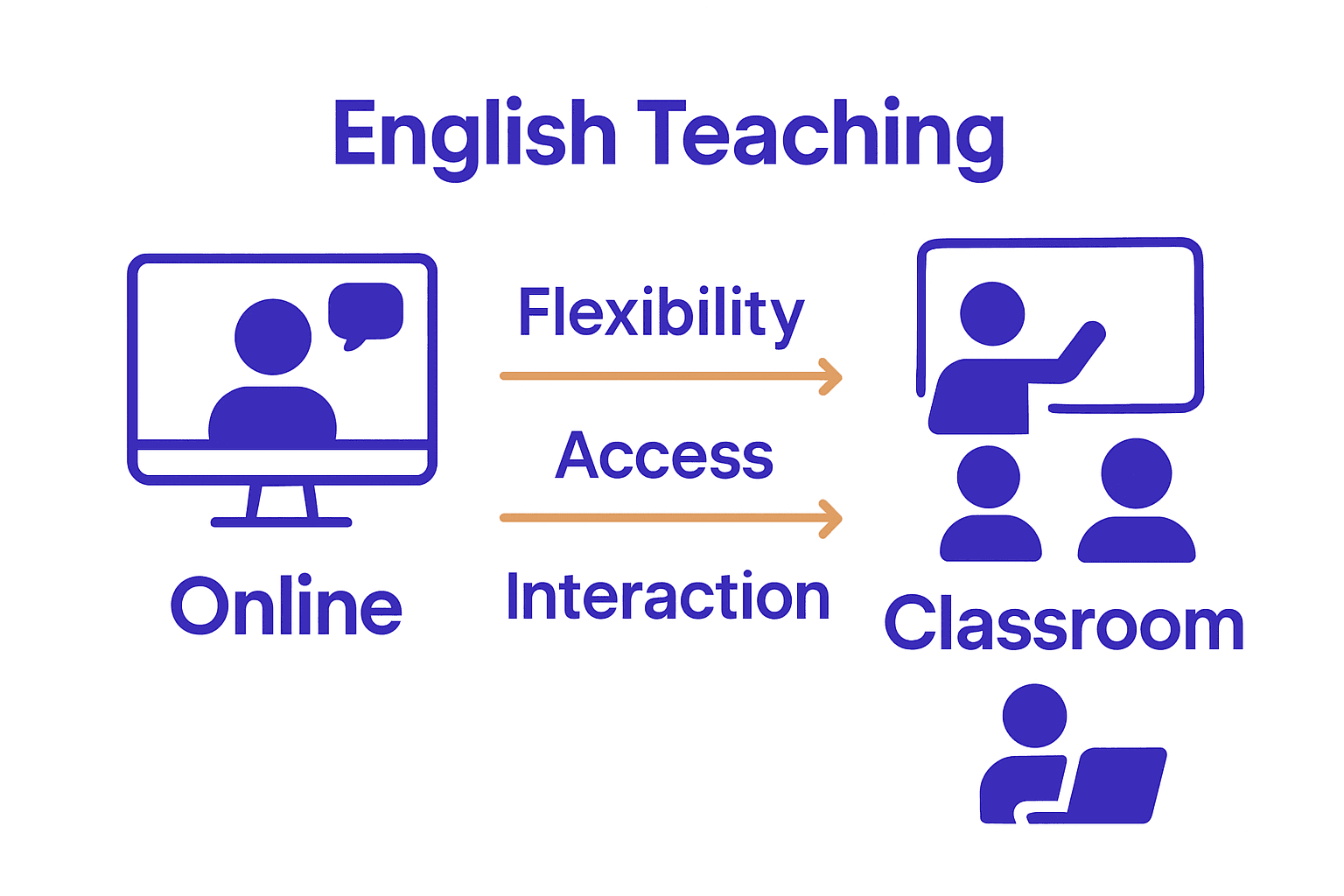
The landscape of English language education has dramatically transformed, with online and traditional classroom teaching presenting distinct approaches to language learning. Modern educational strategies now combine online and face-to-face methods, offering unprecedented flexibility and interaction opportunities while requiring careful pedagogical integration.
Key Comparative Dimensions:
- Interaction Dynamics
- Classroom: Direct physical presence
- Online: Digital communication platforms
- Hybrid: Mixed interaction modes
- Resource Accessibility
- Classroom: Physical learning materials
- Online: Digital content libraries
- Hybrid: Comprehensive resource integration
- Learning Environment
- Classroom: Structured physical space
- Online: Flexible virtual environments
- Hybrid: Adaptable learning contexts
Online self-access learning provides significant flexibility but simultaneously demands higher levels of student self-motivation. Face-to-face and online teaching: Get certified for both offers comprehensive insights into navigating these diverse teaching modalities.
Successful language educators increasingly recognize the value of adaptive teaching approaches that leverage both traditional and digital methodologies. By understanding the unique strengths of online and classroom instruction, teachers can create dynamic, engaging learning experiences that transcend traditional educational boundaries and meet the diverse needs of modern language learners.
Unlock Your Potential by Teaching English Online Today
The journey to becoming a confident and successful online English teacher begins with overcoming common challenges like managing digital tools and engaging students remotely. This guide highlights crucial pain points such as technology mastery, flexible scheduling, and intercultural communication skills — all vital for thriving in the evolving online teaching landscape. At EBC TEFL Course, we understand these challenges and offer accredited TEFL and TESOL certification courses designed to equip you with practical skills and knowledge to excel in virtual classrooms.

Don’t wait to transform your passion for language into a rewarding global career. Explore specialised courses like online teaching certification, business English, and dynamic lesson planning tutorials that prepare you for a variety of teaching platforms. Begin your professional journey with proven support including free consultations, lifelong job placement assistance, and inspirational success stories. Take the next step toward teaching English online by visiting EBC TEFL Course to enrol today and build the skills that students worldwide truly value.
Frequently Asked Questions
What are the main benefits of teaching English online?
Teaching English online offers geographical flexibility, professional advantages such as diverse income streams and flexible scheduling, and opportunities for personal development through enhanced technological skills and cross-cultural communication.
What skills do I need to teach English online successfully?
Key skills required include digital technology competence, language teaching expertise, and intercultural communication. Familiarity with video conferencing tools, online lesson management systems, and adaptive teaching strategies is essential.
How do I choose between different types of online English teaching jobs?
Consider factors such as structure and flexibility, income potential, and key advantages. Company-based positions offer predictability and resources, while marketplace platforms provide flexibility, and freelance teaching offers maximum autonomy and control over pricing.
How can I overcome challenges when teaching English online?
To overcome challenges like technical issues and maintaining student engagement, develop a proactive mindset, continuously upgrade your digital skills, and invest in professional development. Emphasizing interactive virtual environments can also enhance student comprehension.
Recommended
- The best books for online English teachers – quality teaching resources
- Teach online and face-to-face: Get certified to do both – EBC Trinity CertTESOL and TEFL courses
- Artificial intelligence: Teaching English online in the age of AI – EBC Trinity CertTESOL and TEFL courses
- Get accredited online Trinity CertTESOL certification for more jobs – EBC Trinity CertTESOL and TEFL courses