
Over 250,000 educators teach English abroad each year, with Europe standing out as a top destination for those seeking meaningful international work. The demand for English teachers continues to rise as schools, businesses, and private students across Europe invest in language skills for global opportunities. Understanding the unique requirements and varied job markets across the continent helps you find roles that match your goals, while enjoying the professional growth, salary potential, and cross-cultural experiences that come with teaching English in Europe.
Table of Contents
- Teaching English In Europe Explained
- Certification And Qualification Requirements
- Teaching Destinations And Job Opportunities
- Professional And Personal Benefits Offered
- Legal, Financial, And Cultural Considerations
Key Takeaways
| Point | Details |
|---|---|
| Diverse Opportunities | Teaching English in Europe encompasses various sectors including public schools, private language schools, and online platforms, allowing for flexible employment options. |
| Certification Requirements | Most positions require a TEFL/TESOL certification, with some countries necessitating additional qualifications like a PGCE for public school roles. |
| Salary Variations | Salaries for English teachers range from €1,000 to €2,500 monthly, influenced by location, experience, and living costs. |
| Cultural Adaptability | Successful English teachers must possess strong adaptability and interpersonal skills to navigate diverse educational and cultural environments. |
Teaching English in Europe Explained
Teaching English in Europe presents an exciting and transformative career opportunity for educators seeking international professional experiences. Unlike traditional teaching roles, working as an English language instructor across European countries offers unique challenges and rewards that extend far beyond conventional classroom settings. Professionals can immerse themselves in diverse cultural landscapes while developing valuable cross-cultural communication skills.
The European English teaching market provides multiple pathways for aspiring instructors. Language schools, public education systems, and private tutoring represent primary employment channels for English teachers. Most positions require a TEFL or TESOL certification, with many institutions preferring candidates holding internationally recognised qualifications like the Trinity CertTESOL. Understanding regional requirements becomes crucial, as each European country maintains distinct recruitment standards and visa regulations.
- Typical requirements include: 1. Native or near-native English proficiency 2. Bachelor’s degree (in most cases) 3. Valid teaching certification 4. Clean criminal background check
Salary expectations vary significantly across different European nations. Western European countries like Germany and France typically offer more competitive compensation packages compared to Eastern European destinations. However, lower living costs in countries such as Poland or Czech Republic can balance out relatively modest teaching salaries. Experienced educators can potentially earn between €1,000 to €2,500 monthly, depending on qualifications, location, and teaching context.
Successful English teachers in Europe must demonstrate adaptability, cultural sensitivity, and strong interpersonal skills.
Understanding local educational systems, learning effective classroom management techniques, and developing engaging teaching methodologies will distinguish outstanding instructors. Prospective teachers should research specific country requirements, prepare comprehensive documentation, and remain open to diverse teaching opportunities across the continent.
Certification and Qualification Requirements
Navigating the certification landscape for teaching English in Europe requires understanding multiple qualification pathways and institutional expectations. TEFL (Teaching English as a Foreign Language) and TESOL (Teaching English to Speakers of Other Languages) certifications form the cornerstone of professional credentials for international English language instructors. These internationally recognised qualifications demonstrate a standardised level of pedagogical training and language teaching competence.
Trinity CertTESOL and Cambridge CELTA represent two premium certification options widely respected across European educational institutions. These comprehensive programs typically involve:
- 120 hours of intensive training
- Practical teaching practice with real students
- Academic modules on language teaching methodology
- Assessment of lesson planning and classroom management skills
- International accreditation recognised across multiple countries
Understanding specific country requirements becomes crucial when pursuing teaching opportunities.
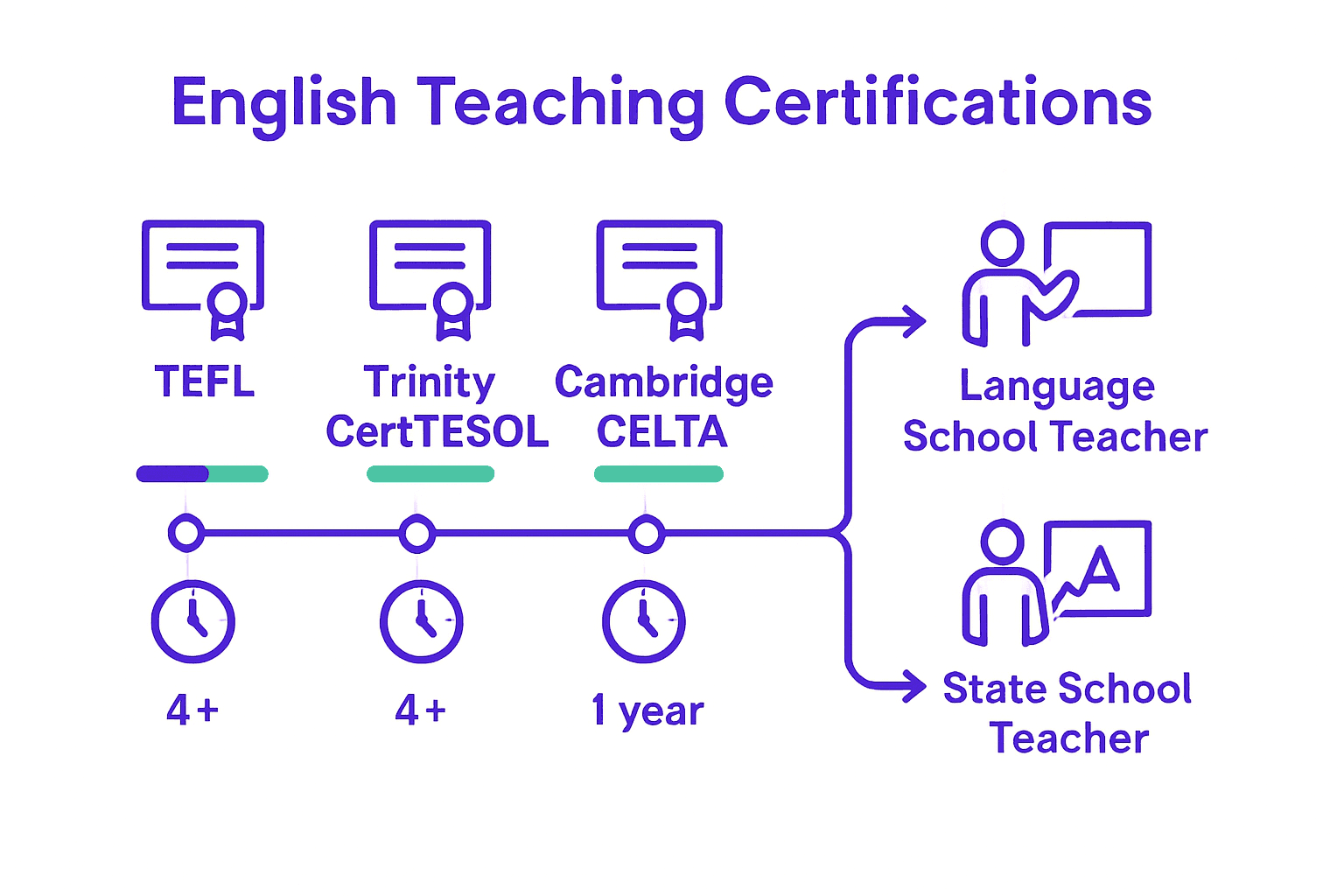 While most European nations accept standard TEFL/TESOL certifications, some countries like Spain and Italy have additional specific requirements. Public school systems often mandate advanced qualifications, such as a Post-Graduate Certificate in Education (PGCE) or equivalent academic teaching credentials.
Here’s a comparison of key certification and qualification requirements for teaching English in Europe:
| Certification Type | Typical Duration | Recognised In | Key Features |
|---|---|---|---|
| TEFL/TESOL Certificate | 100-120 hours | Some European countries |
|
| Trinity CertTESOL | 120 hours | Internationally |
|
| Cambridge CELTA | 120 hours | Internationally |
|
| PGCE or Equivalent | 1 year | Public schools (selected) |
|
| Specialisations | Varies | Niche positions |
|
Beyond standard certifications, professional development and specialisation can significantly enhance employment prospects. Educators with additional endorsements in Business English, Online Teaching, or Young Learner Methodologies frequently attract higher-paying positions. Professional tips and advice for teaching English can help aspiring instructors strategically build their professional portfolio and increase their competitive edge in the European job market.
Teaching Destinations and Job Opportunities
Europe offers a diverse and dynamic landscape for English language educators, with numerous compelling destinations that promise unique professional experiences. Spain, Italy, Germany, and Czech Republic emerge as top locations for English teachers, each presenting distinctive cultural contexts and employment opportunities. These countries not only provide competitive salaries but also offer immersive environments for professional and personal growth.
Job opportunities for English teachers in Europe span multiple sectors, including:
- Public school systems
- Private language academies
- Corporate training programs
- Online teaching platforms
- University language departments
- Private tutoring networks
Salary ranges vary significantly across different European countries. Western European nations typically offer higher compensation, with monthly earnings ranging from €1,200 to €2,500 for qualified teachers. Eastern European countries might offer lower base salaries but compensate with lower living expenses and unique cultural experiences. Discover the top countries seeking English teachers in 2025 to strategically plan your international teaching career.
Successful job hunting requires strategic preparation and understanding of regional job markets. As an EBC graduate, you can use our worldwide, lifetime job placement assistance programme.
 Networking, building a comprehensive professional portfolio, and demonstrating cultural adaptability significantly enhance employment prospects. Many educators find success by combining multiple teaching opportunities, such as working in language schools while offering private tutoring or online classes. Flexibility, language proficiency, and a genuine passion for cross-cultural communication are key differentiators in the competitive European English teaching market.
Professional and Personal Benefits Offered
Teaching English in Europe transcends traditional career paths, offering transformative professional and personal development opportunities that extend far beyond conventional classroom experiences. Educators who choose this international career pathway gain unprecedented opportunities to develop cross-cultural competencies, enhance global communication skills, and build a truly international professional portfolio that stands out in today’s competitive job market.
Professional benefits of teaching English in Europe include:
- Internationally recognised teaching credentials
- Extensive cross-cultural communication skills
- Advanced language teaching methodologies
- Networking opportunities with global educators
- Potential career progression in international education
- Enhanced adaptability and problem-solving capabilities
Personal growth represents another significant dimension of this career choice. Living and working in a foreign country challenges individuals to step outside their comfort zones, develop resilience, and gain profound insights into different cultural perspectives. Language immersion, navigating complex social systems, and building international relationships contribute to substantial personal transformation. Professional tips for teaching English abroad can help aspiring educators strategically approach these unique opportunities.
Beyond immediate professional experiences, teaching English in Europe opens doors to long-term international career trajectories. Many educators discover pathways into international business, global education consulting, intercultural training, and diplomatic communications. The skills acquired through teaching abroad – including adaptability, communication expertise, and cross-cultural understanding – become invaluable assets in an increasingly interconnected global professional landscape. Whether seeking personal adventure or strategic career development, teaching English in Europe offers a remarkable journey of professional and personal exploration.
Legal, Financial, and Cultural Considerations
Navigating the complex landscape of teaching English in Europe requires comprehensive understanding of legal, financial, and cultural nuances that can significantly impact an educator’s experience. Work visas, residency permits, and employment regulations vary dramatically across European countries, making thorough research and preparation essential for successful international teaching careers.
Key legal and financial considerations include:
- Schengen visa requirements
- Tax obligations in host countries
- Health insurance documentation
- Work permit application processes
- Banking and financial management abroad
- Social security registration
- Contractual employment rights
Cultural adaptation represents another critical dimension of teaching in Europe. Each country maintains unique educational philosophies, classroom dynamics, and interpersonal communication styles that demand flexibility and cultural intelligence. Understanding local social norms, professional etiquette, and educational expectations becomes crucial for building effective teaching relationships. Professional tips for teaching English abroad can provide invaluable guidance in navigating these complex cultural landscapes.
Financial planning requires strategic approach and realistic expectations. While teaching salaries in Europe can be competitive, living expenses vary significantly between Western and Eastern European nations. Educators should budget carefully, considering factors like accommodation costs, transportation, healthcare, and potential initial settlement expenses. Developing a comprehensive financial strategy, maintaining emergency funds, and understanding local economic contexts will ensure a smoother transition and more sustainable international teaching experience.
Unlock Your Future Teaching English in Europe
Feeling uncertain about navigating the complex certification requirements and discovering the right teaching opportunities across Europe is very common. The article highlights crucial challenges like obtaining accredited TEFL or TESOL qualifications such as the Trinity CertTESOL, adapting to diverse cultural teaching environments, and overcoming visa and legal hurdles. If your goal is to gain recognised credentials while receiving practical training that prepares you for success in countries like Spain, Italy, or Germany, you need personalised support to make this journey smooth and rewarding.
Take control of your path now by enrolling in a course designed to build confidence, cultural awareness, and teaching expertise. At EBC TEFL Course, we provide internationally accredited certifications alongside lifetime job placement assistance so you can confidently step into your ideal role abroad. Whether you seek specialised training in Business English or want to explore online teaching options, our expert guidance will help you overcome common obstacles highlighted in the guide. Start your adventure today by booking a free consultation with us at Book a Call and discover how to transform your passion for teaching into an exciting European career.
Frequently Asked Questions
What qualifications do I need to teach English in Europe?
To teach English in Europe, most positions require a TEFL or TESOL certification. Additionally, some employers prefer candidates with a Bachelor’s degree and a clean criminal background check.
How much can I earn teaching English in Europe?
Salaries for English teachers in Europe can vary widely, typically ranging from €1,000 to €2,500 per month, depending on the location, qualifications, and teaching context.
What are the benefits of teaching English in Europe?
Teaching English in Europe offers numerous benefits, including internationally recognized teaching credentials, development of cross-cultural communication skills, and opportunities for personal growth through immersive cultural experiences.
How can I find teaching opportunities in Europe?
As an EBC graduate, you can use our worldwide, lifetime job placement assistance programme. Alternatively, you can do it yourself – job opportunities for English teachers in Europe can be found in public school systems, private language academies, corporate training programs, and online teaching platforms. Networking and building a comprehensive professional portfolio can enhance your employment prospects.
Recommended
- Best countries to teach English in Europe – EBC Trinity CertTESOL and TEFL courses
- Accredited TEFL Courses | Teach English Abroad
- TEFL Blog: Teaching Tips, Stories & Career Advice | EBC
- Europe – a true melting pot. – EBC Trinity CertTESOL and TEFL courses
- Mejores ofertas cursos inglés – Comparativa 2025 – Academia Atenea