
Over 1.5 billion people worldwide use English for business, but finding the right approach can make all the difference, especially for british professionals competing on the global stage. Modern workplaces demand not just fluent speech but mastery of specialised language skills that open doors internationally. This guide dives into what makes business English online teaching effective and how targeted strategies empower learners to confidently handle real-world business challenges.
Table of Contents
- Defining Business English Online Teaching
- Types of Business English Learners
- Key Skills And Teaching Methods Needed
- Requirements And Certification Pathways
- Earning Potential And Career Development
- Risks, Challenges, And Common Mistakes
Key Takeaways
| Point | Details |
|---|---|
| Specialised Language Development | Business English online teaching focuses on developing communication skills tailored for professional environments and global interactions. |
| Diverse Learner Segments | Learners include corporate professionals, career transitioners, and entrepreneurs, each with unique goals and challenges in language acquisition. |
| Essential Teaching Skills | Instructors must possess advanced language proficiency, digital platform mastery, and intercultural communication skills for effective teaching. |
| Risks and Challenges | Common challenges include maintaining student engagement, managing technological issues, and adapting to evolving industry terminology. |
Defining Business English Online Teaching
Business English online teaching is a specialised educational approach designed to help professionals develop language skills specifically tailored for workplace communication and international business interactions. Unlike standard language learning, this discipline focuses intensively on developing communication competencies that directly enhance professional effectiveness and global business interactions.
At its core, business English online teaching involves delivering targeted language instruction through digital platforms, enabling learners to acquire specialised vocabulary, communication strategies, and professional linguistic nuances essential for successful corporate environments. These programmes typically cover critical areas such as professional correspondence, presentation skills, negotiation techniques, and sector-specific terminology across industries like finance, technology, trade, and international relations.
The key distinguishing factor of business English online teaching lies in its pragmatic, outcome-driven methodology. Instructors design curricula that simulate real-world business scenarios, incorporating interactive elements like virtual meetings, email writing workshops, and cross-cultural communication exercises. Explore our comprehensive guide on teaching Business English to understand the intricate strategies professionals use to transform language learning into practical workplace communication skills.
Participants in these programmes can expect to develop several critical competencies:
- Advanced professional vocabulary
- Sophisticated email and report writing skills
- Confident verbal communication techniques
- Cultural intelligence for international business contexts
- Sector-specific language proficiencies
By combining technological innovation with targeted linguistic training, business English online teaching represents a dynamic approach to professional language development, bridging communication gaps and empowering professionals to succeed in an increasingly globalised business landscape.
Types of Business English Learners
Business English learners represent a diverse group of professionals and aspiring business communicators seeking targeted language skills for workplace success. These learners are not a homogeneous group but rather a dynamic spectrum of individuals with unique professional development objectives and linguistic backgrounds.
Typically, business English learners can be categorised into several distinct segments:
- Corporate Professionals: Mid to senior-level employees seeking to enhance their international communication capabilities
- Career Transitioners: Individuals preparing to enter global business environments
- Entrepreneurial Learners: Small business owners and startup founders aiming to expand international market reach
- Graduate Students: Individuals preparing for international business programmes or academic research
- International Trade Specialists: Professionals working in export, import, and multinational corporate settings
Each learner segment brings unique motivations and challenges to their language learning journey. Explore our expert guide on teaching Business English strategies to understand the nuanced approaches required for effectively supporting these diverse learning profiles. Corporate professionals might prioritise negotiation language, while entrepreneurs could focus more on pitch presentation skills and cross-cultural communication techniques.
The complexity of business English learning extends beyond simple vocabulary acquisition. Successful programmes must recognise individual learner contexts, integrating sector-specific terminology, cultural intelligence, and practical communication strategies. Whether preparing for international conferences, writing complex reports, or navigating multicultural team dynamics, business English learners require flexible, targeted learning experiences that directly translate language skills into professional competence.

Key Skills and Teaching Methods Needed
Business English online teaching demands a sophisticated blend of linguistic expertise, technological proficiency, and strategic instructional approaches. Successful instructors must cultivate a unique skill set that bridges traditional language education with contemporary professional communication requirements, enabling learners to develop practical, context-specific language capabilities.
The core skills required for effective business English instruction include:
- Advanced Language Proficiency: Comprehensive understanding of professional English dialects and nuanced communication styles
- Digital Platform Mastery: Ability to navigate and leverage online teaching technologies
- Intercultural Communication Skills: Deep understanding of global business communication protocols
- Adaptive Instructional Design: Capacity to customise learning experiences for diverse professional backgrounds
- Technical Communication Expertise: Specialised knowledge in professional writing, presentation, and negotiation techniques
Learn essential English language teaching skills for successful instruction to understand the comprehensive competencies required in modern business language education. Effective teaching methods must transcend traditional language instruction, incorporating interactive scenarios, real-world business simulations, and targeted communication skill development that directly translates to professional environments.
Methodologically, business English online teaching requires a multifaceted approach. Instructors must design curriculum that integrates sector-specific terminology, practical communication strategies, and immersive learning experiences. This involves creating dynamic learning modules that simulate authentic business interactions, from email correspondence and virtual meeting negotiations to complex report writing and cross-cultural communication challenges. The ultimate goal is transforming language learning from theoretical exercise to practical professional skill development.
Requirements and Certification Pathways
Teaching Business English online requires a structured approach to professional development, encompassing rigorous educational qualifications and specialised certification pathways. Aspiring business English instructors must navigate a complex landscape of credentials that demonstrate advanced linguistic expertise and professional teaching competence.
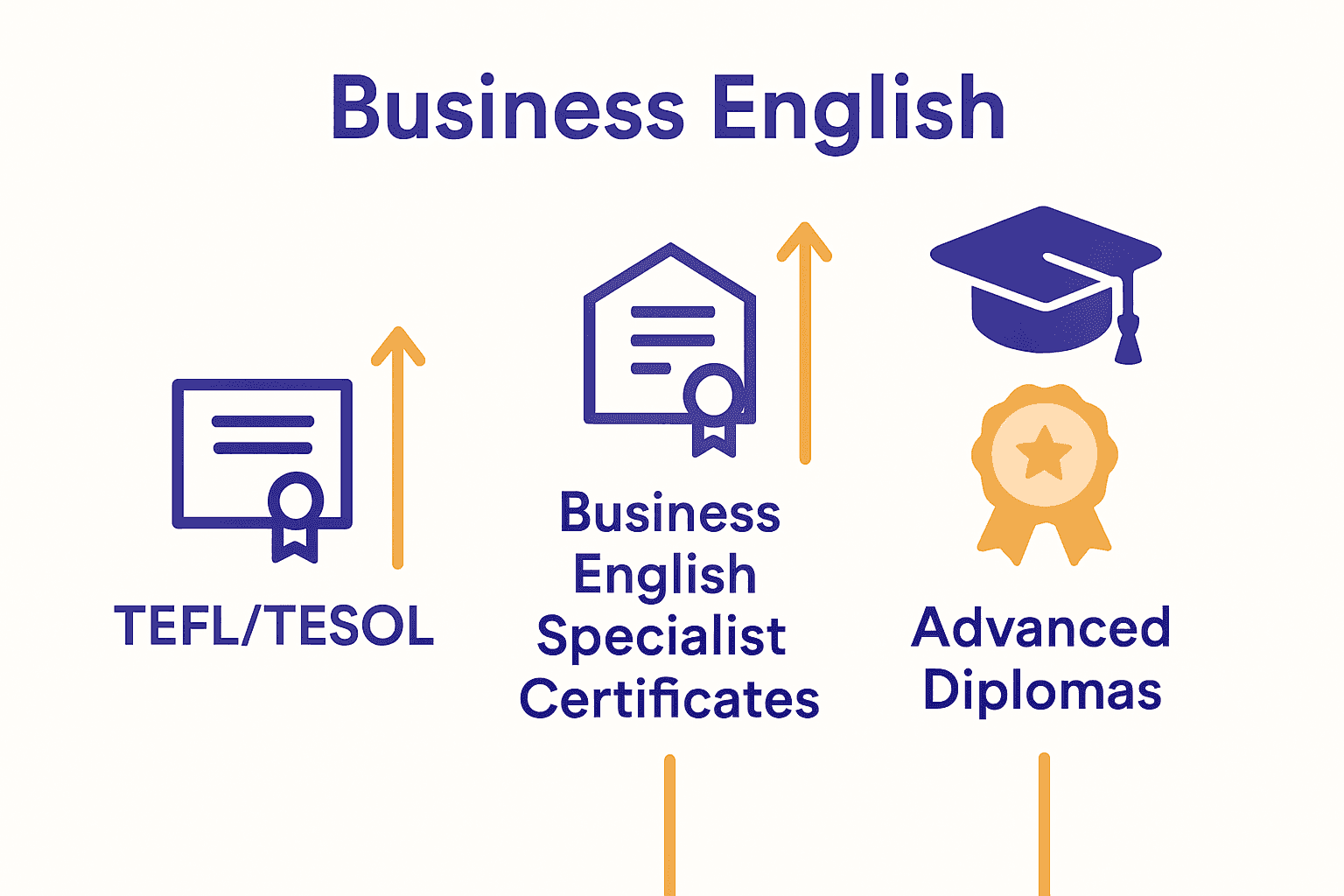
The primary certification pathways for business English instructors typically include:
- TEFL/TESOL Certifications: Essential baseline qualifications for international language instruction
- Business English Specialist Certificates: Advanced credentials focusing specifically on professional communication training
- Trinity CertTESOL: Internationally recognised qualification with specialised business language modules
- Cambridge Business English Certificates: Globally acknowledged professional language teaching credentials
- Postgraduate Qualifications: Academic programmes specialising in business communication and language instruction
Learn about the comprehensive requirements for successful English language teaching to understand the intricate credentialing process for business English professionals. Successful candidates must demonstrate not only linguistic proficiency but also a nuanced understanding of professional communication contexts, technological integration, and adaptive instructional methodologies.
Beyond formal certifications, instructors must cultivate a robust professional profile that includes practical experience, continuous professional development, and specialised skills in digital platform management. This holistic approach ensures that business English educators can effectively bridge linguistic education with real-world professional communication requirements, providing learners with transformative language learning experiences that directly enhance their career prospects.
Earning Potential and Career Development
Business English online teaching represents a dynamic and financially rewarding professional pathway with significant opportunities for career growth and global mobility. Instructors can leverage their specialised skills across multiple employment models, ranging from freelance platforms to corporate training programmes and international educational institutions.
The potential career trajectories for business English professionals encompass several exciting dimensions:
- Freelance Online Instruction: Flexible work arrangements with global client bases
- Corporate Language Training: Specialised roles within multinational organisations
- Educational Platform Instruction: Positions with established online learning platforms
- Consultancy and Materials Development: Creating specialised business English curricula
- Academic Research and Curriculum Design: Advanced professional opportunities in language education
Discover strategies for becoming a successful online English language mentor to understand the comprehensive career development opportunities in this field. Experienced business English instructors can expect earnings that range significantly based on qualifications, specialisation, and delivery platforms, with potential annual incomes varying from £25,000 to £60,000 for full-time professionals, and hourly rates between £15 to £50 for freelance and contract work.
Successful career progression in business English teaching requires continuous professional development, technological adaptability, and a commitment to understanding evolving global communication landscapes. Instructors who invest in advanced certifications, develop niche expertise in specific industry sectors, and maintain a robust professional network will find themselves well-positioned to access premium teaching opportunities and command higher compensation rates in an increasingly globalised professional education market.
Risks, Challenges, and Common Mistakes
Business English online teaching presents a complex professional landscape fraught with unique challenges that can derail even experienced instructors. Navigating these potential pitfalls requires strategic awareness, adaptability, and a proactive approach to professional development and technological integration.
The most prevalent risks and challenges in business English online instruction include:
- Technological Inconsistencies: Managing diverse digital platforms and potential connectivity issues
- Cultural Communication Barriers: Navigating nuanced professional communication across international contexts
- Student Engagement Maintenance: Sustaining motivation in virtual learning environments
- Rapidly Evolving Industry Terminology: Keeping curriculum current with dynamic business language
- Income Instability: Managing fluctuating freelance and contract work opportunities
Learn how to motivate your online English students effectively to understand strategies for mitigating common instructional challenges. Instructors frequently encounter mistakes such as over-generalising communication techniques, failing to personalise learning experiences, and neglecting continuous professional skill updates.
Successful business English online teachers must develop a sophisticated approach that balances technological proficiency, cultural intelligence, and adaptive instructional methodologies. This involves creating dynamic, interactive learning experiences that transcend traditional language instruction, integrating real-world business scenarios, and maintaining a flexible, student-centred approach that recognises the unique communication challenges faced by professionals in diverse global business environments.
Elevate Your Career with Expert Business English Teaching Training
If you are inspired by the idea of shaping professional communication through business English online teaching you face challenges like mastering advanced language skills, adapting to diverse learner needs and navigating digital teaching platforms. This article highlights these core pain points such as developing sector-specific vocabulary, engaging learners virtually and obtaining the right certification pathways. You want to transform your passion into a rewarding career yet need structured support and practical guidance to stand out in a competitive market.
Our specialised courses at EBC TEFL Course are designed exactly for this. With accredited training options including Trinity CertTESOL and Trinity CertPT Business English specialisations you will gain the expertise to teach confidently and connect with global job opportunities. Benefit from a vibrant community, lifelong career support and personalised mentoring that guides you through navigating the complexities of business English instruction. Do not wait to equip yourself with the skills that employers demand and the confidence learners need.
Take the next step today by booking a free consultation with our expert advisors to discuss your ambitions and find the perfect course for you at Book a Call. Unlock your potential and start building a dynamic teaching career that meets the evolving needs of international business professionals.
Frequently Asked Questions
What is Business English online teaching?
Business English online teaching is a specialised approach aimed at helping professionals improve their language skills for effective workplace communication and international business interactions.
Who are the typical learners of Business English?
Business English learners include corporate professionals, career transitioners, entrepreneurial learners, graduate students, and international trade specialists, each with unique goals and challenges in their language learning journey.
What skills are essential for teaching Business English effectively?
Essential skills for teaching Business English include advanced language proficiency, digital platform mastery, intercultural communication skills, adaptive instructional design, and technical communication expertise relevant to professional environments.
What certifications are required to teach Business English online?
Key certifications for teaching Business English online include TEFL/TESOL certifications, Business English Specialist Certificates, Trinity CertTESOL, Cambridge Business English Certificates, and postgraduate qualifications in business communication.
Recommended
- Business English: The EBC Teaching Business English Guide
- Teaching business English in Madrid Spain – EBC Trinity CertTESOL and TEFL courses
- Why Teach English Online: Complete Guide for 2026 – EBC Trinity CertTESOL and TEFL courses
- Teach business English – effective analysis and adaptation of material – EBC Trinity CertTESOL and TEFL courses