
Many aspiring English teachers believe that any TEFL certificate will open doors to teaching abroad, but this misconception can limit career prospects significantly. The Trinity CertTESOL is an internationally recognised qualification accredited by Ofqual and accepted by major education providers globally, setting it apart from generic online certifications. This comprehensive guide explores everything you need to know about the Trinity CertTESOL course, from structure and requirements to career benefits in Spain, France, and Italy. Whether you’re planning your first teaching role abroad or seeking to enhance your credentials, understanding this certification will help you make informed decisions about your teaching career.
Table of Contents
- Key takeaways
- What is the Trinity CertTESOL course?
- Trinity CertTESOL course structure and requirements
- Benefits of Trinity CertTESOL certification for teaching in Spain, France, and Italy
- How to prepare and succeed on the Trinity CertTESOL course
- Explore your Trinity CertTESOL training options with EBC
- Frequently asked questions about the Trinity CertTESOL course
Key Takeaways
| Point | Details |
|---|---|
| Course duration and structure | The Trinity CertTESOL typically runs for 120 contact hours over four to six weeks, with assessed teaching practice and written assignments. |
| International recognition worldwide | It is accredited by Ofqual and sits at Level 5 on the Regulated Qualifications Framework, recognised by major education providers globally. |
| Practical teaching experience included | Unlike many online courses, it emphasises practical teaching through observed classroom practice with genuine language learners. |
| European career benefits | The qualification opens doors to teaching posts in Spain, France and Italy where education standards are rigorously maintained. |
What is the Trinity CertTESOL course?
The Trinity Certificate in Teaching English to Speakers of Other Languages represents one of the most respected entry-level qualifications for English language teaching worldwide. Established by Trinity College London, an examination board with over 140 years of educational excellence, this certification provides rigorous training that prepares teachers for real classroom challenges. Unlike many online TEFL courses that focus primarily on theory, the Trinity CertTESOL emphasises practical teaching skills through observed classroom practice with genuine language learners.
What distinguishes this qualification from alternatives is its accreditation status. The Trinity CertTESOL is an internationally recognised qualification accredited by Ofqual and accepted by major education providers globally, meaning it meets stringent quality standards that employers trust. This accreditation places it at Level 5 on the Regulated Qualifications Framework, equivalent to the second year of an undergraduate degree. Schools and language centres worldwide recognise this benchmark, making it significantly more valuable than unregulated certificates.
The course develops core competencies that form the foundation of effective teaching:
- Planning and delivering engaging lessons that meet learner needs
- Managing diverse classrooms with varying proficiency levels
- Assessing student progress and providing constructive feedback
- Understanding language systems including grammar, phonology, and vocabulary
- Adapting teaching approaches to different learning styles and contexts
Employers value Trinity CertTESOL holders because the certification guarantees that candidates have demonstrated teaching ability under observation, not merely completed online modules. This practical focus builds confidence and competence that translates directly into classroom success. For those considering understanding Trinity CertTESOL in greater depth, the qualification opens doors to positions that specifically require internationally recognised credentials, particularly in European countries where education standards are rigorously maintained.
“The Trinity CertTESOL gave me the practical skills and confidence to walk into any classroom worldwide. The observed teaching practice was challenging but invaluable for my development as a teacher.” – Sarah Mitchell, Trinity CertTESOL Graduate
Choosing Trinity CertTESOL over alternatives means investing in a qualification that employers actively seek, rather than one that merely ticks a box on application forms. The difference becomes apparent when applying for positions at reputable institutions that prioritise quality teaching and professional development.
Trinity CertTESOL course structure and requirements
Understanding the course structure helps you prepare effectively and manage expectations throughout your training journey. The course typically runs for 120 contact hours over 4-6 weeks including assessed teaching practice and written assignments, though some providers offer part-time options extending over several months. This intensive format ensures you gain concentrated experience and develop teaching skills rapidly through daily practice and feedback.
The course comprises several interconnected components that build your teaching expertise systematically:
- Input sessions covering language awareness, teaching methodology, and classroom management techniques
- Teaching practice with real students at various proficiency levels, observed and assessed by qualified tutors
- Lesson planning developing detailed plans that demonstrate understanding of learner needs and lesson objectives
- Written assignments exploring teaching concepts, language analysis, and reflective practice
- Peer observation watching fellow trainees teach and providing constructive feedback
- Tutorial support receiving personalised guidance on areas requiring development
Assessment occurs continuously throughout the course rather than through a single final examination. You must complete a minimum of six assessed teaching practice sessions, each lasting 40-60 minutes with genuine language learners. Tutors evaluate your ability to plan effectively, deliver engaging lessons, manage classroom dynamics, and respond to learner needs in real time. This practical assessment ensures you can actually teach, not just understand teaching theory.
| Assessment component | Weighting | Key focus areas |
|---|---|---|
| Teaching practice | 50% | Classroom management, lesson delivery, learner engagement |
| Written assignments | 30% | Language awareness, teaching methodology, reflection |
| Professional portfolio | 20% | Lesson plans, materials, self-evaluation |
Prerequisites for enrolment typically include being at least 18 years old and possessing education equivalent to university entrance level. English proficiency must meet native or near-native standards, as you’ll be analysing complex language systems and modelling accurate English for learners. Some centres require a pre-course task assessing your language awareness and readiness for the intensive programme. No prior teaching experience is necessary, though any classroom exposure helps you adapt more quickly to the demands of teaching practice.
Pro Tip: Begin practising your language analysis skills before the course starts by identifying parts of speech, verb tenses, and pronunciation features in everyday English. This preparation significantly reduces the learning curve during the intensive programme.
Support mechanisms throughout the course include regular tutorials where tutors discuss your progress, identify strengths, and suggest specific areas for improvement. Many trainees find the feedback process challenging initially but recognise its value in accelerating their development. The Trinity CertTESOL course steps guide you through each phase systematically, ensuring you understand expectations and can track your progress towards certification.

Benefits of Trinity CertTESOL certification for teaching in Spain, France, and Italy
European countries maintain high standards for English language instruction, making internationally recognised qualifications essential for securing quality positions. Holding a Trinity CertTESOL certificate increases employability and salary potential significantly across European countries like Spain, France and Italy, where reputable language schools and international schools specifically request this qualification in job advertisements. The certification signals to employers that you’ve completed rigorous training and demonstrated teaching competence under observation.
In Spain, language academies and private schools actively recruit Trinity CertTESOL holders for positions teaching children, teenagers, and adults. The qualification meets requirements for teaching in both private academies and state-funded language programmes. Spanish employers value the practical teaching experience component, as it prepares teachers for the interactive, communicative approach preferred in Spanish classrooms. Salary packages for qualified teachers typically range from €1,200 to €1,800 monthly, with opportunities for private tutoring supplementing income significantly.
France presents excellent opportunities for Trinity CertTESOL holders, particularly in Paris, Lyon, and other major cities where demand for English instruction remains consistently high. French language schools appreciate the Trinity qualification’s emphasis on communicative methodology, which aligns with modern language teaching approaches. The certification also facilitates working with corporate clients who require teachers with proven credentials for business English instruction. Contract positions often include benefits such as health insurance and paid holidays, advantages rarely offered to teachers with unrecognised certificates.
Italy’s diverse teaching landscape offers roles in private language schools, international schools, and university language centres. Northern cities like Milan, Turin, and Bologna host numerous institutions seeking qualified English teachers. The Trinity CertTESOL’s international recognition proves particularly valuable when applying for positions at British Council-accredited centres and international schools that maintain strict hiring standards. Italian employers frequently offer renewable contracts with opportunities for professional development and career progression.
Key advantages of Trinity CertTESOL certification in these markets include:
- Priority consideration for advertised positions at reputable institutions
- Higher starting salaries compared to teachers with unregulated certificates
- Access to professional development workshops and teaching communities
- Eligibility for contract positions with benefits and job security
- Credibility when offering private tutoring services at premium rates
| Country | Average monthly salary | Contract benefits | Additional opportunities |
|---|---|---|---|
| Spain | €1,200-€1,800 | Health insurance, paid holidays | Private tutoring, summer camps |
| France | €1,400-€2,000 | Social security, vacation pay | Corporate training, exam preparation |
| Italy | €1,100-€1,600 | Contract renewal options | University language centres, online teaching |
Pro Tip: Research specific visa requirements for your target country before completing your certification, as some European nations offer special visas for English teachers with recognised qualifications, streamlining the relocation process considerably.
The benefits of Trinity CertTESOL extend beyond initial employment to long-term career development. Holding this qualification positions you for advancement into senior teaching roles, teacher training positions, and academic management. Many language school directors and academic coordinators began their careers with Trinity CertTESOL certification, using it as a foundation for further professional qualifications.
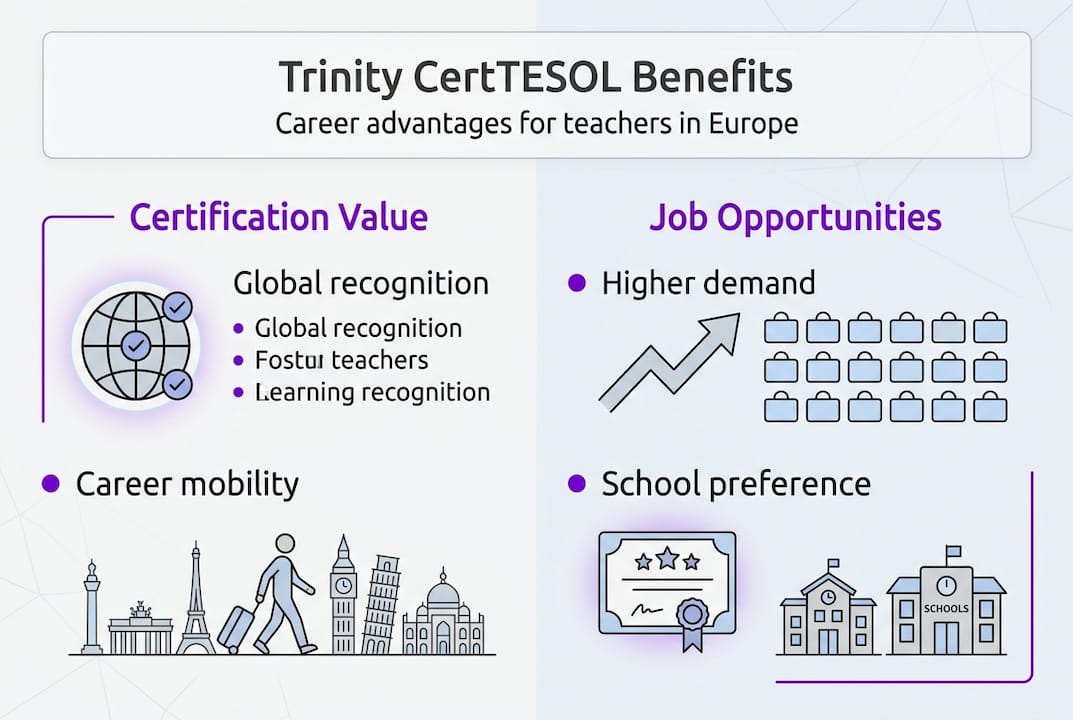
Cultural integration becomes easier when you possess credentials that local employers respect and understand. The Trinity name carries weight in European education circles, opening conversations with school directors and facilitating networking within professional teaching communities. This recognition helps you establish yourself quickly in a new country, building the professional relationships essential for long-term success abroad.
How to prepare and succeed on the Trinity CertTESOL course
Successful completion requires strategic preparation and commitment to intensive learning over a compressed timeframe. Focused preparation and familiarity with course expectations greatly improve pass rates and teaching confidence, transforming the challenging experience into an achievable goal. Understanding what tutors assess and how to demonstrate competence makes the difference between struggling through the course and thriving during training.
Before starting the course, strengthen your foundation in these critical areas:
- Language awareness: Review English grammar terminology, verb tenses, and parts of speech to ensure you can analyse language accurately
- Pronunciation skills: Familiarise yourself with phonemic symbols and common pronunciation challenges for language learners
- Teaching methodology: Read introductory texts on communicative language teaching and learner-centred approaches
- Observation experience: Watch experienced teachers online or in person to understand effective classroom management techniques
- Time management: Prepare for intensive daily schedules requiring evening lesson planning and assignment work
During the course, effective strategies significantly impact your success and stress levels. Create a realistic study schedule that allocates time for lesson planning, assignment writing, and personal reflection. Many trainees underestimate the time required for thorough lesson preparation, leading to rushed plans that don’t fully consider learner needs or lesson objectives. Allocate at least two hours for planning each teaching practice session, more for your initial lessons when everything feels unfamiliar.
Excelling in teaching practice requires focusing on core competencies that tutors assess systematically. Demonstrate clear lesson objectives that students understand from the start. Maintain a balance between teacher talking time and student practice opportunities, ensuring learners actively use English rather than passively listening. Respond flexibly when activities don’t proceed as planned, showing you can adapt in real time to learner needs. These competencies matter more than delivering a perfect lesson exactly as planned.
Common challenges include:
- Managing classroom timing effectively whilst covering all planned activities
- Providing clear instructions that students understand without lengthy explanations
- Balancing error correction with maintaining student confidence and fluency
- Analysing language accurately under pressure during teaching practice
- Completing written assignments alongside intensive teaching schedules
Overcoming these challenges requires accepting that mistakes form part of the learning process. Tutors expect trainees to make errors and improve through feedback rather than demonstrate perfection immediately. View each teaching practice session as an opportunity to experiment with techniques and refine your approach based on tutor observations. This growth mindset transforms challenges into valuable learning experiences.
Pro Tip: Record yourself teaching during practice sessions if permitted, then review the footage to identify areas for improvement that you might miss in the moment. This self-reflection accelerates your development significantly.
Utilise course feedback strategically by identifying patterns in tutor comments across multiple teaching sessions. If tutors repeatedly mention timing issues, prioritise this area in your next lesson planning. If instructions consistently confuse students, focus on simplifying language and demonstrating activities clearly. Targeted improvement based on specific feedback proves more effective than trying to address everything simultaneously.
Peer support creates a collaborative learning environment where trainees help each other succeed. Share lesson ideas, materials, and teaching strategies with fellow trainees. Observe their teaching practice sessions actively, noting techniques that work well and considering how you might adapt them for your own teaching. The passing Trinity CertTESOL tips emphasise that successful trainees support each other rather than competing, recognising that everyone benefits from a positive, collaborative cohort.
Maintain perspective throughout the intensive programme by remembering that the course prepares you for a rewarding international career. The challenges you face during training develop resilience and problem-solving skills that serve you well in actual teaching positions abroad. Every lesson you plan, every piece of feedback you receive, and every teaching practice session you complete builds the foundation for your future success as a professional English language teacher.
Explore your Trinity CertTESOL training options with EBC
Transitioning from understanding the Trinity CertTESOL to taking concrete steps towards your teaching career becomes straightforward with the right training provider. EBC offers comprehensive international teaching certification with EBC programmes designed specifically for aspiring teachers targeting European destinations. Our Trinity CertTESOL courses combine rigorous academic training with practical support that extends well beyond certification, including lifetime job placement assistance that connects you with teaching opportunities in Spain, France, Italy, and beyond.
What distinguishes EBC’s approach is our integration of TEFL and TESOL methodologies within the Trinity framework. Discover why TEFL and TESOL combined courses provide comprehensive preparation that addresses diverse teaching contexts you’ll encounter abroad. Our experienced tutors bring international teaching experience to every training session, offering insights into cultural expectations and practical strategies for success in European classrooms. We understand that choosing the right course represents a significant investment in your future, which is why we offer personalised guidance throughout the application and training process. Ready to explore how Trinity CertTESOL certification can transform your career prospects? Book a consultation with EBC today to discuss your goals, clarify course options, and create a tailored pathway towards teaching English abroad.
Frequently asked questions about the Trinity CertTESOL course
Is prior teaching experience required for Trinity CertTESOL?
No prior teaching experience is necessary to enrol in Trinity CertTESOL courses. The programme is specifically designed for aspiring teachers with no classroom background, providing foundational training in all essential teaching competencies. Your willingness to learn, strong English language skills, and commitment to intensive study matter more than previous experience.
Can the Trinity CertTESOL be completed fully online?
Whilst some course components may be delivered online, Trinity CertTESOL requires in-person teaching practice with real students for assessment purposes. Hybrid formats combine online input sessions with face-to-face teaching practice, but fully online completion isn’t possible due to the practical assessment requirements. This hands-on component ensures you develop genuine classroom skills rather than just theoretical knowledge.
How long does Trinity CertTESOL certification remain valid?
Trinity CertTESOL certification never expires and remains valid throughout your teaching career. Once you successfully complete the course and receive your certificate, it represents a permanent qualification recognised by employers worldwide. Many teachers use it as a foundation for further professional development, pursuing advanced certifications like the Trinity DipTESOL as their careers progress.
What support is available for job placement after certification?
Reputable training providers offer job placement assistance ranging from CV guidance and interview preparation to direct connections with language schools seeking qualified teachers. EBC provides lifetime job placement support, helping graduates secure positions in target countries and offering ongoing career advice as you develop professionally. This support proves invaluable when navigating unfamiliar job markets abroad.
Does Trinity CertTESOL help teach other types of English exams?
Whilst Trinity CertTESOL focuses on general English teaching methodology, the skills you develop apply directly to exam preparation contexts. Many Trinity CertTESOL holders successfully teach Cambridge, IELTS, and TOEFL preparation courses by building on their foundational training. Some choose to pursue additional specialised qualifications in exam teaching, but the core competencies from Trinity CertTESOL provide an excellent starting point for this work.